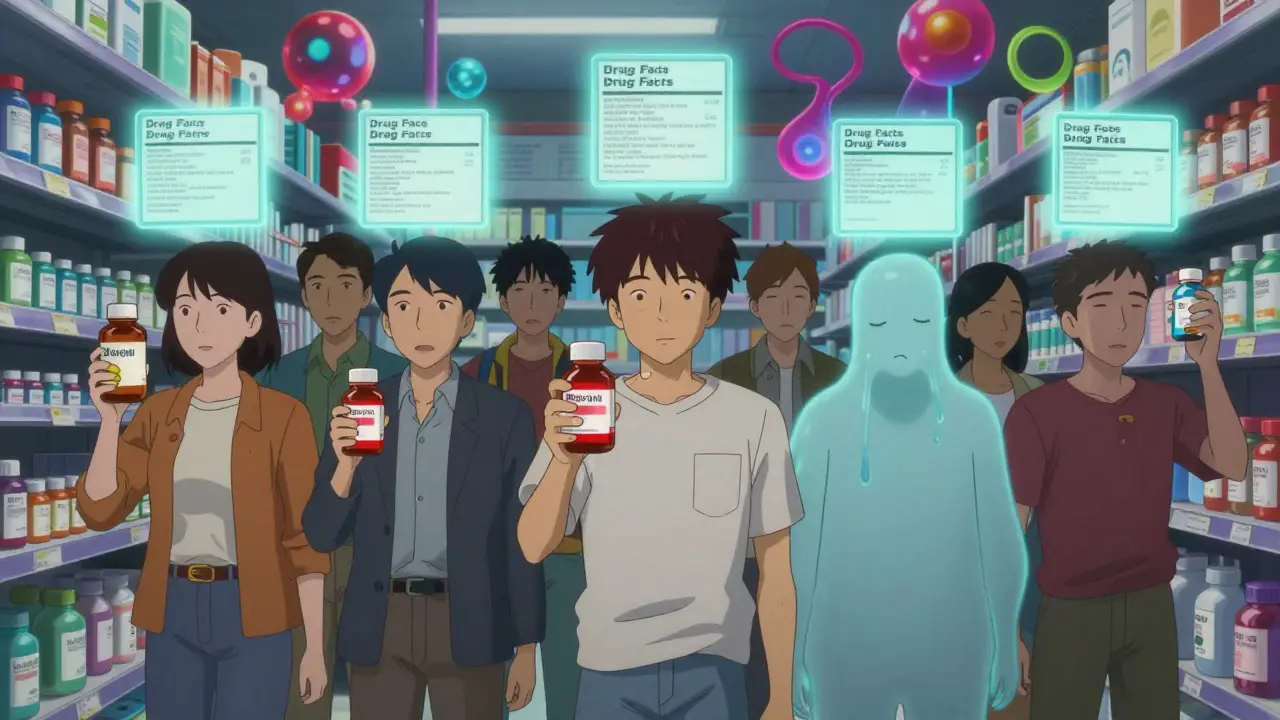

Every year, millions of people walk into a pharmacy looking for quick relief - a headache, a stuffy nose, heartburn, or a cough. They grab a bottle off the shelf, read the front label, and assume it’s safe. But here’s the truth: OTC medications aren’t harmless. They’re powerful chemicals, and taking them wrong can land you in the emergency room.
In the U.S., about 82% of adults use at least one over-the-counter (OTC) medicine each year. That’s more than 270 million people. And while most use them safely, nearly one in three people accidentally take too much, mix dangerous ingredients, or ignore warnings because they didn’t read the label. You don’t need to be a pharmacist to pick the right one. But you do need to know what to look for.
Start with the Drug Facts Label - Not the Brand Name
The bright packaging, catchy names like "Fast Relief" or "Nighttime Multi-Symptom" - they’re designed to catch your eye. But they tell you nothing about what’s actually inside. The only thing that matters is the Drug Facts label. It’s the law. Every OTC medicine sold in the U.S. must have it, and it’s always in the same order. That’s not an accident. It’s there so you can compare products quickly.
Here’s what to check first: Active ingredients. This is the list of chemicals that do the work. If you’re taking two different medicines - say, a cold tablet and a pain reliever - and both contain acetaminophen, you’re doubling your dose. That’s how liver damage happens. Acetaminophen overdose sends about 56,000 people to the ER each year. It’s not rare. It’s predictable.
Don’t just look for "acetaminophen." It’s also called APAP. Check for that too. Same with ibuprofen - it’s in Advil, Motrin, and store brands. If you’re already taking a prescription NSAID like naproxen, adding another one increases your risk of stomach bleeding or kidney damage.
Don’t Treat Symptoms You Don’t Have
That "Cold & Flu Maximum Strength" bottle? It has six active ingredients. If you only have a runny nose, you don’t need the drowsiness-causing antihistamine, the cough suppressant, the decongestant, or the pain reliever. You’re just exposing yourself to extra side effects for no reason.
Choose the medicine that treats only your symptoms. If it’s just a sore throat, get a lozenge with benzocaine. If it’s a fever and body aches, go with plain acetaminophen or ibuprofen. Simpler is safer. Pharmacists see this every day - people taking four different OTC products because they think "more is better." It’s not. It’s dangerous.
Know Your Body - And Your Conditions
OTC meds aren’t one-size-fits-all. Your health history changes what’s safe for you.
- If you have high blood pressure, avoid decongestants like pseudoephedrine or phenylephrine. They can spike your pressure.
- If you have diabetes, watch out for cold medicines with sugar or alcohol. Some cough syrups have as much as 20 grams of sugar per dose.
- If you have an enlarged prostate, antihistamines like diphenhydramine can make it harder to urinate - a real problem for older men.
- If you’re on blood thinners like warfarin, avoid aspirin. Even low-dose aspirin can increase bleeding risk.
- If you’re pregnant or breastfeeding, talk to your pharmacist before taking anything. Many OTC meds cross into breast milk or affect fetal development.
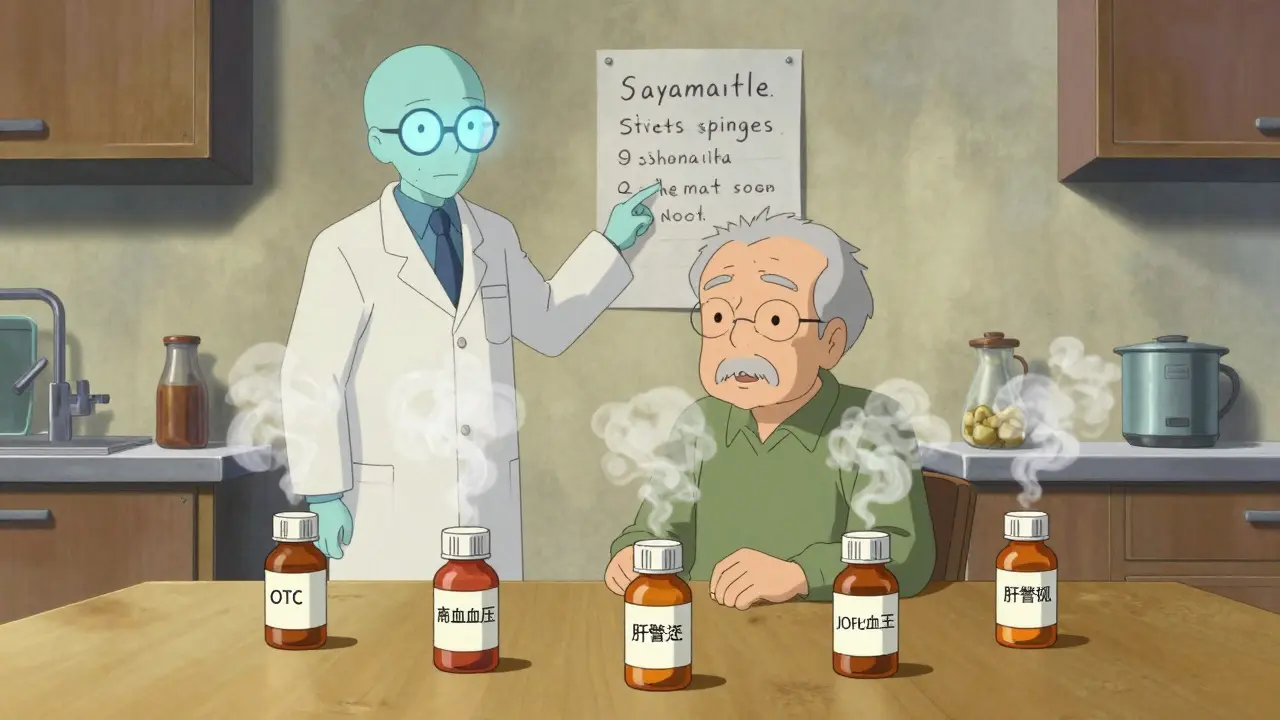
Older adults are especially at risk. They make up only 13% of the population but account for half of all adverse drug reactions from OTC medicines. Why? Because they often take multiple prescriptions, their bodies process drugs slower, and they’re more likely to mix meds without realizing it.
Measure Accurately - No Kitchen Spoons
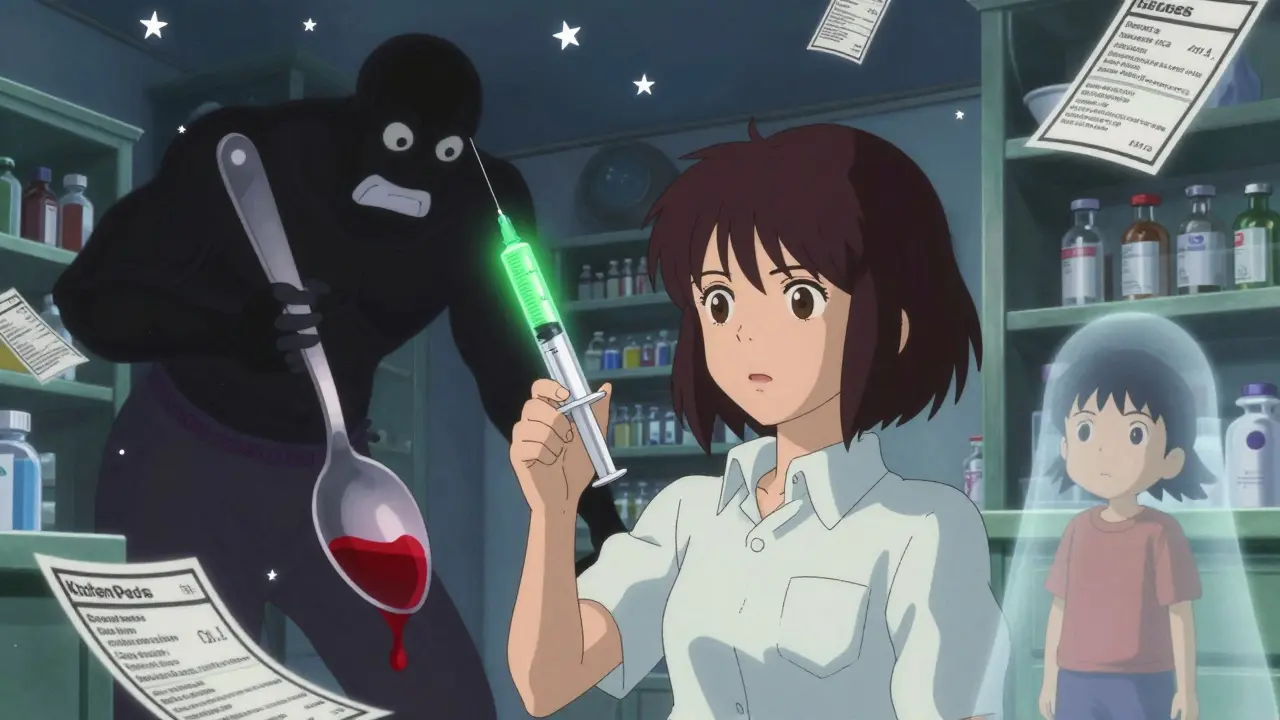
"Just a teaspoon" sounds harmless. But a kitchen teaspoon can hold anywhere from 3 to 7 milliliters. The FDA says that’s a 200% variation. A child’s dose of liquid medicine? A few extra milliliters can be deadly.
Always use the measuring cup, dropper, or syringe that comes with the medicine. If it’s missing, ask the pharmacist for one. They’ll give it to you free. Never guess. Never use a regular spoon. And don’t assume adult and children’s doses are proportional. A 40-pound child isn’t just a smaller adult. Their liver and kidneys can’t handle the same load.
Check for Interactions - Even With Supplements
You might think "natural" means safe. But ginkgo biloba, garlic supplements, and even St. John’s wort can interact with OTC meds. For example, if you’re taking ibuprofen and also take fish oil or vitamin E, you’re increasing your bleeding risk. If you’re using melatonin for sleep and also take a cold medicine with diphenhydramine, you could end up overly drowsy - or even confused.
Alcohol is another hidden danger. Mixing it with acetaminophen? That’s a fast track to liver failure. Mixing it with antihistamines or dextromethorphan (found in many cough syrups)? You could pass out, stop breathing, or have a seizure. The label says "avoid alcohol" for a reason. Don’t ignore it.
Use the Same Pharmacy Every Time
It’s easy to switch pharmacies for convenience - a closer one, a cheaper one, one with better parking. But that’s a safety risk. When you use one pharmacy for all your prescriptions and OTC meds, the pharmacist builds a full picture of what you’re taking. They can spot overlaps. They can warn you about interactions. They can flag if you’ve bought three bottles of Tylenol in the last two weeks.
Pharmacists aren’t just there to hand you a bottle. They’re trained to catch mistakes. A 2022 study showed pharmacist consultations reduced OTC medication errors by 67%. That’s not a small number. That’s life-saving. And it’s free.
When in Doubt, Ask
You don’t need to feel embarrassed. You don’t need to have a prescription. You don’t need to be sick enough to see a doctor. If you read the label and still aren’t sure - ask the pharmacist. Point to the ingredients. Say, "I’m taking this for my headache, but I also take high blood pressure medicine. Is this safe?"
Pharmacists are the most accessible healthcare professionals. They’re on-site, they’re trained in drug interactions, and they’re paid to help you. Don’t skip this step. It’s the single most effective way to avoid a bad reaction.
Keep a List - Even for OTC Meds
Write down every OTC medicine you take - even if you only use it once a month. Include the brand, active ingredient, dose, and why you take it. Keep it in your wallet or phone notes. When you see a doctor or pharmacist, show them the list. It saves time. It prevents mistakes. And if you ever end up in the ER, it could save your life.
For example: - Tylenol 500mg - for headaches - 2 tablets every 6 hours as needed - DayQuil - for cold symptoms - 10 mL every 4 hours (only when congested) - Calcium supplement - 600mg daily Simple. Clear. No guesswork.
What About New OTC Drugs?
The FDA is approving more prescription drugs to become OTC. In 2023, fluticasone furoate (a nasal spray for allergies) became available without a prescription. That’s progress - but it also means more people might assume "new = safer." It doesn’t. Always check the Drug Facts label. Even if it’s "new," it still has risks. The same rules apply: know the ingredients, watch for interactions, and ask questions.
OTC medicines are meant to help you manage small problems at home. They’re not meant to replace medical advice. And they’re not meant to be guessed at. The system is built to work - if you use it right.
Can I take two different OTC medicines at the same time?
You can, but only if you check the active ingredients first. Many OTC products contain the same drug under different names. Taking two that both have acetaminophen, for example, can lead to a dangerous overdose. Always compare the Drug Facts labels. If the active ingredients overlap, don’t take them together unless a pharmacist says it’s safe.
Is it safe to use expired OTC medications?
Most OTC medicines lose effectiveness after their expiration date, but they rarely become toxic. However, for critical uses - like epinephrine auto-injectors or antibiotics - expiration matters more. For pain relievers or antacids, using them a few months past the date is usually okay if stored properly. But if the pill is cracked, discolored, or smells odd, throw it out. Safety isn’t worth the risk.
Why do some OTC medicines say "do not use if pregnant"?
Many OTC drugs haven’t been tested in pregnant women for safety. That doesn’t mean they’re definitely harmful - it means we don’t know. So the label says "do not use" to avoid liability and protect the baby. If you’re pregnant, always check with your pharmacist before taking anything, even something as simple as a cold tablet. Some ingredients, like ibuprofen after 20 weeks, can affect fetal development.
How do I know if I’m taking too much acetaminophen?
The maximum daily dose for adults is 4,000 milligrams - that’s eight 500mg tablets. But many cold and flu medicines also contain acetaminophen. If you take Tylenol for pain and a cold medicine that has it too, you could easily hit 6,000mg in a day. Signs of overdose include nausea, vomiting, loss of appetite, and pain in the upper right side of your abdomen. Liver damage can happen without symptoms at first. If you suspect you’ve taken too much, go to the ER immediately - don’t wait.
Should I avoid store-brand OTC medications?
No. Store brands are required to have the same active ingredients, strength, dosage form, and safety profile as name brands. The only difference is the inactive ingredients - like fillers or dyes - which rarely matter. You’re paying for branding, not better medicine. Save your money. Just make sure the active ingredients match what you need.
What should I do if I accidentally take too much?
Call Poison Control immediately at 1-800-222-1222 (U.S.) or your local emergency number. Don’t wait for symptoms. Don’t try to induce vomiting. Have the medicine bottle with you when you call. They’ll tell you whether to go to the hospital. For acetaminophen overdose, treatment is most effective if started within 8 hours. Time matters.
Choosing safe OTC medications isn’t about being an expert. It’s about being careful. Read the label. Know your body. Ask the pharmacist. And never assume something is safe just because you can buy it without a prescription. Your health isn’t a gamble - and your medicine shouldn’t be either.


