

Black Cohosh Liver Safety & Interaction Checker
Hot flashes can make life miserable. For decades, women have turned to Black Cohosh, a herbal supplement derived from the roots of the North American native plant Cimicifuga racemosa, hoping it would offer relief without the heavy risks of hormone replacement therapy. It feels like a natural, safe choice. But there is a serious question mark hanging over this popular remedy: could it be hurting your liver?
The answer isn't a simple yes or no, but the data is getting clearer. While many people use black cohosh without issue, there are documented cases of severe liver damage linked to its use. More importantly, if you take other medications, black cohosh might change how those drugs work in your body. Understanding these interactions is crucial before you pop that capsule.
What Is Black Cohosh and Why Do People Take It?
Black Cohosh has been used since the 19th century by Native Americans and later by Eclectic physicians for women's health issues. It gained massive popularity in Europe during the 1950s and in the United States during the 1990s as an alternative to hormone replacement therapy (HRT). According to the National Center for Complementary and Integrative Health (NCCIH), approximately 1.1 million American women used black cohosh in 2012 alone.
The main draw is its perceived ability to reduce hot flashes and night sweats. Current formulations typically contain 20-40 mg of standardized extract taken twice daily. Products like Remifemin are among the most clinically studied. The U.S. Pharmacopeia standard requires products to contain at least 1.0% triterpene glycosides, specifically calculated as 23-epi-26-deoxyactein. These compounds, along with caffeic and ferulic acids, are believed to interact with biological pathways to ease menopausal symptoms.
However, the scientific consensus on its effectiveness is mixed. Some studies show benefit, while others find it no better than a placebo. Despite the debate on efficacy, the safety profile-specifically regarding the liver-has become a major point of contention since the first case reports emerged in 2003.
The Liver Risk: What Does the Data Say?
You might hear conflicting opinions. On one side, Dr. Johanna Budwig, lead researcher on the 2008 Black Cohosh Adverse Events Project, argues that many reported cases likely represent confounding factors or product adulteration. She points out that in prospective clinical trials involving more than 1,200 patients, black cohosh was not associated with serum enzyme elevations during treatment.
On the other side, the evidence is stark. Dr. Jayant A. Talwalkar, author of the LiverTox monograph (NCBI Bookshelf, 2023), states that products labeled as black cohosh have been linked to more than fifty instances of clinically apparent liver injury. These cases ranged from mild enzyme elevations to acute liver failure requiring transplantation or resulting in death.
Here is what we know about the pattern of injury:
- Type of Injury: Predominantly hepatocellular (accounting for approximately 70% of cases), though mixed and cholestatic patterns also occur.
- Latency Period: Symptoms can appear anywhere from 2 weeks to 6 months after starting the supplement.
- Severity: In severe cases, ALT (alanine aminotransferase) levels have exceeded 1,000 U/L. One documented case involved a 51-year-old woman whose ALT reached 722 U/L and Alk P reached 226 U/L; she recovered within two weeks of discontinuing the herb.
- Mechanism: The exact cause remains unclear. Hypotheses include direct toxicity from triterpene glycosides, metabolic idiosyncrasy (where your body uniquely reacts to the compound), or immune-mediated injury.
A 2018 systematic review in the Journal of Clinical Gastroenterology found that black cohosh accounted for 4.7% of all herb-induced liver injury cases in Western countries. While this is lower than green tea extract (11.2%) or kava (over 200 cases), it is significantly higher than red clover (approximately 5 reported cases).
How Black Cohosh Interacts With Other Medications
This is where things get tricky for anyone taking prescription drugs. Black cohosh is metabolized primarily through the cytochrome P450 system, particularly the CYP2D6 and CYP3A4 enzymes. These enzymes are responsible for breaking down a huge number of common medications. When black cohosh interferes with them, it can either speed up or slow down the metabolism of your drugs, leading to ineffective treatment or toxic buildup.
| Medication Class | Specific Examples | Interaction Risk |
|---|---|---|
| Antibiotics | Clarithromycin, Erythromycin | High. Strong CYP3A4 inhibitors can increase the risk of hepatotoxicity (liver damage) by up to 3.2-fold. |
| Pain Relievers | Acetaminophen (Tylenol) | Moderate to High. Both substances stress the liver. Combining them increases the risk of acute liver failure. |
| Statins | Atorvastatin, Simvastatin | Moderate. May alter cholesterol drug levels and increase liver strain. |
| Cancer Therapies | Methotrexate, Tamoxifen | High. Can interfere with drug efficacy and increase toxicity. |
| Blood Thinners | Warfarin | Moderate. Potential to affect clotting times due to enzyme competition. |
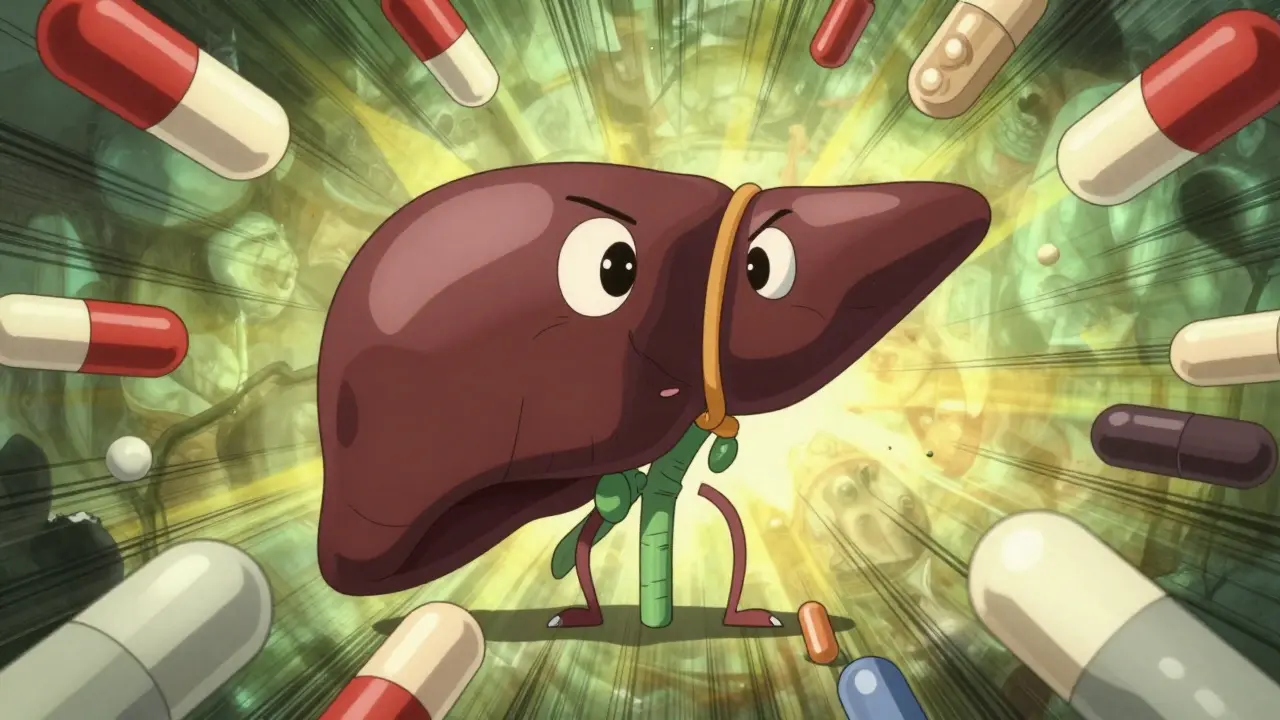
The Merck Manual Professional Edition (2023) specifies that black cohosh should be avoided with strong CYP3A4 inhibitors like clarithromycin due to the increased risk of hepatotoxicity. This risk is backed by retrospective cohort data from the Drug-Induced Liver Injury Network (DILIN).
Who Should Avoid Black Cohosh?
Not everyone is at equal risk, but certain groups face significantly higher dangers. If you fall into any of these categories, you should likely skip black cohosh entirely.
- People with Pre-existing Liver Conditions: If you have hepatitis, cirrhosis, or fatty liver disease, your liver is already under stress. Adding a potential hepatotoxin like black cohosh is dangerous. The U.S. Pharmacopeia explicitly advises that individuals with liver disorders should avoid its use.
- Patients Taking Hepatotoxic Medications: As noted above, combining black cohosh with acetaminophen, methotrexate, or statins creates a "perfect storm" for liver injury. A 2021 case report in the Journal of Medical Case Reports detailed a 54-year-old woman who developed acute liver failure requiring transplantation after combining black cohosh with acetaminophen, despite using both within recommended doses.
- Breast Cancer Survivors: While black cohosh is often marketed as non-estrogenic, concerns remain about its impact on hormone-sensitive cancers. The Susan G. Komen breast cancer organization reported a 37% decline in black cohosh usage among their community since 2015 due to safety concerns. In 2022, they received 147 patient inquiries about black cohosh, with 28% specifically worried about liver interactions with cancer medications.
- Pregnant or Breastfeeding Women: There is insufficient safety data for these groups, and traditional uses suggest it may stimulate uterine contractions.
Signs of Liver Trouble: What to Watch For
Liver damage doesn't always announce itself loudly at first. However, there are specific warning signs you need to recognize immediately. User experiences documented across platforms reveal concerning patterns. On Drugs.com, 32% of users reporting liver-related issues described symptoms emerging after 2-4 months of use.
If you are taking black cohosh, stop immediately and seek medical attention if you experience:
- Dark Urine: Reported in 62% of liver injury cases.
- Jaundice: Yellowing of the eyes or skin, reported in 48% of cases.
- Extreme Fatigue: Unusual tiredness that doesn't go away with rest, reported in 76% of cases.
- Abdominal Pain: Particularly pain in the upper right quadrant of the abdomen, reported in 39% of cases.
- Nausea or Loss of Appetite: Common early indicators of liver distress.
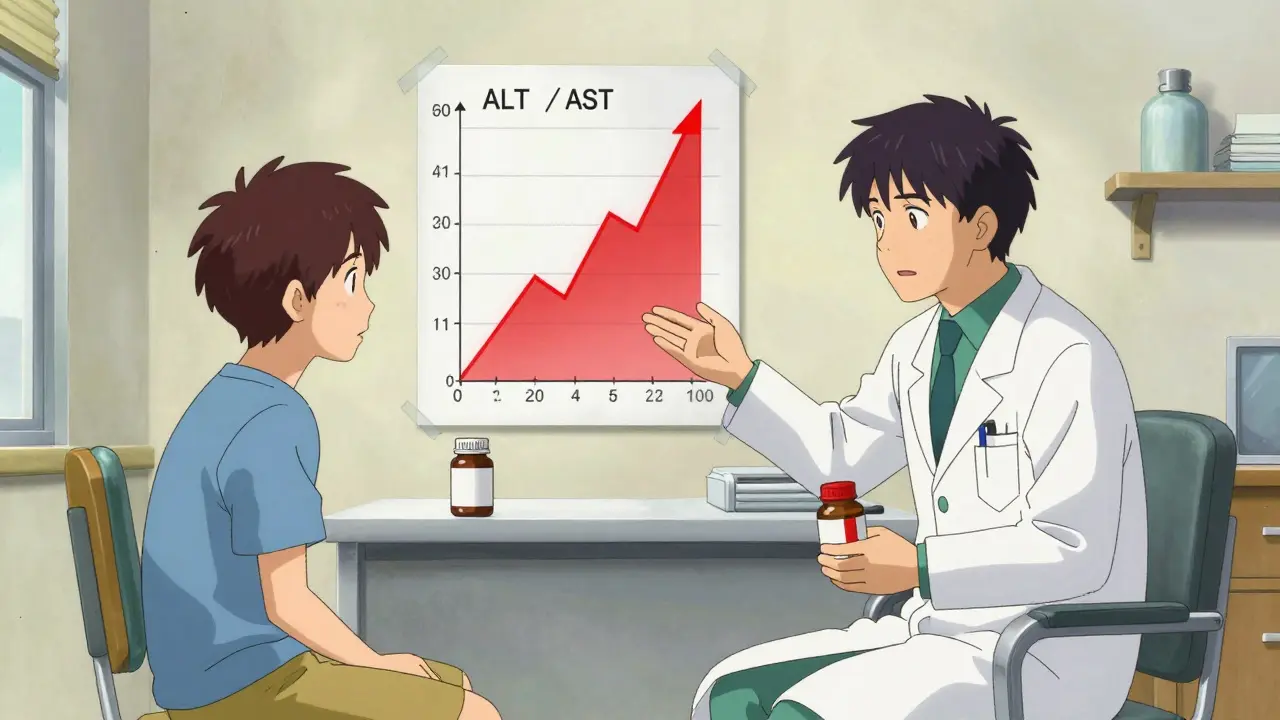
Don't wait. Early detection can prevent permanent damage. The Mayo Clinic's Integrative Medicine program notes that 8.3% of their monitored patients showed transient ALT elevations above 3x the upper limit of normal. Most of these were caught because they were being tested regularly.
Safety Protocols and Monitoring
If your doctor agrees that the benefits outweigh the risks and you decide to try black cohosh, do not just buy it off the shelf and forget about it. You need a monitoring plan.
The American Herbal Pharmacopoeia recommends limiting use to 6 months with mandatory liver function test (LFT) monitoring. Unfortunately, compliance is low. Only 22% of surveyed primary care physicians in a 2022 JAMA Internal Medicine study routinely monitored LFTs for patients using herbal supplements.
Here is a safer approach if you proceed:
- Get Baseline Tests: Before starting, ask your doctor for a baseline panel including ALT, AST, bilirubin, and alkaline phosphatase.
- Schedule Follow-ups: Repeat tests at 8 and 16 weeks. This aligns with the latency period where many injuries manifest.
- Choose Reputable Brands: Look for brands that undergo third-party testing for purity and potency. Adulterated products pose additional risks.
- Avoid Alcohol: Drinking alcohol while taking black cohosh adds extra stress to the liver.
Regulatory Landscape and Market Trends
The rules around black cohosh vary wildly depending on where you live. In the United States, the FDA classifies black cohosh as a dietary supplement under DSHEA (1994). This means it requires minimal pre-market safety review. Manufacturers don't have to prove it's safe before selling it.
In contrast, the European Union requires mandatory liver injury warnings on all black cohosh products sold since 2012. They also require batch testing for authenticity. This regulatory difference highlights why informed consumer caution is so vital in the U.S. market.
The market reflects growing concern. Black cohosh represents approximately $127 million of the $11.3 billion U.S. herbal supplement market (2023 IHS Markit data). Sales have been declining 4.7% annually since 2018. Grand View Research predicts a continued decline (-5.2% CAGR through 2028) as safer alternatives gain acceptance.
New developments include "liver-safe" formulations launched in 2023 by companies like Gaia Herbs and Nature's Way. These use proprietary extraction methods claiming to remove potentially hepatotoxic compounds. However, the American Gastroenterological Association issued a cautionary statement in June 2023 noting there is "no clinical evidence demonstrating improved safety profiles for these modified formulations." Until robust clinical trials prove otherwise, treat these new formulas with the same caution as traditional ones.
Alternatives to Consider
If black cohosh feels too risky, you have other options for managing menopausal symptoms. Many are backed by stronger safety data.
- Selective Serotonin Reuptake Inhibitors (SSRIs): Drugs like paroxetine and venlafaxine are increasingly prescribed for hot flashes. They have well-documented safety profiles and fewer liver interaction risks compared to unregulated herbs.
- Red Clover: Contains isoflavones similar to estrogen. While it has fewer reported liver injury cases than black cohosh, it still carries hormonal considerations.
- Lifestyle Changes: Layered clothing, cooling mattresses, and mindfulness techniques can significantly reduce the frequency and intensity of hot flashes without any pharmacological risk.
- Hormone Replacement Therapy (HRT): For many women, low-dose HRT remains the most effective treatment. While it has cardiovascular risks, its liver toxicity profile is generally better understood and managed than that of black cohosh.
Can black cohosh cause permanent liver damage?
Yes, in rare cases. While most liver injuries resolve after stopping the supplement, there are documented instances of acute liver failure requiring transplantation or resulting in death. The severity depends on how quickly the injury is detected and treated.
Is black cohosh safe for women with breast cancer?
It is generally not recommended. Although some studies suggest it lacks estrogenic activity, concerns remain about its potential to interfere with cancer treatments and its impact on hormone-sensitive tissues. Organizations like Susan G. Komen advise caution, and usage among breast cancer survivors has declined significantly due to these risks.
How long does it take for black cohosh to affect the liver?
The latency period varies widely, ranging from 2 weeks to 6 months. Most reported cases of liver injury occur after 2 to 4 months of continuous use. This is why regular monitoring is essential if you choose to take the supplement.
Are there "safe" versions of black cohosh?
Some manufacturers claim to produce "liver-safe" extracts by removing specific compounds. However, as of 2023, the American Gastroenterological Association states there is no clinical evidence proving these modified formulations are safer. Until rigorous trials confirm otherwise, all black cohosh products carry the same potential risk.
What medications should I never mix with black cohosh?
You should avoid mixing black cohosh with strong CYP3A4 inhibitors like clarithromycin, as well as other hepatotoxic drugs such as acetaminophen (especially in high doses), methotrexate, and statins. Always consult your doctor or pharmacist before combining any herbal supplement with prescription medication.