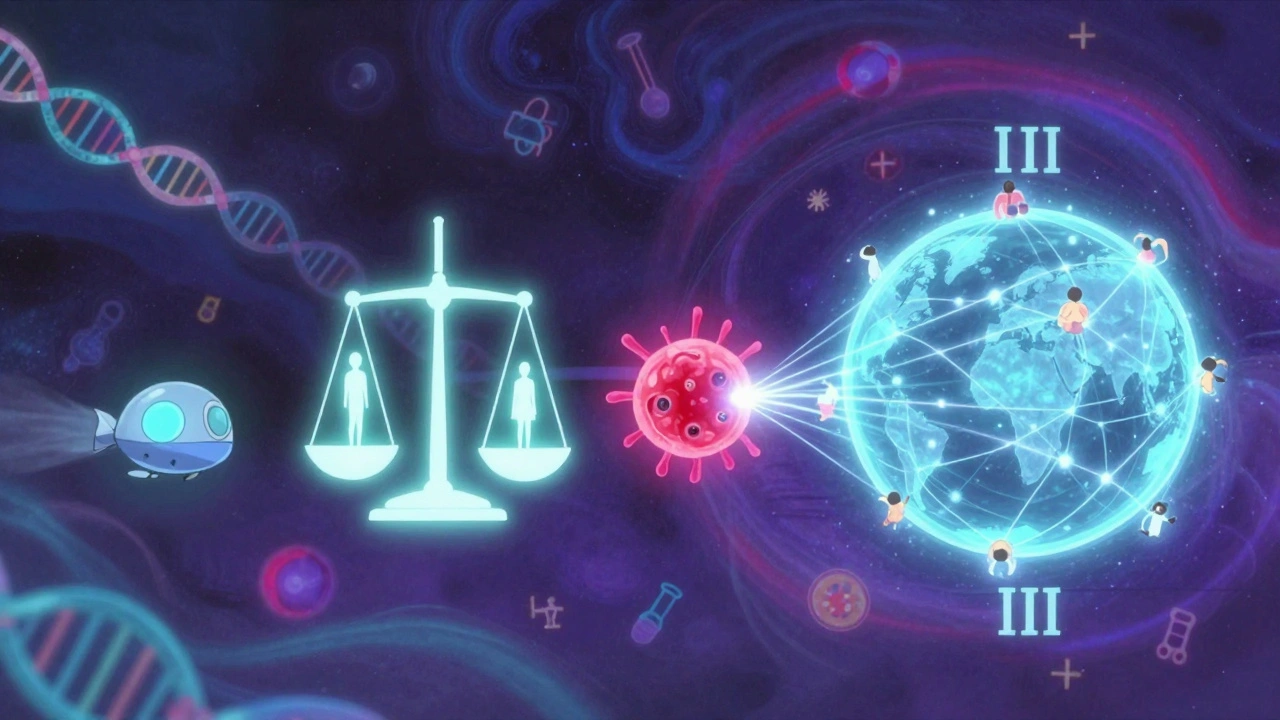

When you or someone you love is facing cancer, the question isn’t just what treatment comes next - it’s where the next breakthrough might be. Cancer clinical trials aren’t just experiments. They’re the backbone of progress. Every new drug, every improved protocol, every life extended started with someone saying yes to a trial. But what exactly happens in these trials? And why might joining one be one of the most important decisions you make?
How Cancer Clinical Trials Work: The Four Main Phases
Cancer clinical trials don’t jump from lab to patient. They follow a strict, step-by-step path designed to protect people while finding what works. This system wasn’t invented overnight - it came from decades of hard lessons and scientific discipline. Today, there are four main phases, with a fifth sometimes used for early testing.Phase 0 is the smallest and fastest. It involves just 10 to 15 people. The goal? Not to treat cancer, but to see if a new drug even reaches cancer cells and how the body breaks it down. Doses here are tiny - too small to kill tumors, but enough to track what happens. Think of it as a scout mission. If the drug doesn’t behave as expected, it’s stopped before more people are exposed.
Phase I is where safety becomes the top priority. Around 20 to 80 people join, usually those who’ve tried all standard options. Researchers start with a very low dose and slowly increase it, watching closely for side effects. This phase answers: What’s the safest dose? What are the risks? It’s the riskiest phase because it’s often the first time humans are exposed to the drug. But it’s also the most controlled. If someone has a bad reaction, the dose is lowered or stopped. Most Phase I trials last a few months.
Phase II shifts focus to effectiveness. Now, 25 to 100 people with a specific type of cancer take part. The question isn’t just “Is it safe?” anymore - it’s “Does it work?” Researchers look for signs the treatment is shrinking tumors, slowing growth, or improving survival. If a drug shows real promise here, it moves forward. But here’s the hard truth: about half of all drugs that enter Phase II never make it to Phase III. Either they don’t work well enough, or the side effects are too severe.
Phase III is the big one. Hundreds, sometimes thousands, of people across multiple hospitals - even countries - are enrolled. Participants are randomly assigned to either the new treatment or the current standard care. This isn’t just about whether the new thing works - it’s about whether it’s better. Does it extend life longer? Reduce side effects? Improve quality of life? These trials take years. They’re expensive. But they’re the final gate before the FDA considers approval.
Phase IV happens after a drug is approved and on the market. Thousands more patients take it in real-world settings. Why? Because rare side effects - ones that only show up after years or in people with other health conditions - don’t always show up in smaller trials. Phase IV catches those. It also helps doctors understand how to use the drug best. This phase can last a decade or more.
Why Join a Cancer Clinical Trial? Real Benefits for Patients
Many people assume clinical trials are a last resort - something you try when everything else has failed. That’s not always true. Some trials are open to people just starting treatment. Others are for those who’ve had multiple rounds of therapy. But regardless of where you are in your journey, there are real, measurable benefits to participating.First, you get access to treatments not yet available to the public. For someone with advanced cancer who’s run out of options, a trial might be the only chance at a new therapy. One participant in a Phase II immunotherapy trial for stage 4 melanoma saw her tumors shrink dramatically - and has been cancer-free for three years now. That’s not luck. That’s science, made possible because someone volunteered.
Second, your care is more intense. People in trials are monitored more closely than those getting standard treatment. You’ll have more scans, more blood tests, more check-ins with your care team. In a 2022 survey of 1,200 trial participants, 78% said they felt their care team was more attentive to side effects. That level of attention can make a huge difference when you’re feeling weak or unwell.
Third, you’re not just helping yourself. You’re helping future patients. In a National Comprehensive Cancer Network study, 85% of participants said knowing their involvement could help others gave them a sense of purpose. That’s powerful. When you’re going through chemo, radiation, or surgery, it’s easy to feel isolated. Being part of something bigger - something that could change how cancer is treated - adds meaning.
What Are the Challenges? Be Realistic
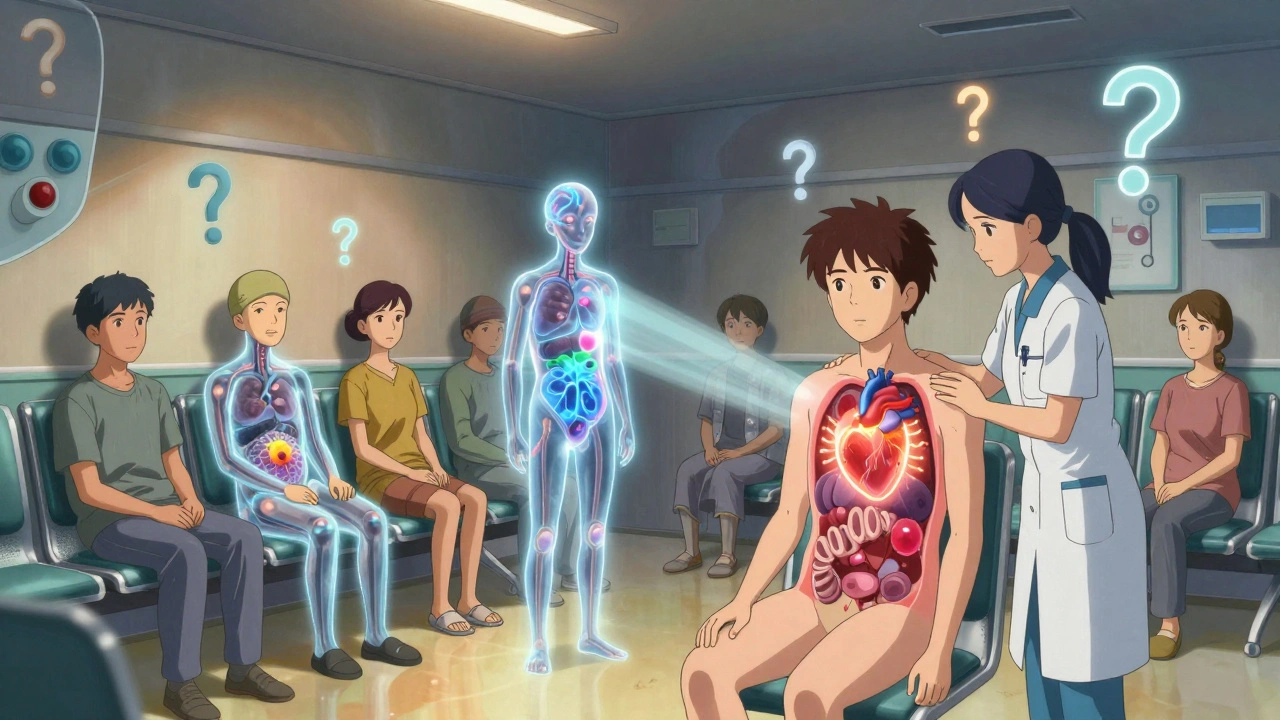
It’s not all easy. Clinical trials come with real hurdles.Travel is a big one. Many trials require visits to specific hospitals or research centers. One participant on Reddit described driving three hours each way for every appointment - while still recovering from treatment. For people without reliable transportation, or who live far from major cancer centers, that’s a huge barrier.
Eligibility is strict. The average trial has 28 inclusion and exclusion criteria. Age, previous treatments, other health conditions, even blood test numbers can disqualify you. About 80% of cancer patients don’t qualify for trials, even if they want to join. That’s not because they’re not sick enough - it’s because trials need to control variables to get clear results. But that also means the results may not apply to everyone.
Then there’s randomization. In Phase III trials, you might get the new drug - or you might get the standard treatment. You won’t know which. That uncertainty can be stressful. Sixty-three percent of people considering a trial say they’re anxious about being assigned to the control group. But here’s the thing: the standard treatment is still the best proven option. You’re not being given a placebo unless there’s no known effective treatment. And if the new drug turns out to be better, you might get access to it later.
Time is another factor. Trials can take months or years. You’ll need to keep appointments, fill out questionnaires, track side effects. It’s a commitment. But many centers now offer patient navigators - trained staff who help with scheduling, transportation, insurance, and understanding the process. At NCI-designated cancer centers, 78% have these roles. They make a difference.
How to Find and Evaluate a Trial
You don’t have to find a trial alone. Start by talking to your oncologist. They know what’s available locally and nationally. You can also search the National Cancer Institute’s database or ClinicalTrials.gov - both are free and updated daily.When you find a trial that seems right, ask these questions:
- What phase is this trial in? (Phase I is riskier, Phase III is more established.)
- What’s the goal? Is it testing a new drug, a new combo, or a new way to deliver treatment?
- What are the possible side effects? Have they been seen in earlier phases?
- How often will I need to come in? Where? Will travel help be provided?
- What happens if I decide to leave? Can I go back to standard care?
- Who pays for what? (Most trials cover the experimental treatment and related tests. Your insurance usually covers routine care like blood work or scans.)
Don’t be afraid to ask for a second opinion. You have the right to understand everything before you sign up. Most centers offer educational materials - often developed by the NCI - to help explain terms like randomization, blinding, and placebo. You’re not expected to know all this on your own.

The Bigger Picture: Why This System Matters
Before clinical trials became standard, treatments were sometimes adopted based on hope, not data. The thalidomide tragedy in the 1960s - where a drug meant for morning sickness caused severe birth defects - led to the strict rules we have today. The phased system exists to prevent that kind of harm.Today, the global market for cancer clinical trials is worth over $28 billion. Nearly half of all new cancer drugs approved since 2010 came from industry-sponsored trials. But the real win isn’t the money. It’s the progress. In 2023, the FDA approved 18 new cancer drugs - most of them tested in clinical trials. These drugs are giving people years they didn’t have before.
And the system is evolving. New trial designs like “basket trials” - which group patients by genetic mutations instead of cancer location - are making trials smarter. Wearable devices now track heart rate, activity, and sleep remotely, reducing the need for constant hospital visits. The NCI’s MATCH trial matches treatments to a patient’s tumor DNA - not where the cancer started. That’s precision medicine in action.
But the biggest challenge remains inclusion. Only 3 to 5% of adult cancer patients in the U.S. join trials. Black patients, who make up 13% of cancer cases, represent just 8% of trial participants. That’s not just unfair - it’s dangerous. If a drug hasn’t been tested in diverse populations, we don’t know if it works the same for everyone.
That’s changing. More trials now require diversity goals. More centers are partnering with community clinics. More outreach is happening in underserved areas. Progress is slow, but it’s happening.
Final Thoughts: Is a Trial Right for You?
There’s no single answer. A clinical trial isn’t better than standard care - it’s different. It might offer hope where none existed. It might mean more tests, more travel, more uncertainty. But it also means you’re part of the next breakthrough.Some people join because they have no other options. Others join because they want to help. Some do both. If you’re considering a trial, talk to your doctor, ask questions, take your time. You’re not signing up for a gamble. You’re signing up for a carefully designed step forward - for yourself and for everyone who comes after you.
Are clinical trials only for people who have run out of treatment options?
No. While many trials are for patients who’ve tried standard treatments, others are open to people just starting out. Some trials test new drugs alongside standard care. Others look at prevention or early detection. You don’t have to be out of options to qualify.
Will I get a placebo instead of real treatment?
In cancer trials, placebos are rarely used alone. If a placebo is involved, it’s usually added to standard treatment - not given instead of it. For example, you might get chemo plus a placebo pill, or chemo plus a new drug. You’re never left without care unless there’s no proven effective treatment.
Who pays for clinical trial costs?
The trial sponsor usually covers the cost of the experimental treatment and any special tests related to the study. Your insurance typically pays for routine care like blood tests, scans, or doctor visits - the same as if you weren’t in a trial. Always ask for a detailed cost breakdown before joining.
Can I leave a clinical trial once I’ve joined?
Yes. You can withdraw from a trial at any time, for any reason - without penalty or loss of care. Your medical team will help you transition back to standard treatment if needed. Your safety and comfort always come first.
How long do cancer clinical trials last?
It depends on the phase. Phase I trials usually last a few months. Phase II trials run 6 to 12 months. Phase III trials can take 1 to 4 years. Phase IV trials may continue for decades. Individual participation varies - you might be in a trial for months or years, depending on the study design and your response.


