

Imagine bringing a powerful cancer treatment into your living room. It sounds empowering, right? You get to stay in your own bed, eat your own food, and avoid the sterile smell of a hospital. But there is a catch. The same medicine killing cancer cells can hurt healthy people if it touches their skin, gets inhaled, or is swallowed accidentally. This isn't just about being careful; it is about following strict safety protocols designed by organizations like the National Institute for Occupational Safety and Health (NIOSH) and the Oncology Nursing Society.
Whether you are taking pills or receiving an IV infusion, understanding how to handle, store, and dispose of these drugs is non-negotiable. One slip-up-like crushing a tablet or flushing the toilet with the lid up-can expose your family to hazardous chemicals. Let’s break down exactly what you need to do to keep everyone safe.
The 48-Hour Rule: Your Most Critical Safety Window
If you remember nothing else from this guide, remember the number 48. For approximately 48 hours after your last dose, chemotherapy agents remain in your bodily fluids. This includes urine, stool, vomit, blood, tears, sweat, semen, and vaginal fluid. Some drugs, like cyclophosphamide, can linger for up to 72 hours.
This window is when you are most contagious in terms of chemical exposure. During this time, caregivers must wear nitrile gloves-not latex, which offers poor protection against these chemicals-for any contact with your body fluids or soiled items. Dr. Mary Daly, President of the National Comprehensive Cancer Network, emphasizes that strict adherence to this period is the single most important safety measure for home care.
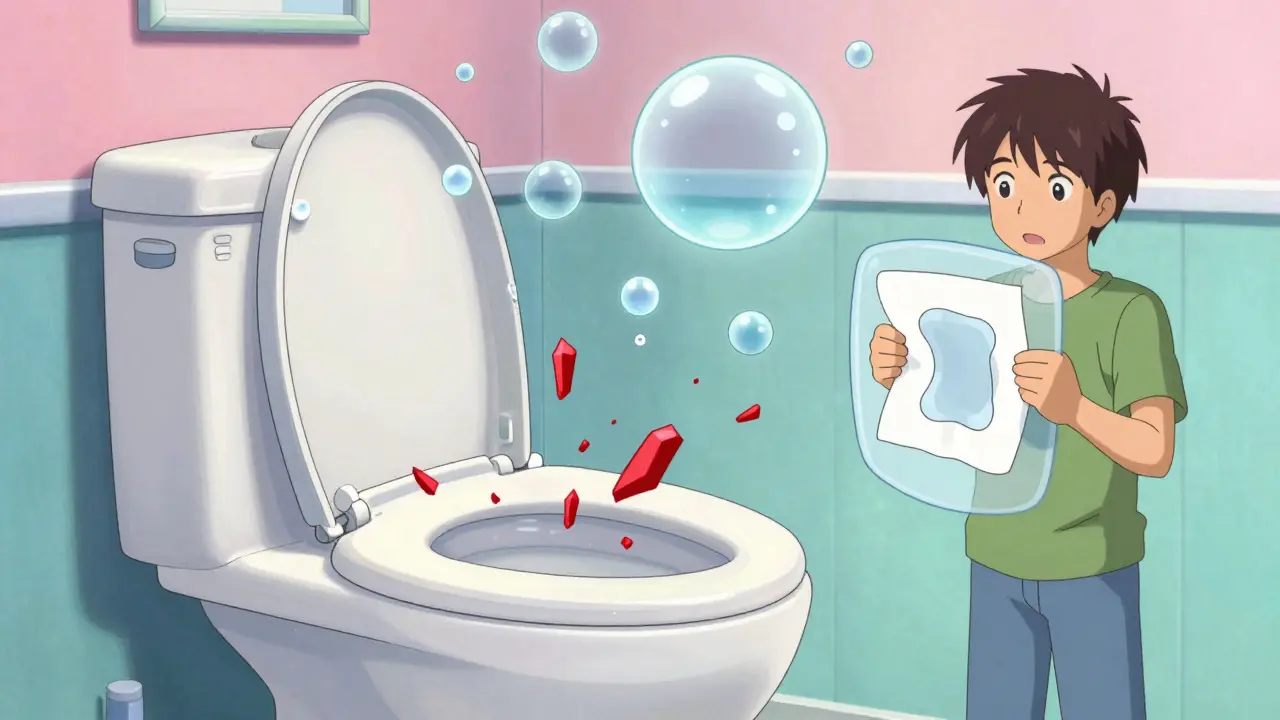
- Toilet Use: Flush the toilet twice with the lid down after every use during the first 48 hours. This prevents aerosolized particles from settling on surfaces.
- Bathroom Hygiene: Clean the toilet seat and rim with disposable wipes after each use. Do not share towels or washcloths during this period.
- Skin Contact: If you sweat heavily, shower immediately to wash off any residue. Dry yourself with a dedicated towel that will be washed separately.
Pregnant women, women who may become pregnant, and breastfeeding individuals must avoid all contact with you and your medications during this window. Studies have found detectable levels of chemotherapy agents in breast milk up to 72 hours post-treatment, posing serious teratogenic risks.
Handling Oral Chemotherapy: Do Not Crush or Chew
Oral chemotherapy accounts for about 25-35% of outpatient treatments. These pills look like regular vitamins, but they are potent cytotoxic drugs. The biggest mistake patients make is trying to split or crush them because they are hard to swallow. Never do this. Crushing a tablet releases microscopic dust that can be inhaled or settle on surfaces, creating a significant inhalation hazard.
If you cannot swallow a pill whole, talk to your doctor immediately. They may prescribe a liquid formulation or a different drug that comes in smaller sizes. Here is how to handle oral chemo safely:
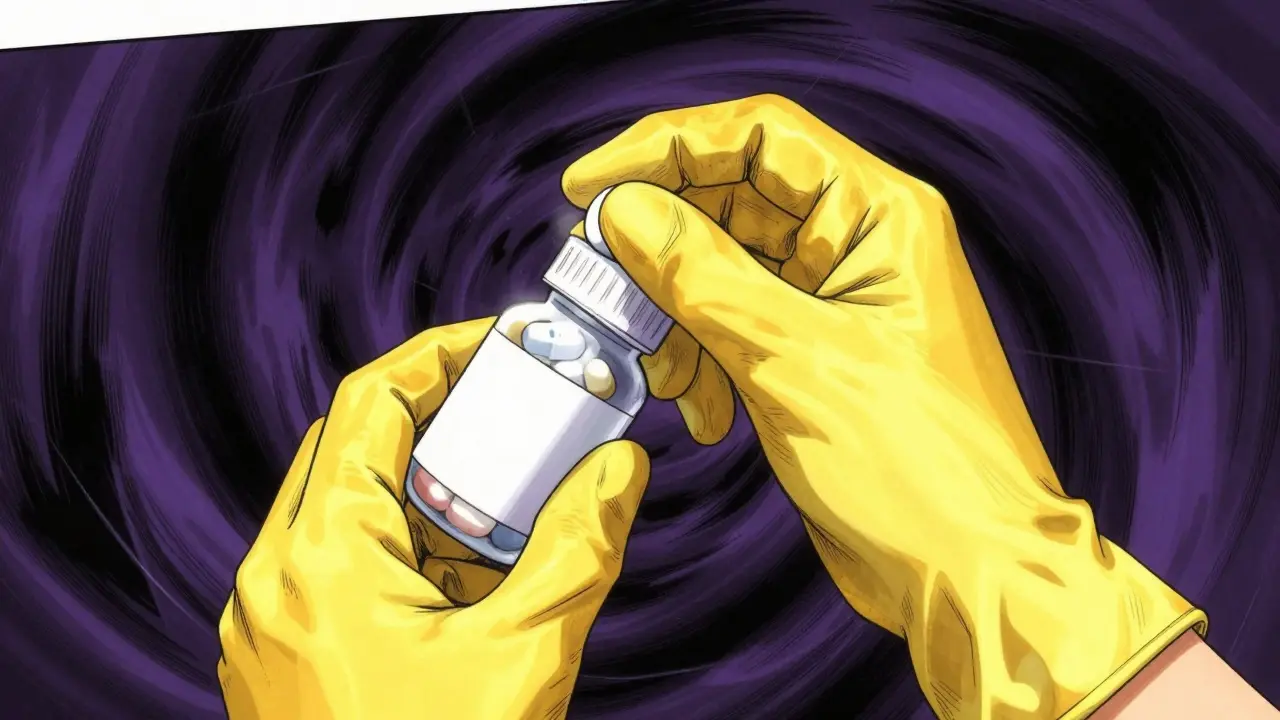
- Use a Dedicated Cup: Pour the pill into a plastic cup rather than holding it directly in your hand. This minimizes skin contact.
- Wear Gloves: Put on nitrile gloves before handling the medication bottle or the pill itself.
- Avoid Grapefruit: Grapefruit products interfere with how your liver metabolizes many chemo drugs. Check with your oncologist, but generally, you should avoid grapefruit juice entirely while on treatment.
- Storage: Keep the medication in its original container, out of reach of children and pets. Most oral chemo drugs require room temperature storage (15°C-30°F), but always check the label. Some need refrigeration (2°C-8°C).
IV Infusions and Pump Safety
If you receive IV chemotherapy at home via a pump, the safety protocols shift slightly but remain rigorous. The medication is contained within bags and tubing, reducing direct handling, but spills and leaks are still a risk.
Your nurse will typically set up a "chemo zone"-usually a bathroom or a well-ventilated area where the pump sits. Cover the surface under the pump with plastic-backed absorbent pads. If a leak occurs, these pads contain the spill.
You must never adjust the pump settings yourself unless specifically trained and instructed by your healthcare team. Tampering with the flow rate can lead to overdose or ineffective treatment. Always store unused medication bags in a locked cabinet away from children and pets. When changing dressings at the injection site, wear two pairs of chemotherapy-tested gloves with a minimum thickness of 5 mil (0.127 mm) as recommended by CDC guidelines.
Cleaning and Disposal: Protecting Your Home Environment
Hazardous waste disposal is confusing for many families. A 2021 Mayo Clinic survey found that 37.5% of patients were initially unsure whether to throw gloves in regular trash or medical waste containers. For home use, you do not need special medical waste bins for routine items like gloves or tissues. Regular household trash is acceptable, provided the items are sealed in plastic bags.
However, laundry requires extra steps. Wash soiled linens, clothes, and towels separately from other household laundry. Run two cycles: one with hot water (140°F/60°C) and regular detergent, followed by a second rinse cycle. This ensures that any residual drug particles are removed. Do not shake soiled clothes before washing, as this can release airborne particles.
Keep a chemo spill kit handy. This should include absorbent pads, forceps, and heavy-duty disposal bags. If a spill occurs, cover it immediately with an absorbent pad, let it soak for 10 minutes, then carefully pick up the pad using forceps and place it in a sealed bag. Wash the area with soap and water afterward.
| Action | Timeframe | Key Detail |
|---|---|---|
| Wear Gloves | During handling & 48-hour window | Use nitrile, not latex. Double-glove for spills. |
| Flush Toilet | First 48-72 hours | Twice with lid down to prevent aerosols. |
| Wash Linens | As needed | Hot water (140°F), separate load, two cycles. |
| Store Meds | Ongoing | Locked cabinet, specific temp range per drug. |
| Hand Washing | Before & after handling | At least 20 seconds with soap and water. |
Technology and Support Resources
Technology is making home chemo safer. The FDA approved the first smart pill dispenser with chemotherapy safety features, the MedMinder Pro Chemo, in August 2022. It provides voice prompts for safety protocols and automatically logs administration times, helping you track the critical 48-hour window accurately. Currently, about 12,000 patients nationwide use this device.
If you feel overwhelmed, you are not alone. The Oncology Nursing Society operates a 24/7 Chemotherapy Safety Hotline (1-866-877-7851). In 2022, they handled over 12,000 calls with an average response time of less than a minute. Additionally, the CDC offers a free printable "Home Chemo Safety Checklist" that has been downloaded tens of thousands of times. Keep a copy visible in your kitchen or bathroom as a daily reminder.
Remember, safety is a shared responsibility. Educate your household members, especially children and pets, about the "do not touch" zones. By following these guidelines, you protect your loved ones and allow yourself to focus on healing.
How long does chemotherapy stay in my body fluids?
Chemotherapy agents typically remain in bodily fluids such as urine, stool, vomit, and sweat for approximately 48 hours after the last dose. For some specific drugs like cyclophosphamide, this window can extend to 72 hours. During this time, strict hygiene precautions are necessary to prevent exposure to others.
Can I crush oral chemotherapy pills if they are too big to swallow?
No, you should never crush, cut, or chew oral chemotherapy tablets. Doing so can aerosolize the medication, releasing hazardous dust that can be inhaled or contaminate surfaces. If swallowing is difficult, consult your oncologist for alternative formulations or smaller dosage options.
What type of gloves should I wear when handling chemo meds?
You should wear nitrile gloves, not latex. Latex gloves offer inferior chemical protection against chemotherapy agents. For handling contaminated materials or cleaning spills, the CDC recommends using two pairs of chemotherapy-tested gloves with a minimum thickness of 5 mil (0.127 mm).
Is it safe for pregnant women to be around someone taking chemo at home?
Pregnant women, women who may become pregnant, and breastfeeding individuals must avoid all contact with chemotherapy medications and contaminated materials. There are documented teratogenic effects, meaning the drugs can harm fetal development. They should maintain distance and avoid assisting with hygiene tasks during the 48-72 hour exposure window.
How should I wash laundry soiled with chemotherapy drugs?
Wash soiled linens and clothing separately from other household laundry. Use hot water (140°F/60°C) and regular detergent. Run two complete wash cycles to ensure all residual drug particles are removed. Do not shake the soiled items before placing them in the washer to avoid releasing airborne particles.
Do I need special medical waste bins for disposing of chemo gloves?
For routine home use, you do not need special medical waste containers. Gloves, tissues, and wipes can be disposed of in regular household trash, provided they are sealed in plastic bags. However, keep a chemo spill kit with absorbent pads and disposal bags for accidental leaks or spills.


