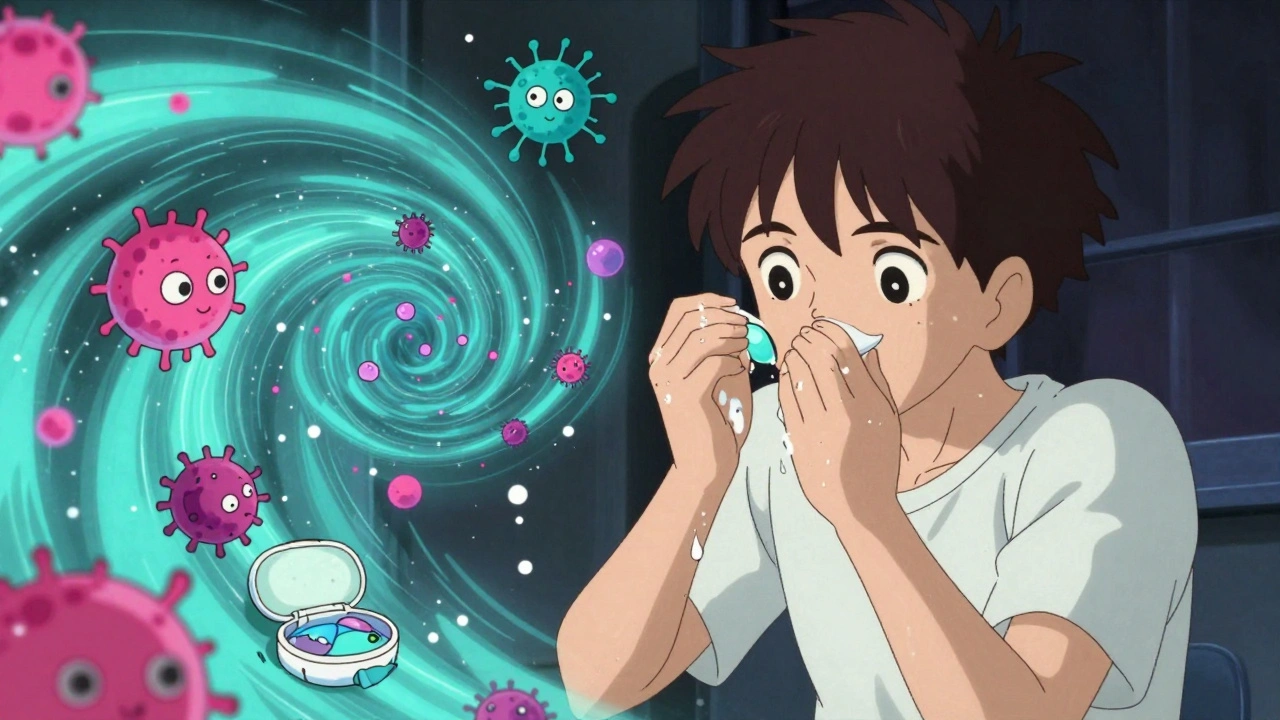

Every year, about 1 in every 1,000 contact lens wearers ends up with a serious eye infection. Most of these cases aren’t accidents-they’re preventable. The problem isn’t the lenses themselves. It’s how they’re handled. Poor hygiene, wrong solutions, and ignoring wear time rules turn a simple vision correction tool into a risk to your sight. And it’s happening more than you think.
Hand Hygiene: The First Line of Defense
Your hands touch everything: phones, doorknobs, money, your face. And if you’re handling contact lenses without washing them first, you’re basically transferring germs straight to your eyes. The CDC and the American Optometric Association agree: handwashing is the single most important step in preventing infection. Don’t just rinse. Don’t use hand sanitizer. Soap and water, scrubbed for 20 to 30 seconds, is the only safe method. You need to clean under your nails, between your fingers, and around your thumbs. Then dry with a clean, lint-free towel. Paper towels work best-cloth towels can harbor bacteria over time. Why not alcohol wipes? Because they leave residue. That residue sticks to your lenses and can burn your cornea when you put them in. I’ve seen patients come in with red, painful eyes after using wipes. They thought they were being clean. They were just making things worse. And here’s a trick most people miss: open your lens case before you wash your hands. That way, when you’re done washing, your fingers are clean, and you don’t accidentally touch the case lid with dirty fingers. It sounds small, but it cuts down on contamination.Choosing the Right Solution
Not all solutions are created equal. What works for one lens type might damage another. Saline solution? That’s just salt water. It doesn’t disinfect. Rewetting drops? They help with dryness, not cleanliness. Using either to clean your lenses is like using tap water to wash your hands before surgery. Always use the solution your eye care professional recommends. If you’re on monthly lenses, you probably need a multipurpose solution. If you’re using hydrogen peroxide systems (like Clear Care), you must follow the timing exactly. Wait 4 to 6 hours after disinfection before inserting lenses. Skip that step, and you risk chemical burns that feel like acid in your eye. And never, ever top off solution. That means adding fresh solution to leftover old solution in your case. It sounds efficient, but it cuts disinfection power by 30 to 50%. The CDC says this is one of the top reasons people get infections. Always empty the case, rinse it with fresh solution, then refill with new solution every time.Lens Case Care: The Hidden Danger
Your lens case is a germ farm if you don’t treat it right. Studies show that over 60% of cases harbor bacteria-even if they look clean. That’s because people rinse them with tap water. Tap water isn’t sterile. It contains microbes, including Acanthamoeba, a parasite that can cause a rare but devastating infection called Acanthamoeba keratitis. This infection is brutal. It’s hard to treat, often requires months of medication, and can lead to permanent vision loss. Treatment costs average $7,500 per case. And it’s almost always linked to water exposure. So how do you keep your case clean? After each use, empty it. Rinse it with fresh solution-not water. Let it air dry upside down with the cap off. This prevents moisture buildup, which bacteria love. And replace the case every three months. No exceptions. Some people do it every month, especially if they’ve had an infection before. That’s not overkill-it’s smart.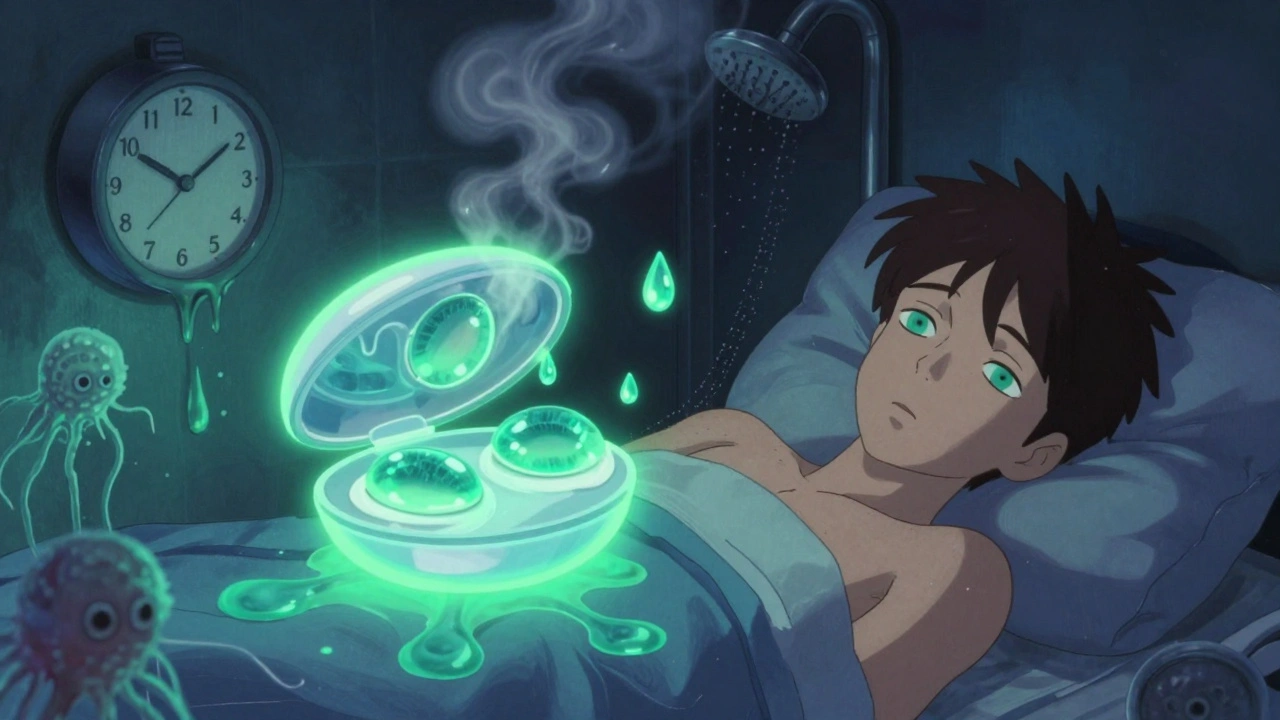
Wear Time: When to Take Them Out
The biggest mistake? Sleeping in lenses that aren’t meant for it. About 40 to 50% of wearers do this. Even if you’re tired, even if you’re watching TV, even if you’re just “closing your eyes for a minute”-take them out. Only 10 to 15% of contact lenses are approved for overnight wear. And even those come with risks. Your cornea needs oxygen. When you sleep, your eyelids block airflow. Lenses block even more. That’s a recipe for hypoxia, swelling, and infection. Also, never wear lenses in the shower, pool, or hot tub. Water carries bacteria and parasites. The FDA says swimming with contacts increases infection risk by 10 to 15 times. If you get water in your eyes, remove the lenses immediately. Clean and disinfect them thoroughly-or toss them if they’re daily disposables. Follow your replacement schedule. Daily disposables? Throw them out every night. Biweekly? Replace every 14 days, no matter how “good” they feel. Monthly? Same rule. Don’t stretch them. Your eyes don’t care how much you paid for them.Who’s at Highest Risk?
Teenagers and young adults-ages 18 to 24-are the most likely to ignore safety rules. They’re busy, tired, or think they’re invincible. The FDA reports that 85% of contact lens complications happen in this group. But it’s not just about age. People who reuse solutions, sleep in lenses, or rinse cases with tap water are at high risk regardless of how old they are. And if you’ve had one eye infection before, you’re more likely to get another. The good news? Compliance improves when people get clear, simple instructions. A Reddit user named u/EyeHealthAdvocate went two years without an infection after switching to monthly case replacements and never topping off solution. Another user, u/ContactLensNewbie, learned the hard way after sleeping in dailies once and waking up with a painful red eye. “Never doing that again,” they wrote.
Daily Disposables: The Easiest Safety Hack
If you’ve been struggling to keep up with cleaning and storage, daily disposables might be your best option. They’re not cheaper per lens, but they eliminate the case, the solution, the rubbing, the rinsing, and the risk of contamination. In the U.S., 65% of contact lens wearers now use daily disposables-up from 45% in 2018. That jump didn’t happen by accident. People realized: if you throw them out every day, you can’t mess up the cleaning. They’re ideal for travelers, swimmers, people with allergies, and anyone who hates the hassle. Just pop them in in the morning, toss them at night. No solutions. No cases. No questions.What’s Next in Lens Safety?
Researchers are testing new lens materials with built-in antimicrobial properties. Early results show up to 70% less bacterial adhesion compared to traditional lenses. That could be a game-changer. But until those hit the market, the best protection is still the same: clean hands, proper solution, fresh case, and never sleeping in lenses unless your doctor says it’s okay. The CDC projects infection rates won’t drop before 2025 unless compliance improves. Right now, only 53 to 77% of users wash their hands properly. That’s not enough. Your eyes aren’t a gamble. Treat them like the delicate, vital organs they are.Can I use tap water to clean my contact lenses or case?
No. Tap water contains bacteria and parasites like Acanthamoeba, which can cause a rare but severe eye infection called Acanthamoeba keratitis. This infection is hard to treat and can lead to permanent vision loss. Always rinse your lenses and case with sterile contact lens solution only.
Is it safe to sleep in my contact lenses?
Only if your eye care professional prescribed extended-wear lenses-and even then, it carries risk. Most lenses are designed for daily wear only. Sleeping in them reduces oxygen flow to your cornea, increasing the chance of ulcers, infections, and swelling. If you’re not sure, assume you should take them out every night.
Can I reuse contact lens solution by topping it off?
No. Topping off-adding new solution to old solution-reduces disinfection effectiveness by 30 to 50%. Always empty the case, rinse it with fresh solution, and refill completely each time. Never reuse old solution.
How often should I replace my contact lens case?
Replace your lens case at least every three months. Many eye care professionals recommend replacing it every month, especially if you’ve had an eye infection before. Always rinse it with solution (not water) after each use and let it air dry upside down with the cap off.
Are daily disposable lenses safer than monthly ones?
Yes, daily disposables are the safest option because they eliminate the need for cleaning, storage, and solution use. Since you throw them out every day, there’s no buildup of bacteria or protein deposits. They’re ideal for reducing infection risk, especially if you struggle with hygiene routines.
What should I do if water gets in my eyes while wearing contacts?
Remove your lenses immediately. If they’re daily disposables, throw them away. If they’re reusable, clean and disinfect them thoroughly with fresh solution before reinserting. If you experience redness, pain, or blurred vision afterward, see your eye care professional right away.
Can I use alcohol wipes to clean my hands before handling contacts?
No. Alcohol wipes leave residue that can damage your lenses and irritate your eyes. Always wash your hands with soap and water for 20-30 seconds, then dry with a lint-free towel. This is the only safe method recommended by the CDC and eye care professionals.


