
Side Effect Type Calculator
Side Effect Type Assessment Tool
This tool helps determine whether your symptoms are likely dose-related (Type A) or non-dose-related (Type B) based on clinical characteristics. For serious reactions, always consult your healthcare provider immediately.
When you take a medication, you expect it to help - not hurt. But side effects happen. Some are predictable, like feeling dizzy after a blood pressure pill. Others come out of nowhere - a rash, a fever, or worse - even when you took the exact dose your doctor ordered. The difference between these two kinds of reactions isn’t just academic. It changes how doctors treat you, what tests they order, and whether you can ever take that drug again.
What Are Dose-Related Side Effects?
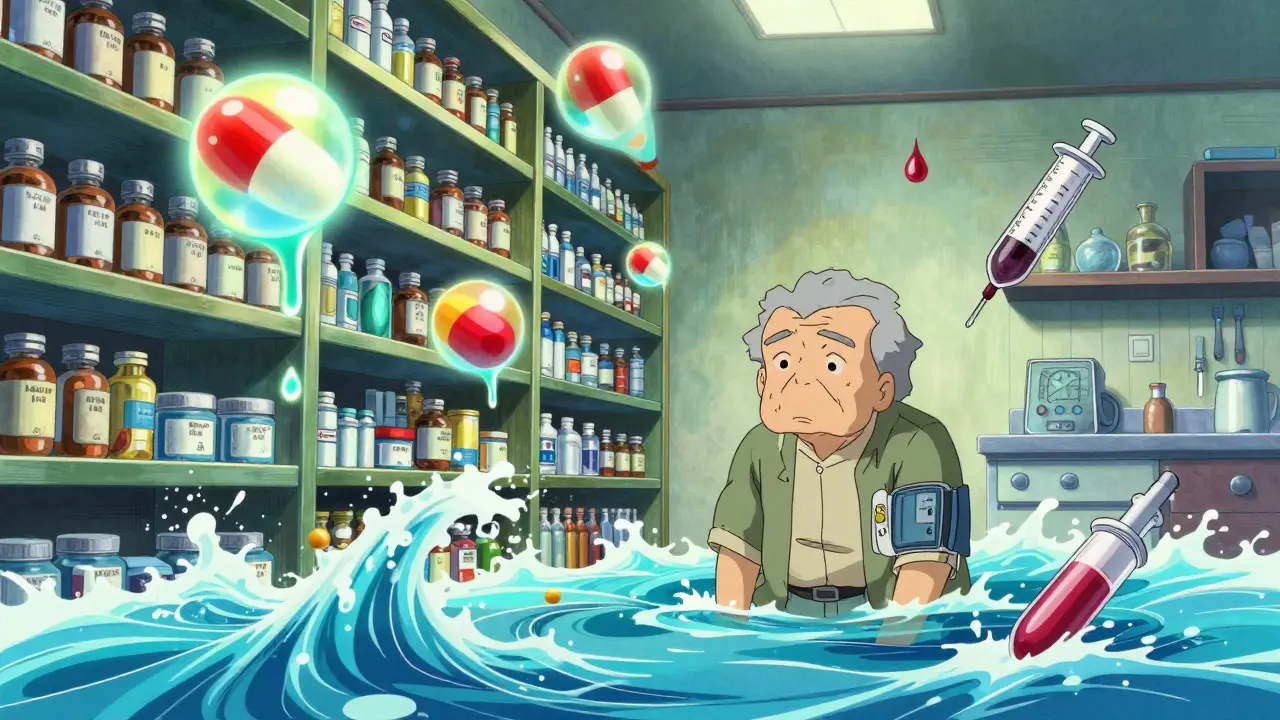
Dose-related side effects - also called Type A reactions - are the most common. They make sense. They’re just an extension of how the drug is supposed to work, turned up too high. Think of it like turning a faucet too far: you get more water than you need, and it floods the kitchen.
These reactions happen because the drug’s effect grows stronger as the dose increases. That’s basic pharmacology. If a drug lowers blood pressure, too much of it can drop it too far. If it lowers blood sugar, too much can cause dangerous hypoglycemia. These aren’t surprises. They’re expected. And they’re predictable.
Common examples include:
- Low blood pressure from too much lisinopril or metoprolol
- Low blood sugar from insulin or sulfonylureas
- Bleeding from warfarin or rivaroxaban when INR goes above 4.0
- Serotonin syndrome from too many antidepressants or migraine meds
- Confusion or dizziness from benzodiazepines like diazepam in older adults
These reactions account for 70-80% of all adverse drug reactions. And they’re the reason why so many older adults end up in the emergency room. According to the New England Journal of Medicine, drugs like anticoagulants, insulin, and oral diabetes meds cause nearly two-thirds of all medication-related ER visits in people over 65.
What makes these reactions especially dangerous is when the drug has a narrow therapeutic index. That means the difference between the right dose and the toxic dose is tiny. Digoxin, for example, works well between 0.5 and 0.9 ng/mL. Go over 2.0 ng/mL, and you risk fatal heart rhythms. Lithium is the same - 0.6-1.0 mmol/L is safe. Over 1.2 mmol/L, and you’re looking at tremors, confusion, and kidney damage.
Doctors manage these by monitoring. Blood tests for digoxin, lithium, or warfarin aren’t just routine - they’re lifesaving. Dose adjustments are made based on results, kidney function, or other drugs you’re taking. If you start clarithromycin while on simvastatin, your statin levels can spike five to ten times higher. That’s a classic Type A interaction - and it can cause muscle breakdown.
What Are Non-Dose-Related Side Effects?
Now, imagine taking exactly the right dose - no more, no less - and suddenly breaking out in a full-body rash, your skin peeling, or your liver shutting down. No warning. No pattern. That’s a non-dose-related reaction - Type B.
These are rare. Only 15-20% of all adverse reactions. But they’re responsible for 70-80% of serious, life-threatening cases. And they’re terrifying because they make no sense. You didn’t take too much. You followed instructions. So why did this happen?
The answer lies in your body’s unique biology. Type B reactions are usually immune-driven or idiosyncratic. That means your immune system misfires. It sees the drug - or a piece of it - as an invader and attacks. This can happen after one dose, or after months of use. It doesn’t care about the amount. Once your system is sensitized, even a tiny bit can trigger a reaction.
Classic examples:
- Anaphylaxis from penicillin - happens in 1-5 out of every 10,000 courses
- Stevens-Johnson syndrome from lamotrigine or sulfonamides - about 1-6 cases per million people per year
- Drug-induced liver injury from amoxicillin-clavulanate - 10-15 cases per 10,000 patient-years
- Abacavir hypersensitivity in HIV patients - linked to the HLA-B*57:01 gene
Here’s the kicker: you can’t predict these reactions by dose. But you can sometimes predict them by genetics. For example, if you’re of Asian descent and about to take carbamazepine, your doctor might test you for HLA-B*15:02. If you have it, your risk of developing Stevens-Johnson syndrome jumps from near zero to over 10%. That test costs around $215 - a small price to avoid a life-threatening reaction.
Even more surprising: some Type B reactions do have dose thresholds - but they vary wildly from person to person. One person might react to 50 mg of a drug. Another might take 500 mg and feel fine. That’s why they seem random. It’s not that dose doesn’t matter - it’s that the threshold is hidden in your genes, your immune history, or your metabolism.

Why the Difference Matters in Real Life
Knowing whether a side effect is Type A or Type B changes everything.
If it’s Type A - dose-related - your doctor doesn’t stop the drug. They adjust it. Maybe reduce the dose. Maybe switch to a different one. Maybe add a blood test to monitor levels. You can often keep using the medication safely.
If it’s Type B - non-dose-related - the rule is simple: never take it again. Even a tiny amount could trigger a worse reaction. That’s why people with penicillin allergies carry epinephrine auto-injectors. That’s why patients who had Stevens-Johnson syndrome are told to avoid all related drugs for life.
Dr. Jeffrey K. Aronson, a leading pharmacologist, puts it plainly: “Type A reactions need dose adjustment. Type B reactions need permanent avoidance.”
And the stakes are high. Type B reactions cause most drug withdrawals. The European Medicines Agency says they account for 70% of all drugs pulled from the market for safety reasons. That’s why the FDA now requires genetic testing labels for 28 drugs - including abacavir, carbamazepine, and clopidogrel. These aren’t just warnings. They’re mandates.
On the other hand, Type A reactions are the biggest financial burden. They cause 90-95% of medication-related costs in the U.S. - around $130 billion a year. That’s because they’re common. A patient on warfarin who bleeds because they started an antibiotic? That’s a hospital stay. A diabetic who goes into a coma from too much insulin? That’s an ER visit. These add up fast.
How Doctors Prevent and Manage These Reactions
Preventing Type A reactions is about control. Doctors use:
- Therapeutic drug monitoring - checking blood levels of drugs like vancomycin, phenytoin, or lithium
- Dose adjustments for kidney or liver problems - reducing enoxaparin by 50% if your kidneys are weak
- Drug interaction checks - avoiding combinations like clarithromycin with statins
- Regular monitoring - checking INR weekly for warfarin users, blood sugar for diabetics
Preventing Type B reactions is about screening and avoidance:
- Genetic testing - HLA-B*57:01 before abacavir, HLA-B*15:02 before carbamazepine in high-risk groups
- Skin testing - for penicillin allergies (50-70% accurate)
- Graded challenges - slowly reintroducing a drug under supervision if the allergy history is unclear
- Black box warnings - the strongest FDA warning, used for drugs with serious Type B risks
At Johns Hopkins, hospitals that implemented Type A prevention protocols saw a 35% drop in major bleeding events among warfarin users. That’s not just a statistic - it’s lives saved.

The Future: Personalized Dosing and AI
Science is catching up. The pharmacogenomics market is growing fast - projected to hit nearly $18 billion by 2030. More drugs now come with genetic guidance. The FDA is even drafting rules for software that helps doctors pick the right dose based on your genes, age, weight, and other meds.
Machine learning is getting better at spotting Type A reactions - 82% accuracy in predicting them from electronic records. But Type B? Only 63%. That’s because they’re still unpredictable. Your immune system doesn’t follow a formula.
Still, progress is real. What used to be guesswork is becoming science. We’re moving from “one-size-fits-all” dosing to “this-dose-is-right-for-you” care.
What You Should Do
If you’re on medication:
- Know your drugs. Ask your pharmacist: “Is this one known for dose-related side effects?”
- Report any new symptom - even if you think it’s minor. A rash, fever, or unusual fatigue could be a red flag.
- Ask if you need genetic testing before starting certain drugs - especially if you’re of Asian, African, or Mediterranean descent.
- Keep a list of all your meds and any past reactions. Share it at every visit.
- If you’ve had a serious reaction, wear a medical alert bracelet. It could save your life.
Side effects aren’t always your fault. Sometimes, they’re just biology. But understanding the difference between dose-related and non-dose-related reactions helps you speak up, ask the right questions, and stay safer.
Are all side effects caused by taking too much of a drug?
No. While many side effects happen because the dose is too high - called dose-related or Type A reactions - others occur at normal doses and are unrelated to how much you took. These are called non-dose-related or Type B reactions. They’re often caused by your immune system reacting to the drug, not by the drug’s main effect. For example, a rash from penicillin isn’t about the dose - it’s about your body’s sensitivity.
Can you have a Type B reaction on your first dose of a drug?
Yes, but only if you’ve been exposed to the drug or something similar before. For example, if you had a reaction to a different penicillin-based antibiotic in the past, your immune system may already be sensitized. Even if you’ve never taken the current drug, your body may react as if you have. In rare cases, cross-reactivity with environmental triggers (like certain infections) can also trigger a first-dose Type B reaction.
Why do some people react badly to a drug while others don’t?
It comes down to genetics, immune history, and metabolism. Some people carry gene variants that make them more likely to have immune reactions - like HLA-B*57:01 and abacavir. Others have liver enzymes that process drugs slowly, increasing the chance of buildup and Type A reactions. Age, kidney function, and other medications also play a role. One person’s normal dose is another person’s overdose - and that’s why personalized medicine is growing so fast.
Is a Type B reaction always permanent?
Once you’ve had a true Type B reaction - like anaphylaxis, Stevens-Johnson syndrome, or drug-induced liver failure - you should avoid that drug and similar ones for life. Your immune system remembers. Even a tiny amount can trigger a worse reaction next time. Some milder reactions, like a mild rash, might not require lifelong avoidance, but only a doctor can decide that after reviewing your history.
Can genetic testing prevent all non-dose-related side effects?
No, but it can prevent many of the most dangerous ones. Currently, genetic testing is recommended for only a handful of drugs - like abacavir, carbamazepine, and clopidogrel - where the link to specific genes is strong. For most Type B reactions, we still don’t know the genetic triggers. Research is ongoing, and as we learn more, testing will expand. But right now, it’s not a universal shield - just a powerful tool for specific high-risk cases.
What should I do if I think I’m having a side effect?
Don’t stop the drug unless you’re having a life-threatening reaction like trouble breathing, swelling, or loss of consciousness - then call 911. For anything else, contact your doctor or pharmacist. Describe the symptom, when it started, and whether you’ve taken anything new. If it’s a rash, fever, or unusual fatigue, mention it even if it seems minor. Early reporting helps avoid serious outcomes. Keep a record of your symptoms and share it at every visit.


