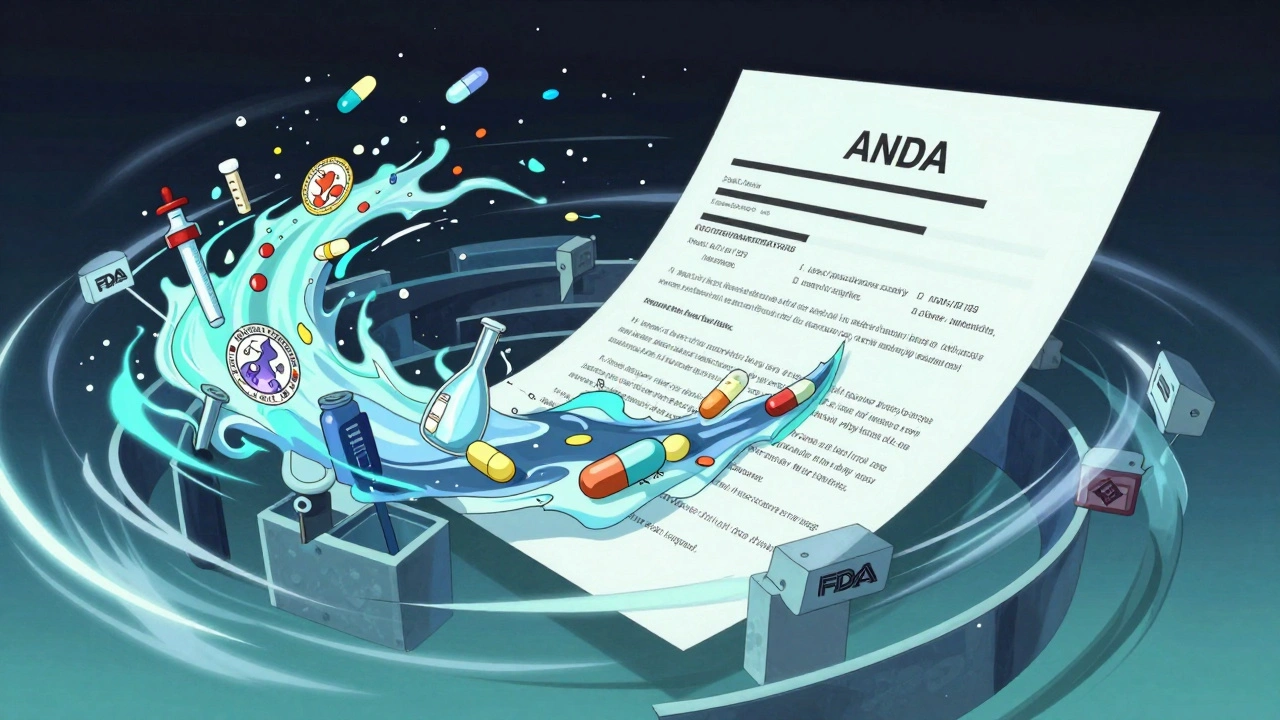

When you pick up a bottle of generic lisinopril at your local pharmacy, you’re holding a product that went through one of the most complex, tightly regulated journeys in modern medicine. It didn’t just appear on the shelf. It started as a scientific application, survived years of regulatory review, passed strict manufacturing checks, and fought its way through payer negotiations-all before it reached your hands. This is the real story of how generic drugs make it from the FDA’s desk to your medicine cabinet.
The ANDA: The Gateway to Generic Market Entry
The entire process begins with the Abbreviated New Drug Application, or ANDA. This isn’t a shortcut-it’s a carefully designed pathway created by Congress in 1984 to let generic manufacturers bring affordable versions of brand-name drugs to market without repeating expensive clinical trials. Instead of proving a drug works from scratch, generic companies must prove their version is bioequivalent to the original. That means it delivers the same amount of active ingredient into your bloodstream at the same rate. No more, no less.
The ANDA isn’t a simple form. It’s a 500+ page dossier packed with chemistry, manufacturing, and controls (CMC) data. Every batch of active ingredient, every capsule coating, every tablet press setting must be documented. The FDA requires exact matches in strength, dosage form, route of administration, and labeling. Even the color of the pill matters if it’s part of the brand’s identity. And everything must be submitted electronically through the FDA’s secure system.
Here’s what’s not in an ANDA: animal toxicity studies, Phase I-III clinical trials, long-term safety data. Those were already proven by the brand-name drug, called the Reference Listed Drug (RLD). That’s why generic development costs average $2-5 million-compared to $2.6 billion for a new drug. This difference is why generics can cost 80-85% less.
Waiting for Approval: The FDA Review Process
Once submitted, the FDA’s Center for Drug Evaluation and Research (CDER) takes over. Under current rules (GDUFA II), the standard review clock is 30 months. But that’s not a guarantee. About 40% of first-time ANDAs get a Complete Response Letter-meaning the FDA found problems and won’t approve it yet. Common reasons? Incomplete bioequivalence data, inconsistent manufacturing controls, or labeling that doesn’t match the RLD exactly.
Some applications get priority. If a drug is in short supply, or if it’s the first generic version of a popular brand, the FDA fast-tracks it. In 2022 alone, the agency approved 112 first generics-drugs no one else had made yet. These often target high-cost medications like insulin or epinephrine auto-injectors. One of the most competitive areas? Patents. If a generic company files a Paragraph IV certification, they’re legally challenging the brand’s patent. That triggers a 30-month legal hold. But if they win, they get 180 days of exclusive market rights. That’s why six companies filed ANDAs for the generic version of Eliquis at once in 2022. Only one gets the exclusivity. The rest still get to sell-but only after the clock runs out.
Approval Isn’t the Finish Line
Many generic manufacturers think getting FDA approval means they’re done. They’re wrong. In fact, a 2022 survey of 45 generic drug companies found that 78% said approval was only the first half of the battle. The real challenge? Getting pharmacies to stock it.
After approval, companies must ramp up production. Going from lab-scale batches to commercial volumes takes 60-120 days. Factories must prove they can consistently produce millions of pills without contamination or variation. Quality control doesn’t stop at approval-it’s continuous. The FDA inspects facilities, often overseas, without warning. One failed inspection can delay a launch by months.
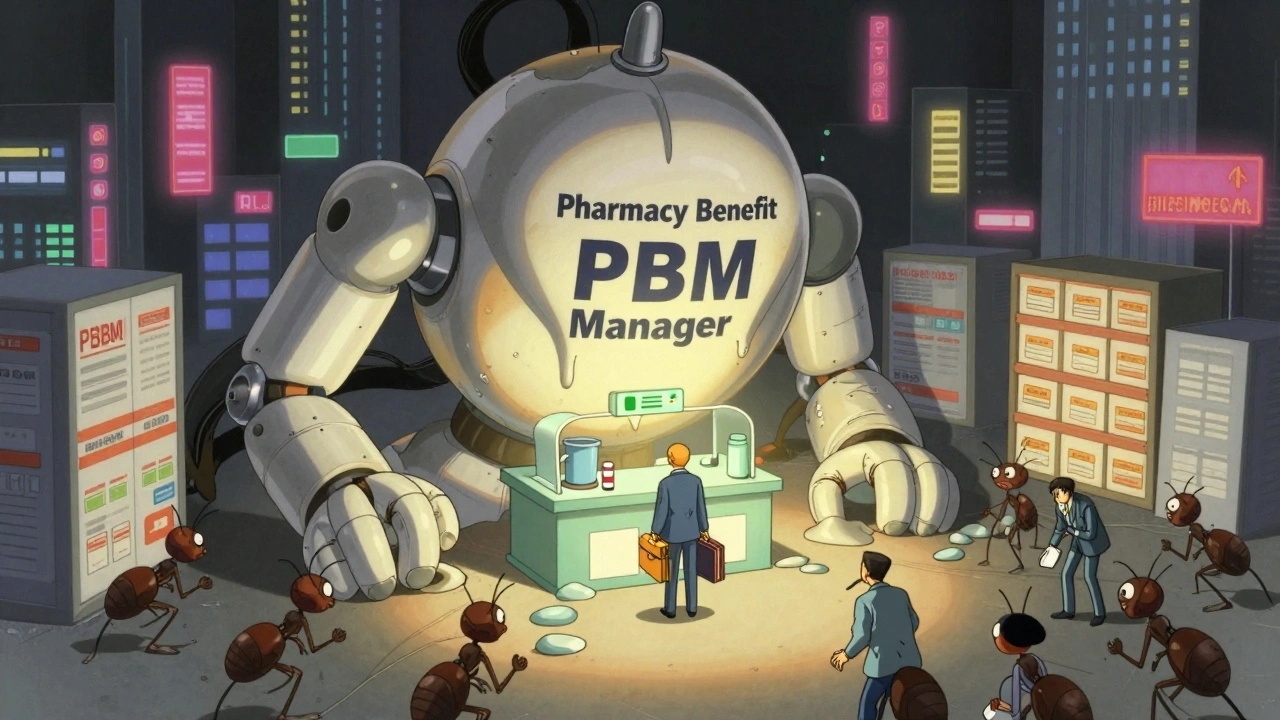
Then comes the payer game. Pharmacy Benefit Managers (PBMs) like Express Scripts, OptumRx, and CVS Caremark control which drugs get covered and at what price. They don’t care about FDA approval-they care about cost and rebates. To get on a preferred tier, generic makers often have to offer discounts of 20-30% deeper than their original price projections. One sourcing manager on Reddit said, “If you’re not on Tier 1, your drug might as well not exist.”
Getting to the Pharmacy Shelf
Once a PBM agrees to include the drug, the manufacturer works with wholesalers-AmerisourceBergen, McKesson, Cardinal Health-to get it into the supply chain. These companies manage inventory for thousands of pharmacies. Adding a new product means updating their digital systems, training staff, and assigning a National Drug Code (NDC). That process takes 15-30 days.
Finally, individual pharmacies get the product. But even then, pharmacists need to update their computer systems. A new drug code must be entered, dosing alerts set, and staff trained to answer patient questions. This last step usually takes 7-14 days.
On average, it takes 112 days from FDA approval to the first retail dispensing. But it varies. Cardiovascular generics like metformin or atorvastatin hit shelves in about 87 days. Complex products-like inhalers, topical creams, or injectables-take longer. One transdermal patch took 145 days to reach stores after approval.
Why This System Works
Over 90% of prescriptions filled in the U.S. are for generic drugs. In 2022, Americans saved $313 billion because of them. The ANDA system is why. It cuts out unnecessary duplication while maintaining safety. The FDA doesn’t lower standards-it just builds on existing proof.
And it’s getting smarter. The FDA’s Drug Competition Action Plan targets anti-competitive behavior. GDUFA III (2023-2027) pushes for real-time review and better communication. Artificial intelligence is starting to help model bioequivalence and predict manufacturing issues. Within five years, these tools could cut ANDA prep time by a quarter.
But the pressure is rising. Generic drug prices have dropped 4.7% per year since 2015. Manufacturers are squeezed. Some are leaving the market. Others are shifting to complex generics-drugs that are harder to copy, like nasal sprays or long-acting injectables-where competition is lower and margins are better.
What’s Next for Generics?
The future of generics isn’t just about price. It’s about access. As more brand-name drugs lose patent protection-like Humira and Enbrel-the pipeline of potential generics is growing. But the system must adapt. More complex drugs mean more review time. More global manufacturing means more inspection demands. And more patients rely on these drugs than ever before.
Right now, the U.S. generic market is worth $124.7 billion. By 2028, it’s expected to hit $150 billion, with 93% of all prescriptions being generic. That’s not just a number-it’s millions of people getting life-saving meds they can afford.
So next time you pick up your generic blood pressure pill, remember: it didn’t just appear. It was built on science, tested under scrutiny, negotiated in boardrooms, and shipped through a global supply chain-all to get to you, at a price you can pay.
What does ANDA stand for, and why is it important for generic drugs?
ANDA stands for Abbreviated New Drug Application. It’s the official pathway generic drug manufacturers use to get FDA approval without repeating expensive clinical trials. Instead, they prove their product is bioequivalent to the original brand-name drug. This process is critical because it allows generics to reach the market faster and at a fraction of the cost-making medications affordable for millions of people.
How long does it take for a generic drug to go from FDA approval to the pharmacy shelf?
On average, it takes about 112 days from FDA approval to the first retail dispensing. But this varies by drug type. Simple oral medications like antibiotics or blood pressure pills can reach shelves in as little as 87 days. Complex products like inhalers, patches, or injectables may take 145 days or more due to manufacturing, distribution, and payer challenges.
Why do some generic drugs take longer to appear in pharmacies even after FDA approval?
Approval doesn’t mean automatic availability. Manufacturers must scale production, negotiate with Pharmacy Benefit Managers (PBMs) for formulary placement, and get the drug into wholesaler systems. PBMs often demand deep discounts-sometimes 20-30% below initial pricing-to include the drug on preferred tiers. If those deals aren’t struck, the drug won’t be stocked, even if it’s FDA-approved.
Are generic drugs as safe and effective as brand-name drugs?
Yes. The FDA requires generics to have the same active ingredient, strength, dosage form, and route of administration as the brand. They must also prove bioequivalence-meaning they deliver the same amount of medicine into your bloodstream at the same rate. Over 90% of prescriptions in the U.S. are for generics, and studies consistently show they work just as well. The only differences are in inactive ingredients like color or filler, which don’t affect how the drug works.
What’s the difference between a first generic and a follow-on generic?
A first generic is the very first version of a brand-name drug to be approved after patent expiration. The first company to file a complete ANDA with a patent challenge gets 180 days of exclusive marketing rights. After that, other companies can launch follow-on generics. First generics often have higher initial prices due to exclusivity, but prices drop quickly once competitors enter the market.
How do Pharmacy Benefit Managers (PBMs) affect generic drug availability?
PBMs control which drugs are covered by insurance plans and at what cost. They negotiate rebates and formulary tiers with manufacturers. A generic drug on Tier 1 (preferred) gets dispensed most often. If a manufacturer doesn’t offer a deep enough discount, the PBM may place it on Tier 2 or 3-making it harder for pharmacies to stock it and for patients to afford it. In many cases, PBMs decide whether a generic succeeds, not just the FDA.
What You Can Do
If you’re on a generic medication, ask your pharmacist: “Is this the same as the brand?” They can confirm it’s FDA-approved and bioequivalent. If your insurance won’t cover a generic, ask if a different manufacturer’s version is available-sometimes switching brands within the same generic class can lower your cost. And if you’re curious about why a drug isn’t available yet, check the FDA’s website for the latest approved generics. Knowledge helps you navigate the system-and saves you money.


