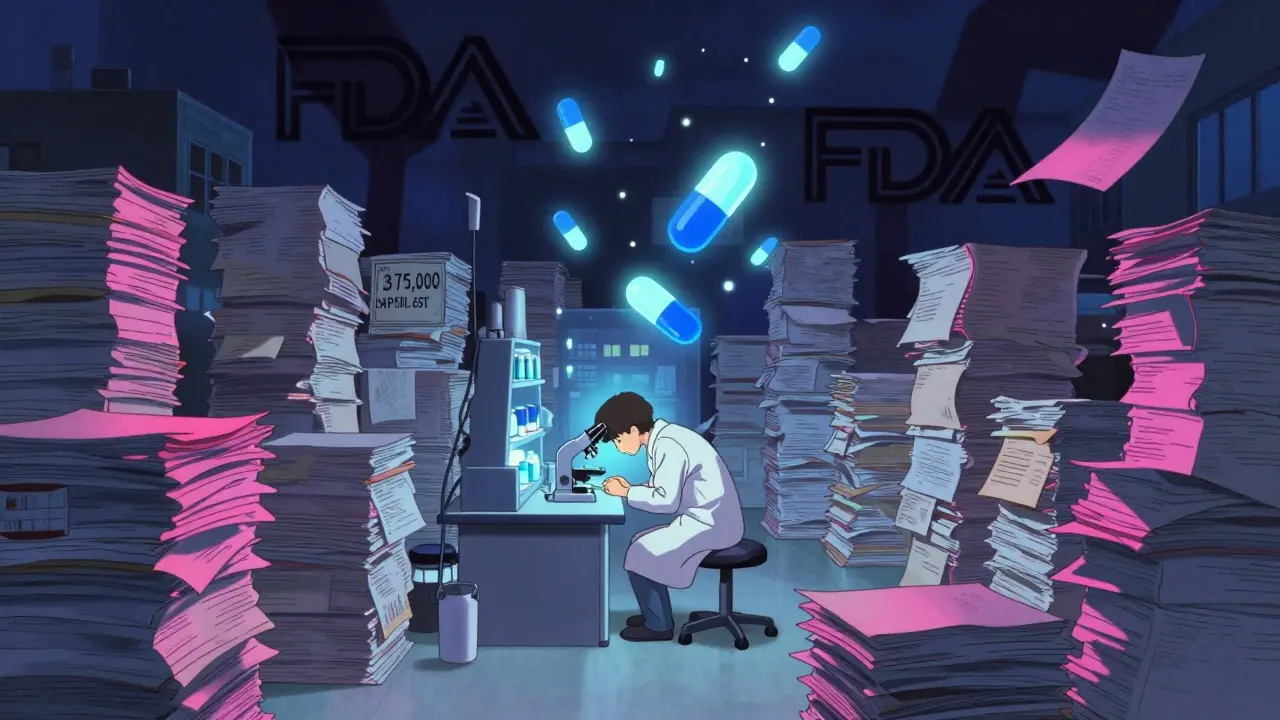

When you pick up a prescription for a generic drug, you probably don’t think about the paperwork, the lab tests, or the years it took to get that pill approved. But behind every cheap generic is a complex, expensive, and often frustrating regulatory journey-one that directly affects how much you pay and how quickly you get your medicine.
The Real Cost of Getting a Generic Drug Approved
The FDA doesn’t approve generic drugs for free. Under the Generic Drug User Fee Amendments (GDUFA), companies must pay fees just to get their application reviewed. For FY 2025, the total fee for a single generic drug application is around $375,000. That includes a $136,485 product fee, a $238,055 facility fee, and other administrative costs. For a small company developing just one generic, that’s a major upfront investment.
Compare that to brand-name drugs. A New Drug Application (NDA) costs over $3.6 million. So yes, generics are cheaper to get approved-but they’re still expensive. And here’s the catch: those fees don’t guarantee approval. In fact, nearly 35% of generic applications get rejected on the first try, forcing companies to resubmit-each time paying more fees and spending more time.
Why Some Generics Take Years Longer to Get Approved
Not all generics are created equal. Simple pills with well-known ingredients? Those usually get approved in 10-14 months. But complex generics-like inhalers, nasal sprays, injectables, or topical creams-are a different story.
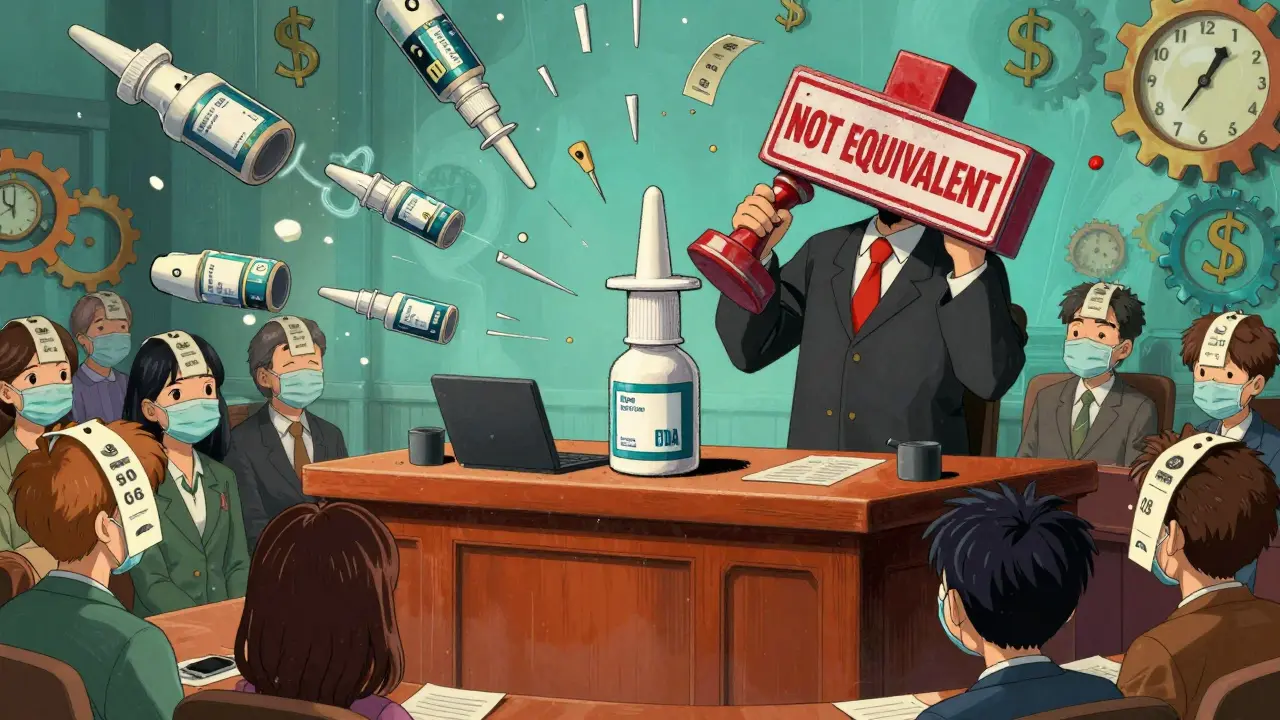
In 2015, the FDA changed its policy. Instead of giving manufacturers detailed feedback on why their formulation didn’t match the brand-name drug, they started saying things like, “Your product isn’t equivalent.” No specifics. No guidance. Just a rejection.
That one change turned what should’ve been a technical adjustment into a guessing game. One mid-sized generic company told RAPS they spent $8.7 million and three reformulation attempts over seven years just to get a nasal spray approved. That’s not innovation-that’s regulatory frustration.
Patients feel it too. Between 2016 and 2020, generic versions of testosterone replacement therapy were delayed by nearly five years. During that time, patients paid up to 300% more for the brand-name version. On Reddit, people are sharing stories of paying $1,200 a month for a drug that could’ve cost $50-if the FDA had just given clear feedback.
How the System Favors Big Companies
Small generic manufacturers are getting squeezed. The paperwork alone has ballooned. In 2013, an ANDA submission averaged 50,000 pages. Today? It’s 150,000 to 200,000 pages. That’s not just more work-it’s more lawyers, more consultants, more time.
Big pharma can afford teams of regulatory experts. Small companies? They often don’t have that luxury. And without clear feedback from the FDA, they’re stuck in a cycle of trial and error. One executive said it best: “We’re not scientists-we’re trying to guess what the FDA wants.”
Meanwhile, the fee structure gives small businesses a break: companies with fewer than 1,000 employees can get waivers. But that doesn’t help if you’re stuck on a reformulation for two years. Waivers don’t pay for your lab costs or your salaries.
What’s Being Done to Fix It
In September 2025, Rep. Neal Dunn and Rep. Kevin Mullin introduced H.R. 1843, the Increasing Transparency in Generic Drug Applications Act. It’s simple: force the FDA to give specific, written feedback on formulation issues. No more vague rejections.
The Congressional Budget Office estimates this could cut approval times for complex generics by 18-24 months. That means 12-15 more complex generics hit the market each year. And that translates to $1.8-$2.3 billion in annual savings.
The FDA hasn’t opposed the bill outright. In fact, Commissioner Robert Califf admitted in 2024 that resource limits have hurt their ability to give detailed feedback. But they’re worried: if they start giving more feedback without more staff, review quality could slip.
There’s a real tension here: speed vs. safety. Patients want faster access. Regulators want to prevent another valsartan recall, which affected 22 million people in 2022. But the current system is punishing patients with delays, not protecting them.
The Bigger Picture: Generics Save Billions-But Not Fast Enough
Generics made up 90.3% of all prescriptions filled in 2024. Yet they cost only 12.2% of total drug spending. That’s $467 billion in savings last year alone. Medicare beneficiaries saved $1,152 per person on average.
But here’s the problem: 83% of brand-name drugs still have no generic competition five years after their patent expires. Why? Because the approval process is too slow, too opaque, and too expensive for many companies to risk.
The FDA approved 1,051 generic drugs in 2024-a record. But 287 applications are stuck in “tentative approval” because of patent lawsuits. Another 143 are delayed because of manufacturing issues. That’s nearly 400 drugs sitting on the sidelines, waiting.
What Can Be Done Now?
If you’re a manufacturer: use Type II meetings. They’re early check-ins with the FDA’s review team. According to the Association for Accessible Medicines, 78% of successful applicants used them-and they cut review time by over three months.
If you’re a patient: ask your pharmacist if your drug has a generic version that’s been approved but not yet on shelves. Many sit in warehouses, waiting for market entry. Sometimes, the delay isn’t about production-it’s about pricing negotiations between manufacturers and insurers.
If you’re a policymaker: support H.R. 1843. It’s not about cutting corners. It’s about cutting through bureaucracy. Clear feedback isn’t a favor-it’s a necessity.
What’s Next?
GDUFA IV, the next five-year funding cycle, starts in 2028. Industry groups are pushing for a 3-5% annual fee increase to hire more reviewers. The FDA says they’ll need $725-750 million a year just to meet their goals.
But money alone won’t fix this. The real fix is transparency. If the FDA starts giving specific feedback again, companies won’t need to waste millions on blind reformulations. Patients won’t wait years for life-saving meds. And the system will finally work the way it was meant to: cheaper drugs, faster access, better outcomes.
How much does it cost to get a generic drug approved by the FDA?
The total cost for a single generic drug application under GDUFA III is around $375,000 in 2025. This includes a $136,485 product fee, a $238,055 facility fee, and other administrative charges. Companies must pay these fees upfront, even if the application is rejected.
Why are complex generics harder and more expensive to approve?
Since 2015, the FDA stopped giving detailed feedback on formulation differences for complex generics like inhalers or nasal sprays. Without knowing exactly what’s wrong, manufacturers spend years and millions trying different versions. This has led to approval delays of 2-3 years for some products, compared to under a year for simple pills.
Do generic drug fees benefit patients?
Yes-indirectly. The fees fund faster FDA reviews, which help more generics reach the market. In 2024, generics saved the U.S. healthcare system $467 billion. Without these fees, approval times would likely be slower, and fewer generics would be available, driving up prices.
What’s H.R. 1843 and why does it matter?
H.R. 1843 is a bipartisan bill that requires the FDA to provide specific, written feedback on why a generic drug application was rejected. This would cut approval times for complex generics by 18-24 months, saving $1.8-$2.3 billion annually. It’s seen as the most promising fix to a broken system.
Why aren’t more generic drugs available after patents expire?
Even after a brand-name drug’s patent expires, 83% still face no generic competition five years later. Delays in FDA approval, patent litigation, and high development costs-especially for complex drugs-are the main reasons. Many companies simply can’t afford the risk.


