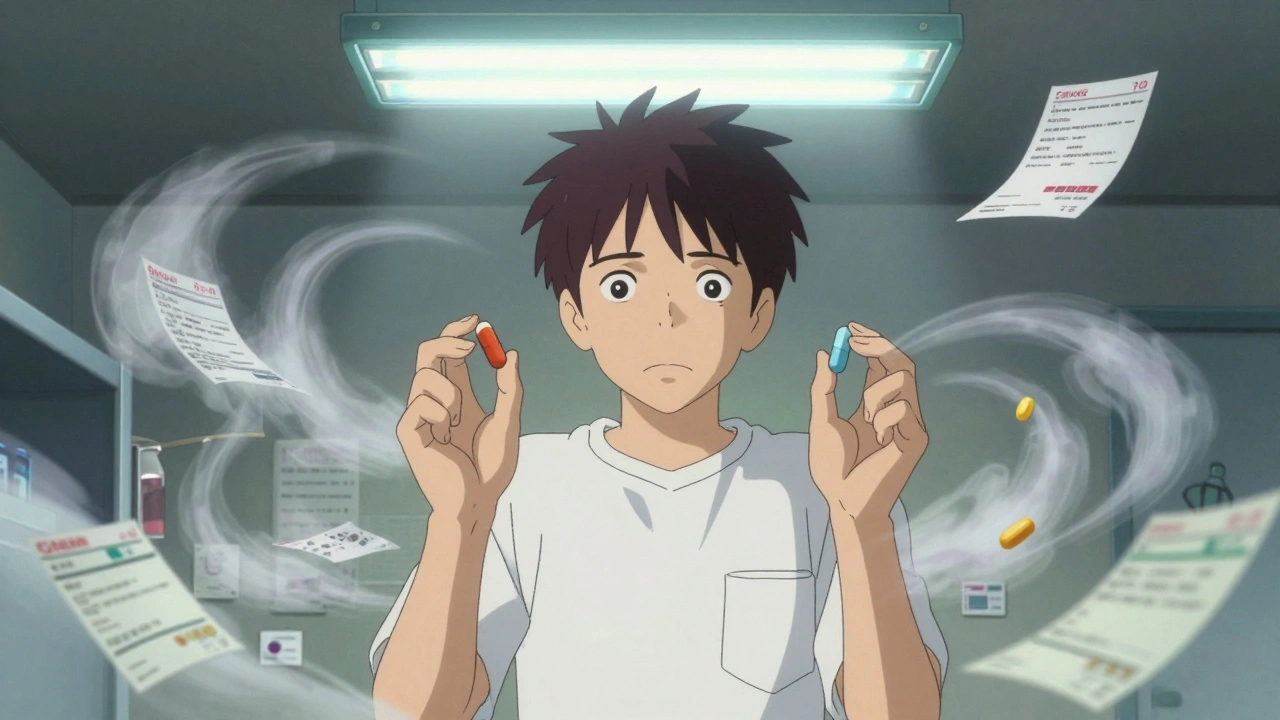

When your prescription switches from a brand-name drug to a generic version, it’s not just a label change. It’s a moment where your health could be affected-sometimes in ways you don’t expect. You might notice the pill looks different. Maybe it’s a different color, shape, or even has strange markings. You might feel off. Or worse, you might not feel anything at all, but your condition starts to flare up. That’s when you realize: communicating with your pharmacy during a generic transition isn’t optional. It’s essential.
Why Generics Are Switched (And Why It Matters to You)
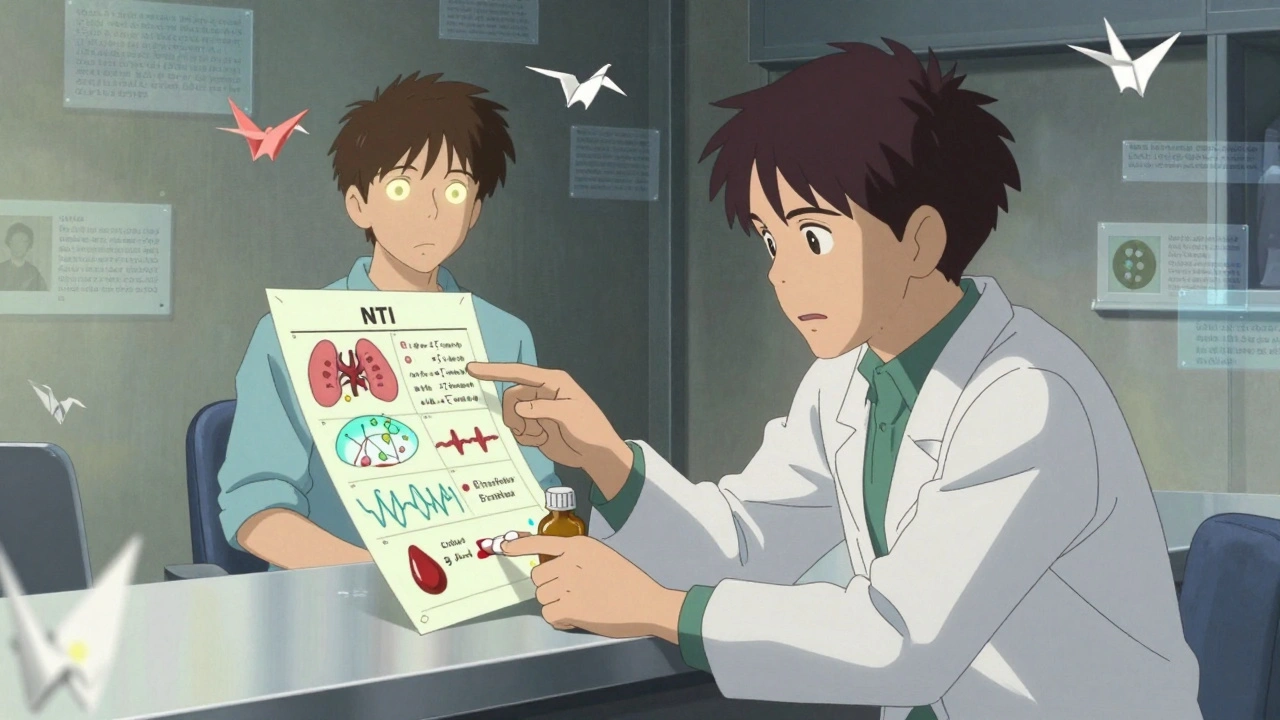
Generic drugs aren’t knockoffs. They’re approved by the FDA as bioequivalent to the brand-name version. That means they deliver the same active ingredient, in the same strength, at the same rate into your bloodstream. By law, they must be within 80% to 125% of the brand’s absorption rate. That’s a tight range. Most of the time, it works perfectly. But here’s the catch: generics can differ in inactive ingredients-fillers, dyes, coatings. For most people, that’s harmless. For others, especially those on narrow therapeutic index (NTI) drugs like levothyroxine, warfarin, or certain epilepsy meds, even tiny changes in how the drug is absorbed can cause real problems. A 2021 JAMA study found that 9.4% of patients switching from brand to generic antiepileptic drugs had therapeutic failure. That’s nearly 1 in 10. That’s not a small risk. It’s a signal to pay attention. And it’s not just about safety. Cost is a huge driver. Generics save patients and insurers billions. In the U.S., generics make up 90% of prescriptions but only 23% of drug spending. That’s why your insurance plan will push you toward them. But if you’re switched without warning, or without a conversation, you’re left guessing whether the new pill is working-or causing harm.What to Do Before the Switch Happens
Don’t wait until you walk into the pharmacy and see a different-looking pill. Start early. If your doctor says your brand-name drug is going off-patent, or your insurer sends a notice that they’re switching you, act immediately.- Call your pharmacy at least 30 days before your current prescription runs out. Ask: "Will my medication be switching to a generic? When? And which one?"
- Request a copy of the generic’s manufacturer name and pill imprint. Write it down. Take a photo. This helps you spot changes later.
- Ask if your insurance requires prior authorization to stay on the brand name. Some plans will only cover the brand if your doctor proves the generic didn’t work.
- Check if the generic manufacturer offers a patient assistance program. Some companies give free samples or coupons during the transition.
What Happens When You Get the Generic
The first time you pick up your new prescription, pause. Don’t just take it home.- Ask the pharmacist: "Is this the same as what I was taking?"
- Compare the pill’s color, shape, size, and markings to your old one. If it’s different, ask why.
- Confirm the dosage and instructions. Sometimes, the generic is dosed differently-even if the active ingredient is the same.
- Ask: "Are there any known issues with this generic version?" Some generics have had recalls or quality concerns.
Red Flags: When to Call Your Doctor
Not all changes are normal. If you notice any of these after switching to a generic, don’t ignore them:- Your symptoms return or worsen (e.g., seizures, high blood pressure, mood swings)
- You develop new side effects-nausea, dizziness, rash-that you didn’t have before
- You feel like the medication isn’t working the same way
- You’re confused about how or when to take it
Insurance, Coverage, and Paperwork
Your insurance plan controls a lot of this. Most Medicare Part D and commercial plans put generics on lower cost tiers. That means you pay less-but you might get switched without notice.- Check your plan’s formulary online. Look up your drug. Is it listed as "preferred" or "non-preferred"?
- If your brand-name drug is no longer covered, ask your pharmacist if they can file a prior authorization. Sometimes, your doctor just needs to write a note saying the generic didn’t work.
- Medicare Part D gives you a 90-day transition period if you’re new to the plan. Use it. Don’t wait until you’re out of meds.
- Ask if your pharmacy offers medication synchronization. This lines up all your refills on the same day. It’s a game-changer during transitions-it cuts missed doses by 27%.
Real Stories, Real Outcomes
A Healthline survey of over 1,200 people found that 78% noticed no difference after switching to generics. For them, it was a win-saving $265 a year per medication on average. But 22% reported concerns. One woman on Reddit said her generic thyroid med made her feel like she was "in a fog." She went back to the brand. Her doctor didn’t question it. She just asked for the name on the bottle. Another patient with rheumatoid arthritis switched to a generic methotrexate and developed severe mouth sores. Her pharmacist recognized the pattern-she’d had the same reaction to a different generic years before. They switched her back and flagged it in her record. That’s the kind of care you want. The key difference? The people who did well asked questions. The people who struggled didn’t.What You Can Do Right Now
You don’t need to be a medical expert to protect yourself. Here’s your checklist:- Keep a printed or digital list of every medication you take-name, dose, reason, and how often.
- When you get a new prescription, ask: "Is this generic? Who makes it?"
- If the pill looks different, take a photo and compare it to your last one.
- If you feel off after switching, call your pharmacy before calling your doctor.
- Ask your pharmacist if they offer free Medication Therapy Management.
- Set a reminder 30 days before your next refill to check if your drug is switching again.
Final Thought: Your Pharmacist Is Your Ally
Pharmacists aren’t just the people who hand you pills. They’re the last line of defense between you and a medication error. They see your full history. They know which generics have had quality issues. They’ve seen patients react to the same pill in different ways. Don’t be shy. Ask questions. Bring your list. Say: "I’ve had issues before. I want to make sure this is safe for me." That’s not being difficult. That’s being smart. Generic drugs save lives and money. But they only work if you’re part of the conversation.Can I ask my pharmacy to keep me on the brand-name drug instead of the generic?
Yes. You can ask your pharmacist to request a brand-name prescription from your doctor. Many insurance plans require a prior authorization-your doctor may need to write a note explaining why the generic isn’t suitable for you. This is common for people with conditions like epilepsy, thyroid disease, or those on blood thinners. Pharmacists can help you start this process.
Why do generic pills look different from brand-name ones?
By law, generic manufacturers can’t copy the exact appearance of brand-name drugs, including color, shape, or markings. This is to avoid confusion and trademark issues. But the active ingredient must be identical. The differences are only in inactive ingredients like dyes or coatings. If you’re concerned, ask your pharmacist for the manufacturer name and pill imprint-this helps you track changes over time.
Are generic drugs less safe than brand-name drugs?
No. The FDA requires generics to meet the same strict quality, safety, and effectiveness standards as brand-name drugs. They’re tested for bioequivalence and manufactured in FDA-inspected facilities. However, rare quality issues have occurred-like contamination or inconsistent potency. That’s why it’s important to report any unusual side effects to your pharmacist and the FDA’s MedWatch program.
What if I switch to a generic and it doesn’t work?
Don’t stop taking it suddenly. Call your pharmacist right away. They can check if the generic is bioequivalent, confirm the manufacturer, and help you contact your doctor. In many cases, switching back to the brand or trying a different generic works. Some patients need to try two or three generics before finding one that suits them. Your pharmacist can track this and document your response.
Can my pharmacy transfer my prescription automatically during a generic switch?
Yes, thanks to a DEA rule from August 2023, pharmacies can now transfer electronic prescriptions for controlled substances (like opioids or ADHD meds) at your request without needing your doctor to reissue them. This makes it easier to switch pharmacies if your current one doesn’t stock your preferred generic. Just ask your new pharmacy to initiate the transfer.
How do I know if my generic is from a reputable manufacturer?
Ask your pharmacist for the manufacturer’s name. Some companies, like Teva, Mylan, and Amneal, have strong reputations for consistent quality. Others have had FDA warning letters for quality issues. You can also check the FDA’s Drug Shortages and Warning Letters database. If you’re unsure, ask your pharmacist to recommend a generic from a trusted maker.
Should I avoid generics if I’m on multiple medications?
Not necessarily. But if you take five or more medications, the risk of interactions increases. Ask your pharmacist for a Medication Therapy Management (MTM) review. They’ll check for interactions, dosage overlaps, and whether any of your generics could affect how your other drugs work. This is especially important if you’re on blood thinners, heart meds, or antidepressants.


