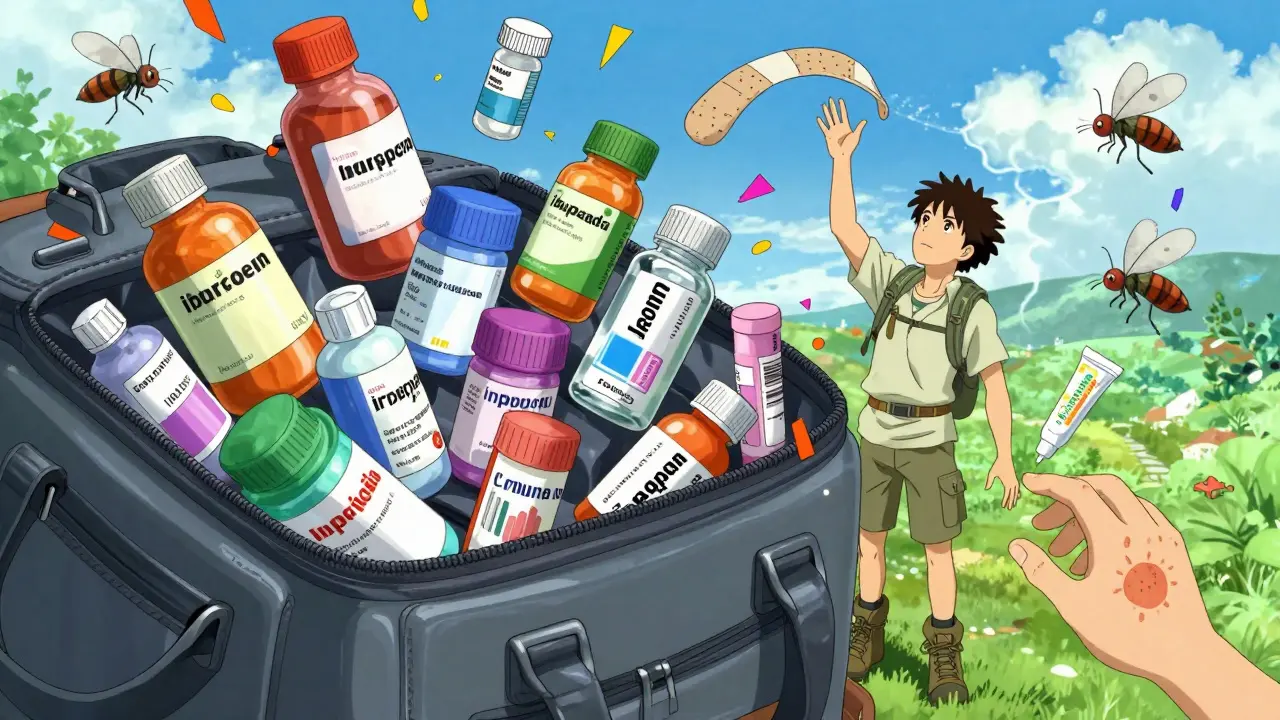

Why You Need a Travel Medication Kit
Ever been stuck in a foreign city with a stomach bug, no pharmacy nearby, and no idea what’s safe to buy? Or maybe you got a blister on day two of a hike and spent an hour searching for bandages in a tiny shop that didn’t carry the right size. These aren’t rare problems-they happen to travelers every day. A well-packed travel medication kit isn’t about being paranoid. It’s about staying in control when you’re far from home.
Most minor health issues on the road-diarrhea, headaches, insect bites, sunburn, or a simple cut-don’t need a doctor. But they do need the right supplies, fast. Waiting until you’re miserable to figure out what to buy means wasting time, spending more money, and risking the wrong treatment. A kit lets you act quickly, safely, and with confidence.
Core Items for Every Travel Medication Kit
Start with the basics. These are the non-negotiables for any trip, whether you’re heading to Bali or Boston.
- Pain and fever relief: Ibuprofen (200-400mg) or acetaminophen (500mg). Bring at least 10 tablets each. Ibuprofen also helps with swelling and inflammation, making it useful for sprains or sore muscles.
- Antidiarrheal: Loperamide (Imodium, 2mg tablets). Pack at least 6 tablets. Diarrhea is the #1 travel illness. It’s not dangerous for most people, but it can ruin a day-or a whole trip.
- Antibiotics for traveler’s diarrhea: Ciprofloxacin (500mg) or azithromycin (500mg). These require a prescription. Only take them if symptoms are severe (fever, bloody stool, or dehydration). Don’t use them for mild cases. A 3-day course is usually enough.
- Allergy and insect bite relief: Loratadine (10mg) or cetirizine (10mg) tablets. Pack 7 tablets. Add a 15g tube of 1% hydrocortisone cream for itching, redness, or rashes.
- Wound care: Adhesive bandages (assorted sizes, minimum 10), 4x4 inch gauze pads (4 pieces), medical tape (1-inch roll), antiseptic cleaner (chlorhexidine or povidone-iodine, 1oz bottle), and antibacterial ointment (bacitracin or neomycin, 0.5oz tube).
- Digestive support: Oral rehydration salts (minimum 5 packets-WHO formula). These are more effective than sports drinks. Also pack psyllium husk (10 single-dose packets) for constipation and antacids (calcium carbonate 500mg or famotidine 10mg, 7 tablets) for heartburn.
Destination-Specific Add-Ons
One size doesn’t fit all. Where you’re going changes what you need.
- Tropical or humid areas: Add DEET-based insect repellent (20-30% concentration, 1oz bottle). Mosquitoes carry dengue, chikungunya, and Zika. Rehydration salts become even more critical here-heat increases dehydration risk.
- High altitudes (mountains, Andes, Himalayas): Acetazolamide (125-250mg tablets). Start taking it 1-2 days before ascending. It helps prevent altitude sickness. Also pack ibuprofen for headaches, which are common at elevation.
- Outdoor adventures (hiking, camping): Blister pads (hydrocolloid type), tweezers (for splinters or ticks), and a small pair of scissors. These aren’t allowed in carry-on luggage on most flights-pack them in checked bags.
- Areas with unsafe water: Water purification tablets (iodine or chlorine dioxide). Even bottled water can be tampered with. Having a backup means you can safely drink tap water if needed.
- Winter travel: Lip balm with SPF, hand warmers, and extra pain relievers. Cold weather can trigger joint pain and migraines.
Prescription Medications: Don’t Guess, Prepare
If you take regular meds-for blood pressure, diabetes, asthma, anxiety, or birth control-bring more than you think you’ll need.
Rule #1: Bring at least two extra weeks’ supply. Flights get delayed. Visas get extended. You don’t want to be stranded without your heart medication because your bag was lost.
Rule #2: Keep them in original packaging. Pharmacies abroad won’t refill prescriptions without the bottle and label. If you’re taking insulin, keep it cool-use a small insulated pouch with a cold pack.
Rule #3: Carry a doctor’s letter. It should list your medications, dosages, and why you need them. Use generic names (like “metformin” not “Glucophage”). This helps if customs asks questions. Diabetics especially need this letter to carry needles and syringes through security.
Rule #4: Bring copies of your prescriptions. Store them digitally and on paper. Some countries require them to even enter with certain meds.
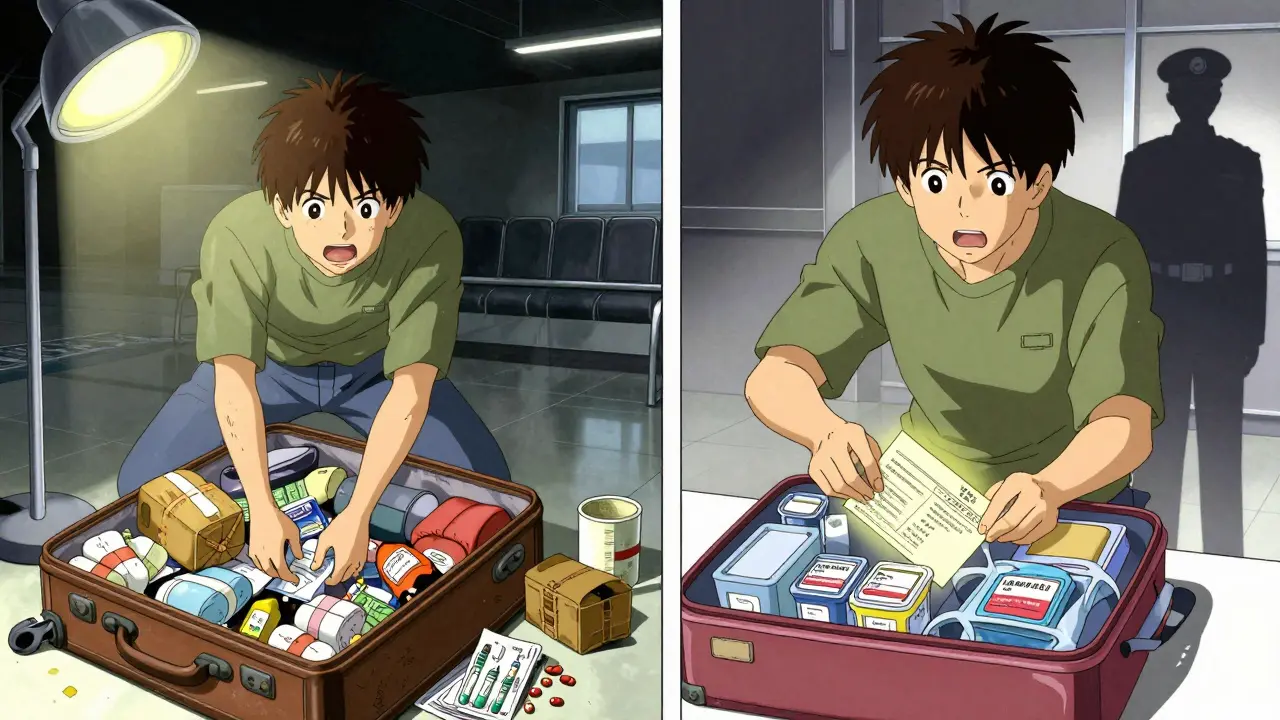
What You Can’t Take (And Where)
Not every medicine you can buy in New Zealand or the U.S. is legal elsewhere.
Japan bans pseudoephedrine (common in cold meds like Sudafed). Dubai restricts strong painkillers like codeine. Australia limits melatonin. Germany requires a prescription for even common antihistamines like cetirizine in some cases.
Before you go, check with the embassy or consulate of your destination. The Therapeutic Goods Administration (TGA) in Australia and the CDC both have updated lists online. Don’t rely on Google-rules change often.
If you’re unsure, leave it behind. Buy it there if needed. Many countries have good pharmacies, and pharmacists are often trained to help travelers.
How to Pack It Right
Organization saves time-and stress.
- Use a clear, waterproof plastic box. Something like a small tackle box or makeup case. You can see everything at a glance, and it won’t leak if your bag gets wet.
- Keep medications separate from first aid. Put pills in one section, bandages and creams in another.
- Use travel-sized containers. Transfer liquids into small bottles (under 100ml) to pass airport security. Label them clearly.
- Split your kit. Put half in your carry-on, half in checked luggage. If one bag gets lost, you still have meds.
- Keep a printed list of everything in the kit, with dosages and reasons. Include your doctor’s name and phone number. If you feel sick and can’t speak the language, hand this to a pharmacist or nurse.
- Add a contact card with emergency numbers: your family, your doctor, your hotel, the nearest hospital, and your country’s embassy.
Special Cases: Kids, Seniors, and Chronic Conditions
Adults aren’t the only ones who get sick on trips.
For children under 2: Never use adult medications. Ask your pediatrician for child-safe versions of fever reducers (acetaminophen or ibuprofen drops), antihistamines, and rehydration solutions. Pack a digital thermometer and a bulb syringe for nasal congestion.
For seniors: If you take blood thinners, heart meds, or diabetes drugs, bring extra. Include a copy of your latest lab results. Some countries have different standards for medications-your usual dose might not be available.
For diabetics: Carry insulin in your carry-on. Keep it cool. Bring glucose tablets or gel. Get a doctor’s letter explaining your need for syringes and sharps containers.
For asthma or allergies: Bring two inhalers. Keep them in your carry-on. If you have severe allergies, carry two epinephrine auto-injectors (EpiPens). Know the local word for “allergy” and “emergency.”

What to Avoid
Don’t make these common mistakes.
- Don’t pack expired meds. They lose potency. Throw them out before you go.
- Don’t rely on local pharmacies. You might get the wrong dose, fake drugs, or something that interacts with your existing meds.
- Don’t share meds. Even if someone has the same symptom, their body reacts differently.
- Don’t take extra doses. Feeling worse? Don’t double up. Wait. Call your doctor. Overdosing on painkillers or antidiarrheals can be dangerous.
- Don’t forget sunscreen. It’s not a pill, but it’s medical. Sunburn leads to dehydration, pain, and infection risk. Use SPF 30+.
Final Checklist Before You Leave
- ☑ All meds in original bottles or labeled containers
- ☑ Extra 2-week supply of prescriptions
- ☑ Doctor’s letter for prescriptions and needles
- ☑ Copies of prescriptions (printed + digital)
- ☑ Rehydration salts and electrolyte packets
- ☑ Antidiarrheal and antibiotics (if prescribed)
- ☑ Antihistamines and hydrocortisone cream
- ☑ Wound care: bandages, gauze, tape, cleaner, ointment
- ☑ Insect repellent (DEET 20-30%)
- ☑ Water purification tablets (if needed)
- ☑ Blister pads (if hiking)
- ☑ Acetazolamide (if going above 2,500m)
- ☑ Contact card with emergency info
- ☑ Kit split between carry-on and checked bag
- ☑ No expired items
- ☑ Checked local laws on medications
What If Something Goes Wrong?
Even with the best kit, things can still happen.
If you have severe symptoms-chest pain, trouble breathing, confusion, high fever with rash, or signs of dehydration (dry mouth, no urine, dizziness)-don’t wait. Find a clinic or hospital. Your kit helps with minor issues, not emergencies.
Keep your embassy’s number handy. They can help you find English-speaking doctors, translate, or contact your family.
And remember: your kit is a tool, not a replacement for good judgment. If you’re unsure, rest. Drink water. Wait. Call someone. It’s better to be safe than sorry.


