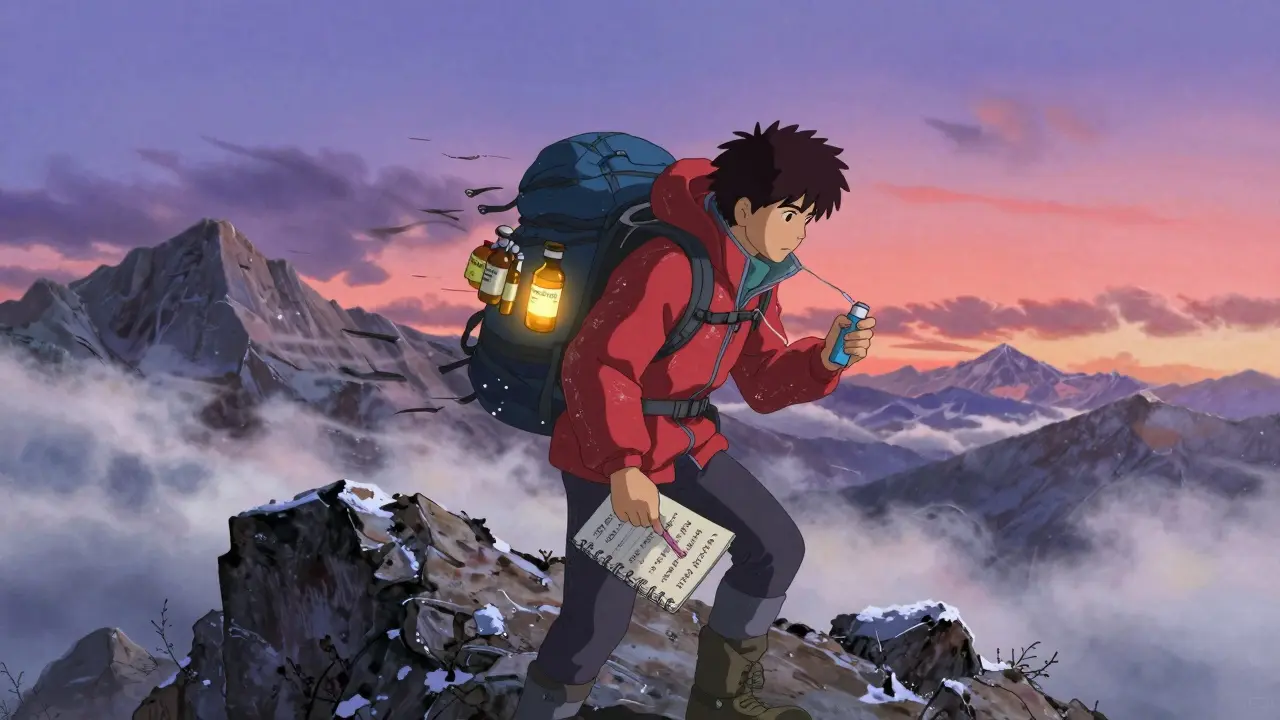

When you’re heading into the mountains for a pilgrimage or a long trek, the real challenge isn’t just the climb-it’s staying healthy when you’re far from a hospital. At 17,500 feet, where many trekkers reach Everest Base Camp, about 43% of people start feeling symptoms of altitude sickness. And if you’re diabetic, have heart issues, or rely on daily prescriptions, the risks multiply. Cold temperatures can ruin your insulin. Humidity can turn pills into mush. And if you run out of your asthma inhaler or antibiotics in a remote village, help might be days away. This isn’t fear-mongering-it’s fact. The Wilderness Medical Society says 22% of medical evacuations from high-altitude treks happen because someone wasn’t prepared with the right meds. Here’s how to fix that.
Know Your Medications Inside and Out
Before you even pack your backpack, sit down with your doctor. Not a general practitioner-someone who understands travel medicine. They’ll check your heart, lungs, and blood pressure, and ask if you’ve ever had trouble with altitude before. Most serious complications are preventable. Studies show 83% of them could be avoided with a simple pre-trip checkup. Bring a list of everything you take: prescriptions, over-the-counter drugs, supplements. Your doctor will tell you what to keep, what to leave behind, and whether you need extra doses.
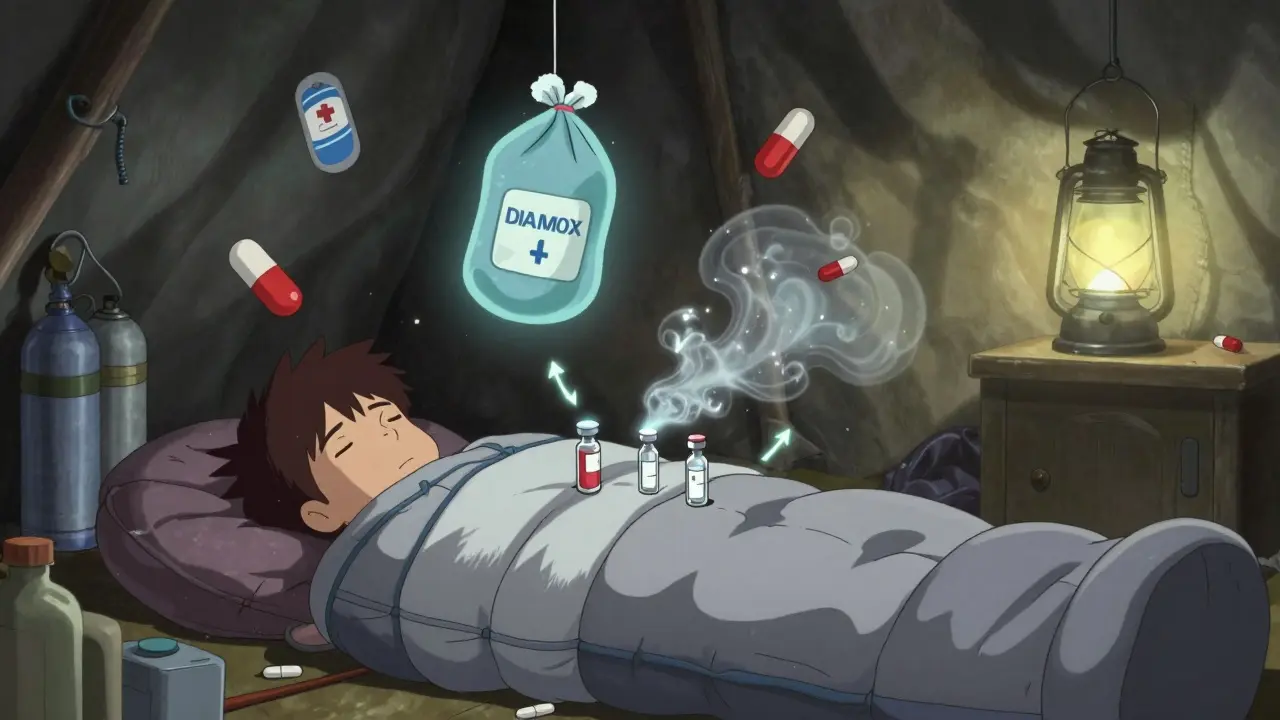
For altitude sickness, acetazolamide (Diamox) is the most trusted preventive. The standard dose is 125 mg twice a day, starting one day before you climb and continuing for three days after you reach your highest point. It works by helping your body breathe faster, which balances your blood chemistry. Side effects? You’ll pee more often-about 67% of users report that-and your fingers might tingle. That’s normal. If you’re allergic to sulfa drugs (3-6% of people are), skip Diamox. Your doctor can suggest alternatives like dexamethasone, which is used for more severe cases of brain swelling (HACE). Nifedipine is another key drug, especially if you’ve had High Altitude Pulmonary Edema (HAPE) before. It opens up lung arteries and is taken as 20 mg extended-release every 12 hours.
Build a Complete Medical Kit
Your kit isn’t just for altitude. It’s for everything that can go wrong. Pack these essentials:
- Prescription meds: Carry your full supply. Don’t rely on local pharmacies. In 2013, 89% of health camps along pilgrimage routes had no acetazolamide, dexamethasone, or nifedipine. You can’t count on help being there.
- Antibiotics: Azithromycin (500 mg daily for 3 days) for traveler’s diarrhea. It’s the go-to because it works against most bacteria and doesn’t need refrigeration.
- Pain and fever: Ibuprofen (400 mg tablets). It’s better than acetaminophen at high altitude because it reduces inflammation and helps with headaches caused by low oxygen.
- Allergy and motion sickness: Diphenhydramine (25-50 mg) for rashes, swelling, or nausea.
- Topicals: Antibiotic ointment, hydrocortisone cream, and antifungal powder. Blisters, infections, and fungal rashes are common when you’re sweating for days.
- Supplemental oxygen: Portable oxygen canisters (1-2 liters) can be a lifesaver during sudden drops in oxygen levels. They’re not a cure, but they buy you time to descend.
- Hyperbaric bag (Gammow Bag): If you’re leading a group or trekking in extreme isolation, this portable pressure chamber can stabilize someone with severe HACE or HAPE until they can be evacuated. Few camps have them, but if you’re carrying one, you’re prepared.
Storage Is Everything
Medications don’t care if you’re on a sacred journey. They care about temperature. Insulin degrades by 25% in just 24 hours if it gets colder than 32°F (0°C). Glucometers give wrong readings at 14°F (-10°C)-error rates jump to 18%. A Reddit user lost $4,200 to a medical evacuation because their insulin went bad at 14,000 feet. Don’t be that person.
Use a waterproof, insulated container. Keep it close to your body-inside your jacket or sleeping bag at night. Some travelers use hand warmers wrapped in cloth to keep meds from freezing. Never leave pills in your backpack overnight. If you’re flying, carry all meds in your hand luggage. Checked bags can sit in unheated cargo holds for hours.
Keep everything in original containers with pharmacy labels. If you’re carrying controlled substances like opioids or strong stimulants, you might need a letter from your doctor and possibly an International Narcotics Control Board form. About 17% of trekking groups need this step. Don’t wait until you’re at the airport to find out.
Plan for the Unexpected
Diarrhea hits 60% of Everest Base Camp trekkers, mostly between 9,000 and 14,000 feet. Water sources are contaminated. Even bottled water can be tampered with. Always carry enough antibiotics for three full days. Drink 4-5 liters of water daily. Dehydration makes altitude sickness worse. And yes, you need to pee a lot-but that’s the price of survival.
Ascend slowly. If you’re flying into Lhasa at 12,000 feet, spend at least two days resting before climbing higher. The gold standard is no more than 1,000 feet (305 meters) of gain per day above 10,000 feet. But pilgrims often don’t have that luxury. That’s why medication becomes your backup plan. Don’t rely on willpower. Your body needs time. If you feel dizzy, nauseous, or have a pounding headache, stop. Don’t push. Use your Diamox. Drink water. Rest.
Test your gear before you go. If you use an inhaler, test it in cold air. If you wear a glucose monitor, check its accuracy at low temperatures. Bring extra batteries. Bring extra pills. Bring extra everything. A 2022 survey of 1,250 trekkers found that 47% of medication issues came from running out. Another 29% were from temperature damage. You can’t afford to guess.
Know the Local Reality
Many pilgrimage routes-like Mount Kailash or the Gosainkunda Lake trail-have health posts. But they’re often understocked. In Nepal, a 2021 government campaign distributed 15,000 medical kits with Diamox and education materials to trekking agencies. Hospitalizations dropped by 22%. That’s progress. But you still can’t rely on them. Local staff may not know how to use dexamethasone properly. Pharmacies might sell expired meds. Your best defense is carrying your own supply.
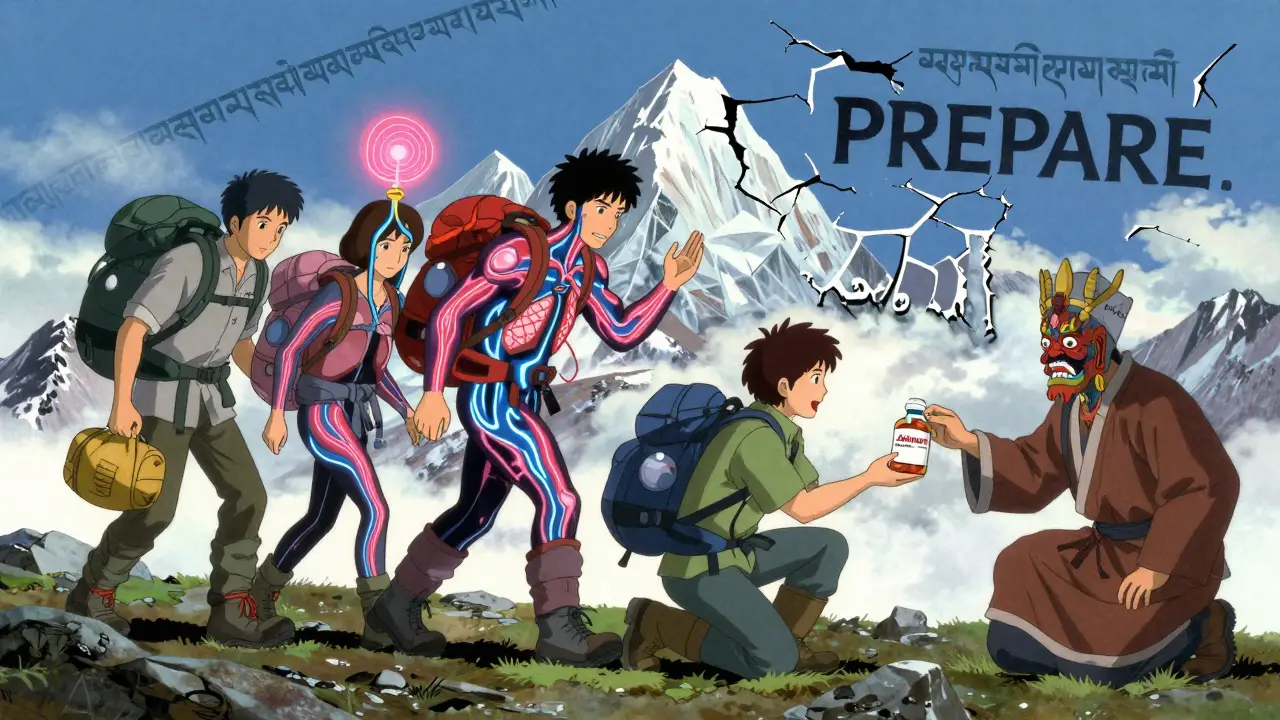
And don’t assume everyone speaks English. Have the names of your meds written in local script if possible. In Nepal, that’s Devanagari. In Tibet, it’s Tibetan script. Ask your doctor or a pharmacist to help you write them down. A photo of your prescription on your phone helps too.
What’s Changing in 2026
The industry is waking up. By 2027, 95% of high-altitude trekking companies will require a pre-trip medical consultation-up from 68% today. Insurance providers are pushing it. Liability is too high. Nepal’s government is training local health workers. The Wilderness Medical Society is testing standardized kits for different altitude zones. You’ll soon see pre-packaged kits labeled “Below 10,000 ft,” “10,000-15,000 ft,” and “Above 15,000 ft.”
Right now, 76% of trekkers buy pre-packaged kits. But not all are equal. Look for ones that include acetazolamide, dexamethasone, nifedipine, azithromycin, and ibuprofen. If it doesn’t have those, it’s not enough.
Final Checklist
- ✅ Consult your doctor 4-6 weeks before departure
- ✅ Get prescriptions for all meds, including extra doses
- ✅ Pack meds in original containers with pharmacy labels
- ✅ Carry a doctor’s letter for controlled substances
- ✅ Use insulated, waterproof storage-keep meds warm
- ✅ Include Diamox, dexamethasone, nifedipine, azithromycin, ibuprofen, diphenhydramine, topicals
- ✅ Bring supplemental oxygen and/or a hyperbaric bag if trekking above 15,000 ft
- ✅ Test your devices (glucometer, inhaler) in cold conditions
- ✅ Carry written names of meds in local language
- ✅ Never rely on local pharmacies
High mountains don’t forgive mistakes. But they don’t have to kill you either. With the right meds, the right storage, and the right mindset, you can walk sacred paths and climb towering peaks without risking your health. Preparation isn’t just smart-it’s essential. Your body will thank you.


