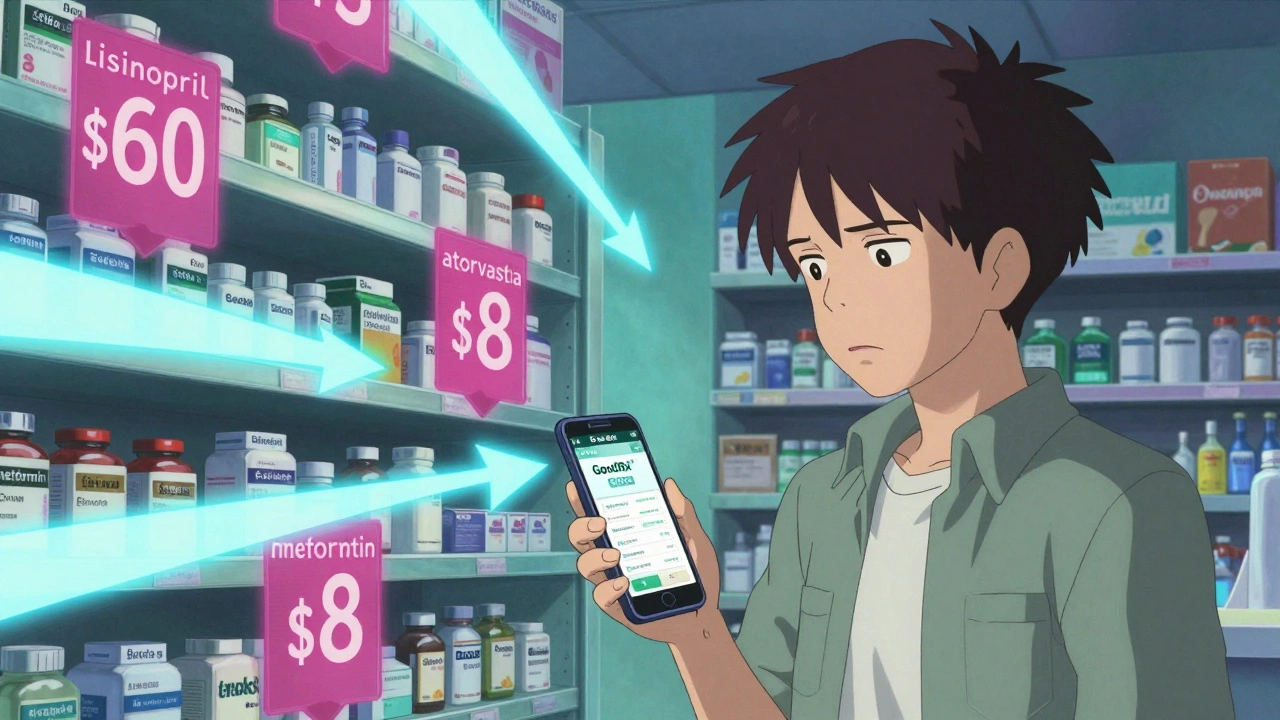

Buying generic drugs shouldn’t feel like a financial gamble. Yet for millions of Americans, even the cheapest versions of blood pressure pills, cholesterol meds, or diabetes treatments can cost $50, $100, or more out of pocket-especially if you’re on a high-deductible plan or have no insurance at all. That’s where coupon and discount card programs come in. These aren’t insurance. They’re not government aid. But for many, they’re the only thing standing between affordable meds and skipped doses.
How These Programs Actually Work
Think of discount cards like a bulk-buying club for prescriptions. Companies like GoodRx, NeedyMeds, and Blink Health negotiate directly with pharmacies and drug manufacturers to get lower prices on common generic medications. They don’t pay for your drugs-they just show you where to get them cheapest. When you show the card (digital or printed) at the pharmacy, the pharmacy pays the discount provider a small fee, and you pay the reduced price.
This system started with Walmart’s $4 generic program in 2006. Now, most major chains-Target, Kroger, Costco-still offer fixed-price generics. But third-party cards like GoodRx go further. They cover thousands of drugs, not just a short list. And they often beat even those fixed prices.
What You Can Actually Save
Let’s get real about savings. If you’re taking three common generic drugs-say, lisinopril for blood pressure, metformin for diabetes, and atorvastatin for cholesterol-you could be paying under $15 a month total with a discount card. That’s not a guess. A 2022 study in Circulation: Cardiovascular Quality and Outcomes tracked heart failure patients on generic-only regimens and found average savings of 65% compared to regular cash prices.
Here’s what that looks like in real dollars:
- Lisinopril 10mg (30 tablets): $4-$8 with GoodRx vs. $45 cash
- Metformin 500mg (60 tablets): $5-$10 with NeedyMeds vs. $55 cash
- Atorvastatin 20mg (30 tablets): $7-$12 with Blink Health vs. $60 cash
That’s $110 down to $25. That’s not a trick. That’s the math.
But here’s the catch: these savings vanish with brand-name drugs. If your doctor prescribes a newer medication like an SGLT2 inhibitor for diabetes, even with a discount card, you’re still looking at $1,200-$1,500 a month. The discount? Maybe 10%. That’s not a bargain. That’s a reminder that these cards were never meant to fix the broken brand-name drug market.
Who Benefits the Most?
These programs were built for people without insurance. If you’re on Medicare Part D, Medicaid, or a low-cost employer plan, your copay might already be cheaper than the discount card price. A 2023 analysis from Ohio State University’s College of Pharmacy found that for insured patients, the card often doesn’t beat their plan’s negotiated rate.
But if you’re uninsured, underinsured, or in the early part of your plan year before hitting your deductible? You’re the target audience. Nearly 43% of U.S. workers now have high-deductible health plans. That means you pay full price until you’ve spent $1,500-$2,000 out of pocket. For someone taking five or six meds, that’s a nightmare.
One Reddit user, u/MedSaver2022, saved $87 on their cholesterol meds in a single month using GoodRx. That’s not rare. Thousands of posts like that exist. But there’s another side.

The Hidden Friction: Why It’s Not Always Easy
These programs aren’t plug-and-play. You have to work for the savings.
First, you can’t just pick one card and call it done. Prices vary wildly between GoodRx, Blink Health, SingleCare, and even your local pharmacy’s own discount program. One user reported paying $15 for the same pill with Blink, then $42 with GoodRx-same pharmacy, same day. That’s not a typo. That’s how the system works.
Consumer Reports surveyed 1,200 people in 2023. 68% had to check multiple cards. 42% said the process caused them to delay filling prescriptions. That’s dangerous. Skipping meds because you’re tired of comparing prices isn’t smart-it’s risky.
And it’s not just about cards. You might need to visit three different pharmacies. One might have the best price on your blood pressure med but charge double for your thyroid pill. You can’t just pick the cheapest overall-you have to build a patchwork of deals.
How to Use These Programs Without Getting Overwhelmed
You don’t need to become a pharmacy ninja. Here’s how to make it simple:
- Start with GoodRx. It’s the most widely accepted-over 70,000 pharmacies in the U.S. download their app or visit their website.
- Enter your drug name and zip code. Look at the lowest price listed. Note the pharmacy.
- Check NeedyMeds or Blink Health for the same drug. Compare.
- If you’re near a Walmart, Target, or Costco, check their in-store prices. Sometimes their $4/$10 deals beat the apps.
- Call the pharmacy ahead. Ask: "Is this price still good?" Prices change daily.
- Use the same pharmacy for all your meds if possible. It’s easier to manage refills and ask questions.
Pro tip: Ask your pharmacist. Many now check discount card prices automatically when you present your insurance. They’re trained to do this. Don’t be shy-say, "Can you run this through GoodRx too?"

The Bigger Problem: Brand-Name Drugs Are Still Unaffordable
Discount cards work great for generics. They’re useless for most brand-name drugs. That’s not a flaw in the system-it’s the system’s design. These programs were never meant to fix the real problem: drug companies charging $1,000 a month for pills that cost pennies to make.
When you need a brand-name drug, your best bets are:
- Manufacturer copay cards (often found on the drug’s official website)
- Patient assistance programs (PAPs) run by nonprofits
- State pharmaceutical assistance programs
Discount cards won’t help here. Don’t waste your time. Go straight to the source.
What’s Changing in 2025?
Things are shifting. In 2023, major pharmacy benefit managers (PBMs) like Express Scripts and OptumRx started automatically applying the lowest price-insurance or discount card-when you fill a prescription. That means you don’t have to compare anymore. Your insurer does it for you.
GoodRx added telehealth services in early 2024. You can now get a prescription for a generic drug, get the discount applied, and pick it up the same day-all in the app.
But the biggest change might come from regulators. The FTC launched an investigation in late 2023 into how PBMs and discount card companies make money. They’re looking at "spread pricing," where the PBM charges the pharmacy more than it pays the drugmaker-and pockets the difference. If that’s shut down, discount card prices might become more consistent.
For now, the trend is clear: discount cards are growing fast. The market is projected to hit $3.8 billion by 2034. Why? Because people are desperate. One in four U.S. adults admits to skipping meds because of cost.
Final Thought: They’re a Tool, Not a Fix
Coupon and discount card programs are powerful. They’ve saved lives. They’ve kept people out of emergency rooms. They’ve made it possible to take your pills every day when you otherwise couldn’t afford them.
But they’re not a solution to America’s broken drug pricing system. They’re a workaround. And like any workaround, they require effort. You need to know how to use them. You need to be willing to spend 10 minutes comparing prices. You need to understand that generics are just as safe and effective as brand names.
And if you believe that? You’re three times more likely to use these programs successfully, according to a 2020 NIH study. That’s not luck. That’s mindset.
So check the price. Compare the cards. Ask your pharmacist. Don’t pay full price unless you have to. Your health-and your wallet-will thank you.
Do discount cards work with insurance?
Usually not directly. But some insurance plans now automatically compare your insurance copay with the discount card price and charge you the lower amount. If you’re unsure, always ask your pharmacist to check both.
Are discount cards free to use?
Yes. There are no fees, memberships, or sign-ups required. You don’t need to give personal info. Just show the card or app code at the pharmacy.
Why is the price different at different pharmacies?
Each pharmacy negotiates its own pricing with drug wholesalers and discount providers. A Walmart might have a fixed $4 rate for lisinopril, while a local independent pharmacy might charge $12. Even two CVS locations in the same city can have different prices.
Can I use a discount card for brand-name drugs?
You can, but the savings are minimal-often under 10%. For brand-name drugs, look for manufacturer copay cards or patient assistance programs instead. Those can reduce costs by 70-100%.
What if I can’t find my drug on any discount card?
Try NeedyMeds-they list over 1,000 patient assistance programs for hard-to-find or expensive drugs. Or ask your pharmacist if there’s a therapeutic alternative-a different generic that works the same way but costs less.
Are discount cards safe and legitimate?
Yes. GoodRx, NeedyMeds, Blink Health, and others are well-established companies. They don’t sell your data. They don’t charge you. They just connect you to lower prices. Just avoid random websites asking for credit card info or personal health details.


