

Thyroid & Antibiotic Timing Calculator
Optimize Your Medication Schedule
This tool helps you determine the correct timing between thyroid medication, magnesium supplements, and antibiotics based on clinical guidelines.
Taking magnesium supplements while on thyroid medication or antibiotics can seem harmless-until your TSH spikes, your infection won’t clear, or your doctor says your meds aren’t working. The problem isn’t the magnesium. It’s the timing. Many people take their thyroid pill and their magnesium gummy at breakfast, not realizing they’re canceling each other out. The same goes for antibiotics like ciprofloxacin or doxycycline. These aren’t myths. They’re well-documented, clinically significant interactions that affect millions.
Why Magnesium Interferes with Thyroid Medication
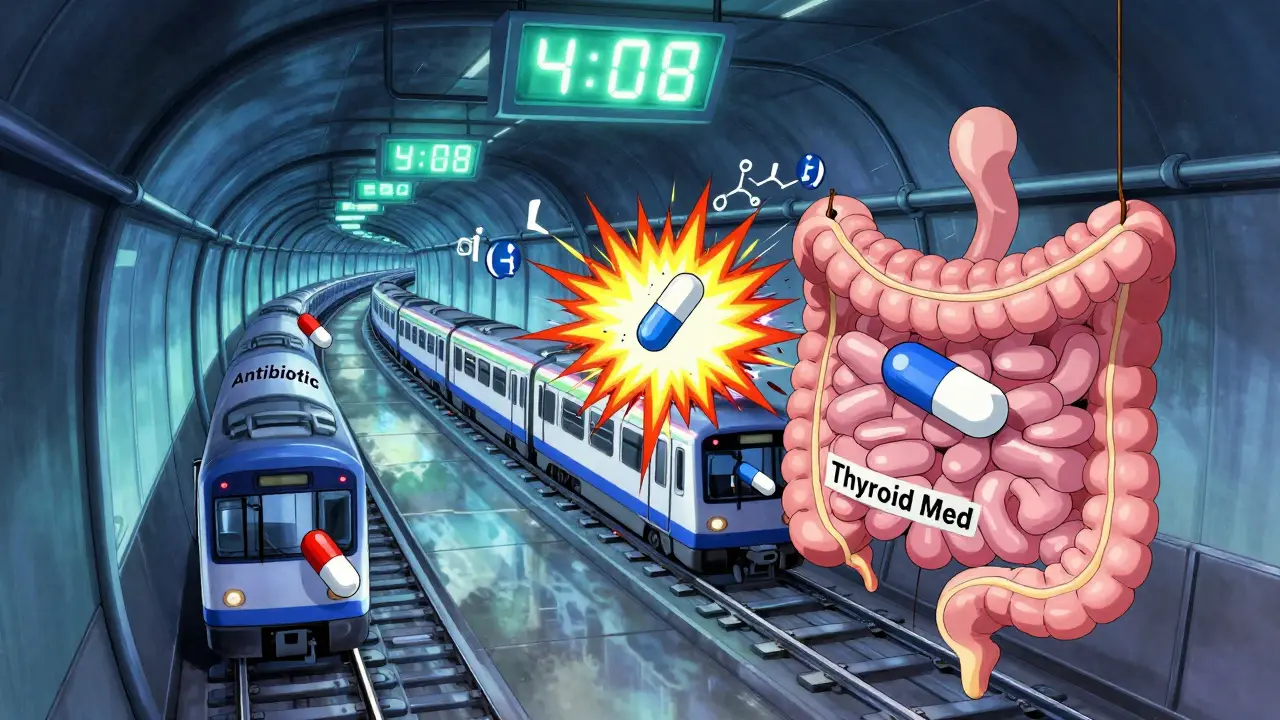
Levothyroxine, the most common thyroid medication, is absorbed in the upper part of the small intestine. Magnesium, especially in forms like hydroxide, carbonate, or sulfate, binds to it in the stomach and intestines. This creates an insoluble complex that your body can’t absorb. Think of it like putting a magnet next to a metal key-you can’t use the key anymore because it’s stuck. Research from the Journal of Clinical Endocrinology & Metabolism (2021) shows that taking magnesium at the same time as levothyroxine can cut absorption by 25-35%. That’s enough to push your TSH from a normal 2.0 to over 6.0 in just a few weeks. Higher TSH means your thyroid isn’t getting the signal to produce enough hormone. You’ll feel tired, cold, gain weight, and struggle to focus-even if you’re taking the right dose. Not all magnesium is the same. Magnesium oxide, often sold as a cheap laxative, causes less interference than magnesium hydroxide (found in antacids like Mylanta). One study found magnesium oxide only reduced absorption by 10%, while magnesium hydroxide cut it by 60%. But here’s the catch: even magnesium glycinate, which is gentler on the stomach, still interferes. The science says: no magnesium within 4 hours of your thyroid pill.How to Time Your Thyroid Medication Correctly
The gold standard is simple: take levothyroxine first thing in the morning on an empty stomach with a full glass of water. Wait 45 to 60 minutes before eating or drinking anything else-not even coffee. This gives your body time to absorb the hormone before food or other substances get in the way. Then, wait at least 4 hours before taking magnesium. That means if you take your thyroid pill at 7 a.m., you shouldn’t take magnesium until after 11 a.m. Most people find it easiest to take magnesium at dinner or right before bed. This also helps with sleep, since magnesium can promote relaxation. A 2023 study in the Journal of Managed Care & Specialty Pharmacy found that patients using pill organizers with labeled AM/PM compartments had an 89% adherence rate to proper timing. Those who didn’t use any system only stuck to the schedule 47% of the time. Simple tools make a huge difference.Antibiotics and Magnesium: The Hidden Conflict
If you’re on an antibiotic like ciprofloxacin, levofloxacin, doxycycline, or minocycline, magnesium is just as problematic. These antibiotics belong to classes that form chelates with magnesium-meaning the mineral grabs onto the drug and carries it out of your system before it can fight the infection. The FDA’s labeling for ciprofloxacin says magnesium can reduce its absorption by up to 50%. That’s not a small risk. It means your antibiotic might not work, your infection could linger, or worse-you could develop antibiotic resistance. A 2021 study in Antimicrobial Agents and Chemotherapy showed that 500 mg of magnesium citrate dropped levofloxacin’s peak blood levels by 37%. The fix? Space them out. Take your antibiotic at least 2 hours before or 6 hours after magnesium. For doxycycline, the Infectious Diseases Society of America recommends 2 hours before or 4-6 hours after. If you take your antibiotic in the morning, wait until after dinner for magnesium. If you take it at night, take magnesium in the morning after your thyroid pill.What About Other Supplements?
Magnesium isn’t the only troublemaker. Calcium, iron, and even antacids like aluminum hydroxide (found in Tums) do the same thing. If you’re on levothyroxine, here’s the ideal daily sequence:- 7:00 a.m. - Levothyroxine with water
- 7:45 a.m. - Breakfast
- 10:00 a.m. - Iron supplement (if prescribed)
- 12:30 p.m. - Calcium supplement with lunch
- 6:00 p.m. - Magnesium supplement with dinner
- 10:00 p.m. - Bedtime (optional magnesium if not taken at dinner)
What If You’ve Been Taking Them Together?
If you’ve been taking magnesium with your thyroid pill or antibiotic without spacing, don’t panic. But do act. Get your TSH checked if you’re on thyroid medication. A sudden rise from 2.5 to 8.0? That’s a red flag. If you’re on an antibiotic and your symptoms aren’t improving, talk to your doctor-your dose might need adjusting, or you might need a different antibiotic. A Reddit user from r/Hypothyroidism shared how their TSH jumped from 1.8 to 14.2 after taking 300 mg of magnesium glycinate with Synthroid every morning. It took 10 weeks. Once they moved magnesium to bedtime, their TSH dropped back to 2.1 in 8 weeks. That’s not luck. That’s science.Which Magnesium Should You Use?
Not all magnesium supplements are created equal. Here’s what works best when you’re also on thyroid meds or antibiotics:- Magnesium glycinate - Best for sleep and anxiety. Low risk of loose stools. Still needs 4-hour spacing.
- Magnesium malate - Good for energy and muscle function. Also well-tolerated.
- Magnesium citrate - Effective but can cause diarrhea. Avoid if you’re sensitive.
- Magnesium oxide - Cheap, but not great for absorption. Less interaction than hydroxide, but still not risk-free.
- Avoid magnesium hydroxide and carbonate if possible-they’re the worst offenders.
What About Newer Thyroid Medications?
Traditional levothyroxine tablets are the most vulnerable. But newer formulations like Tirosint (liquid softgel) and Unithroid (liquid) are designed to bypass the stomach’s acidic environment. Studies show they only lose 8-12% absorption when taken with magnesium, compared to 25-35% for tablets. If you’ve struggled with absorption issues, talk to your endocrinologist about switching. While these formulations cost more, they’re worth it if you’re taking multiple supplements. The market for them grew 17% in 2022-while traditional tablets only grew 4%.
Real-World Tips That Actually Work
- Use a phone alarm labeled “Thyroid Med” and “Magnesium” to remind you. - Keep your thyroid pill and magnesium in separate containers-don’t mix them. - Tell your pharmacist you’re on levothyroxine. Most CVS and Walgreens now give out free “Thyroid Timing Cards” with visual schedules. - If you take antibiotics often, keep a small card in your wallet with spacing rules. - Don’t rely on your doctor to bring this up. A 2023 AMA survey found 74% of doctors now screen for interactions-but 26% still don’t. Be your own advocate.Frequently Asked Questions
Can I take magnesium with my thyroid medication if I wait 2 hours?
No. Two hours isn’t enough. Levothyroxine absorption peaks in the first 4 hours after taking it. Magnesium can still bind to it during this window. Studies show that even 2-hour spacing leads to 15-20% reduced absorption. The safest and most reliable gap is 4 hours.
Is magnesium oxide safe to take with levothyroxine?
Magnesium oxide causes less interference than other forms, but it’s not risk-free. One study found no interaction in 65% of patients, but the rest saw TSH spikes. Because individual responses vary so much, the American Association of Clinical Endocrinologists still recommends 4-hour spacing. Don’t gamble with your thyroid levels.
Can I take magnesium at night if I take my thyroid pill in the morning?
Yes-that’s the ideal timing. Taking magnesium at bedtime, 4+ hours after your morning thyroid dose, avoids interference and may even improve sleep. Many patients report better rest and fewer morning symptoms once they make this switch.
Do all antibiotics interact with magnesium?
No. Only tetracyclines (doxycycline, minocycline) and fluoroquinolones (ciprofloxacin, levofloxacin) are affected. Penicillins, amoxicillin, azithromycin, and cephalosporins don’t interact with magnesium. Always check the label or ask your pharmacist if you’re unsure.
What if I forget and take them together?
One mistake won’t ruin everything. Don’t double-dose or skip your next dose. Just wait until the next scheduled time to take your medication correctly. If it happens often, use reminders or a pill organizer. Consistency matters more than perfection.
Can magnesium help with thyroid symptoms?
Yes-when taken correctly. Magnesium supports energy production, muscle function, and stress regulation-all areas affected by hypothyroidism. But if you take it too close to your thyroid pill, you won’t absorb it. And if you don’t absorb your thyroid medication, your symptoms won’t improve. Timing is everything.


