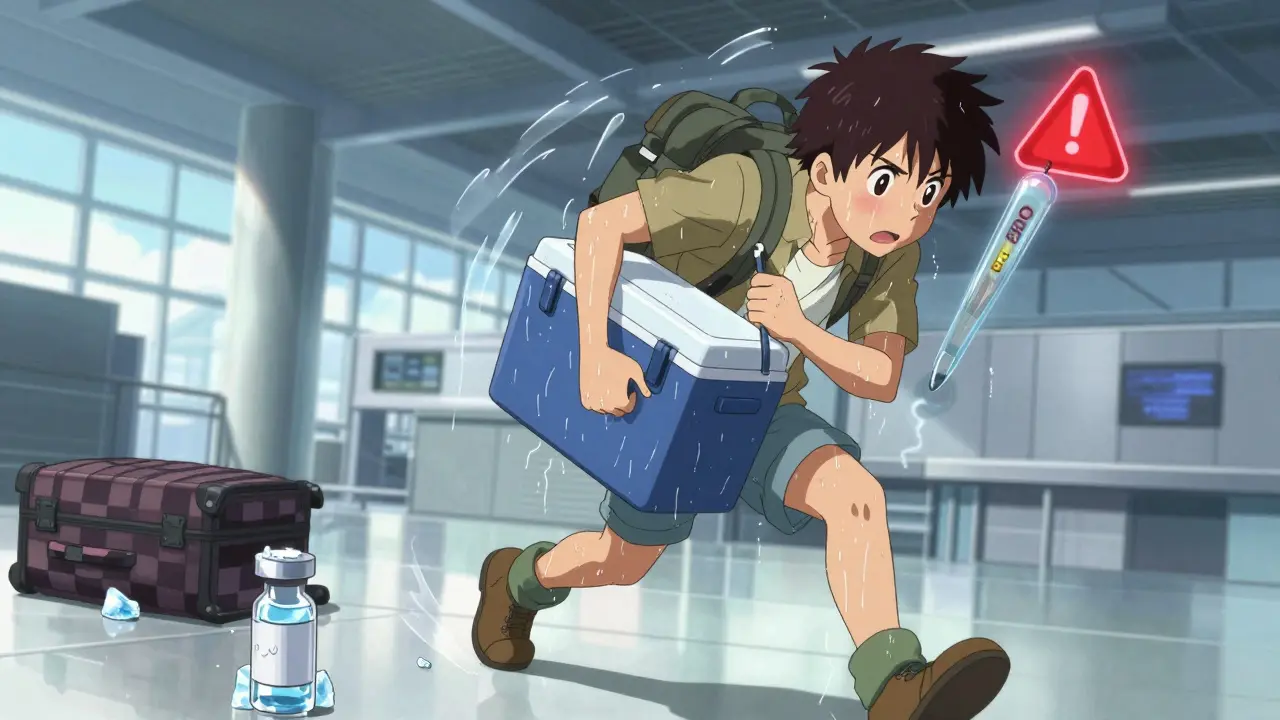

When you’re traveling with medications like insulin, vaccines, or biologics, the temperature outside your car or suitcase can make the difference between a life-saving drug and a useless one. In summer heat, a pill left on a car seat can lose potency in minutes. In winter, an unheated package can freeze and break down just as badly. This isn’t theoretical - it’s happened to real people, and it’s why knowing how to transport medications in hot and cold weather matters more than ever.
Know Your Medication’s Temperature Needs
Not all medications are the same. Some can handle room temperature. Others need to stay cold - and some even need to stay frozen. The three main categories you’ll see on labels are:- Ambient (15°C-25°C): Most tablets, capsules, and some oral liquids. These are the easiest to transport. Just keep them out of direct sunlight and don’t leave them in a hot car.
- Refrigerated (2°C-8°C): Insulin, many vaccines, injectables, and biologic drugs. These are the most sensitive. If they get too warm, they degrade fast. If they freeze, they can be ruined permanently.
- Cryogenic (below -150°C): Only a few specialized treatments like certain mRNA vaccines or tissue samples. These require dry ice or liquid nitrogen and are rarely carried by individuals.
Check the label or ask your pharmacist. If it says "store between 2°C and 8°C," treat it like perishable food. It’s not a suggestion - it’s science.
Hot Weather: Avoid Heat Like a Fire Hazard
In summer, cars can hit 60°C on a 30°C day. That’s hotter than an oven. Insulin, for example, starts losing potency at 25°C and degrades 1.2% per hour above that. After 45 minutes in a hot car, your insulin could be useless. Vaccines like MMR can lose 10% potency every hour above 8°C.Here’s what works:
- Never leave meds in the car. Even if you’re just running into a store. Use a cooler bag with frozen gel packs.
- Use an insulated lunch bag. Pack two frozen ice packs and your meds. A standard insulated bag like this can keep insulin at 2°C-8°C for up to 8 hours, even in 90°F weather.
- Carry meds on your person. A backpack or purse stays cooler than a trunk. If you’re flying, keep them in your carry-on - checked luggage can sit in unheated cargo holds that reach freezing or worse.
- Avoid direct sunlight. Even if it’s cool, sunlight through a window can heat up a pill bottle fast.
One patient in New Zealand reported her insulin turned cloudy after a 45-minute car ride in 35°C heat. Her pharmacist confirmed it was degraded. She had to get a new prescription while on vacation. That’s avoidable.
Cold Weather: Don’t Let Freezing Ruin Your Meds
Cold is just as dangerous as heat - for different reasons. Insulin and vaccines can freeze if exposed to temperatures below 0°C. Once frozen, even if they thaw, their structure breaks down. The result? Ineffective or dangerous.Winter travel tips:
- Keep meds close to your body. Store them in an inner pocket of your coat or jacket. Your body heat will prevent freezing.
- Use insulated containers. Even a foam cooler with a warm water bottle wrapped in a towel can help buffer against extreme cold. Don’t use regular plastic bags - they offer zero insulation.
- Don’t leave meds in unheated cars overnight. If you’re staying in a cabin or hotel without climate control, bring your meds inside with you.
- Watch for condensation. When you bring cold meds into a warm room, moisture can form inside the container. That can damage blister packs or labels. Let them warm up slowly in their container before opening.
Logistics managers at Pfizer reported a 17% spike in temperature excursions during the 2022-2023 winter because transport vehicles weren’t designed for extreme cold. If professionals struggle with this, imagine what happens when a patient forgets their meds in a freezing car.
Traveling by Air? Do This
Airports are temperature extremes. Checked baggage can drop below freezing or soar above 50°C in cargo holds. Airlines don’t control this. You do.For air travel:
- Always carry meds in your carry-on. No exceptions.
- Bring a doctor’s note. Especially for injectables or large quantities. It helps avoid delays at security.
- Use a TSA-approved travel cooler. Products like the TempAid 2.0 maintain 2°C-8°C for 48 hours and are designed for air travel. They weigh about 1.5 kg, but they’re worth it.
- Don’t use dry ice unless you know how. It’s regulated. You can’t bring it in your carry-on without approval. If you need it, contact the airline ahead of time.
One traveler on Reddit shared that her insulin froze in a checked bag during a layover in Canada. She had to get a replacement at a pharmacy in Toronto - at full price. She didn’t have insurance there.
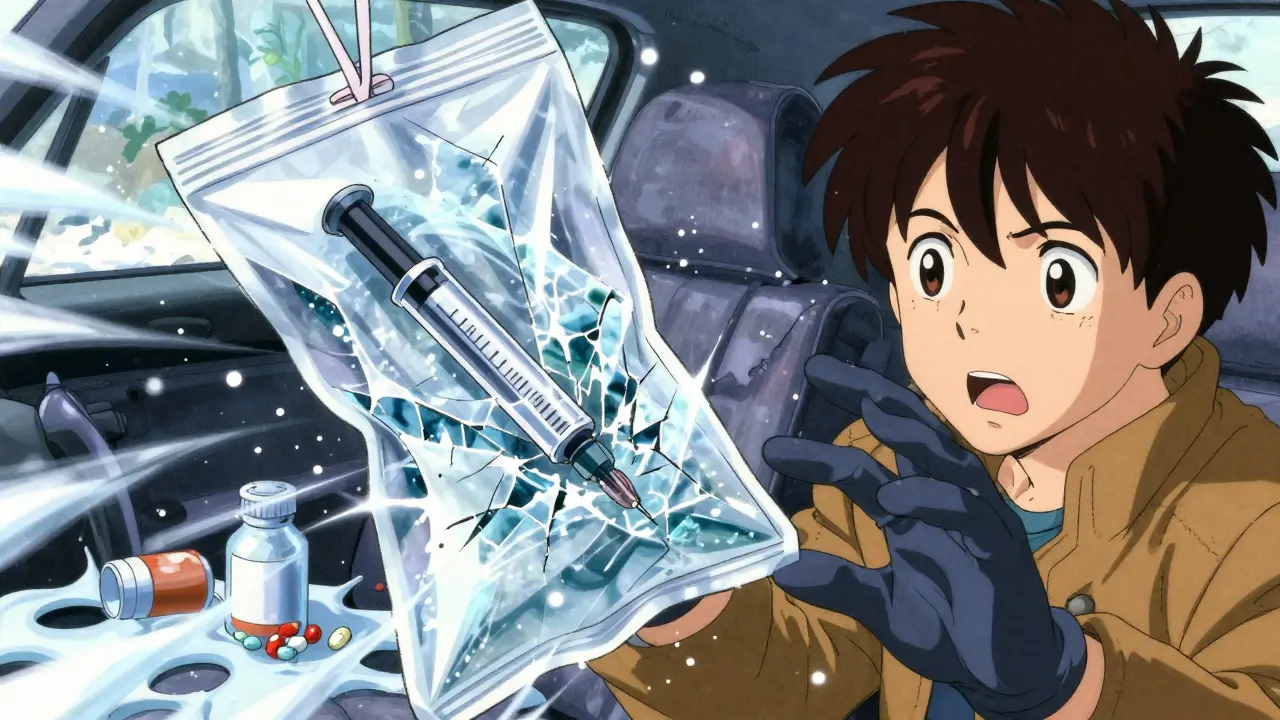
What Packaging Works Best?
There are three types of solutions on the market:- Passive containers: Insulated boxes with gel packs. Cheap, reliable for 24-72 hours. Best for short trips or local travel.
- Active containers: Battery-powered coolers that maintain exact temps. Expensive ($300-$800), but used by hospitals and pharmacies. Overkill for most travelers.
- Hybrid solutions: Insulated bags with small cooling units that activate when needed. Good balance of cost and control. Prices range from $100-$200.
For most people, a good insulated bag with two frozen gel packs is enough. Look for ones rated to maintain 2°C-8°C for at least 8 hours. Brands like MedAngel or VaxiCool have been tested and trusted by pharmacists.
Monitoring Matters More Than You Think
A thermometer that shows the highest and lowest temperature isn’t enough. You need to know what happened when.Real-time temperature loggers - small devices that record every 15 minutes - are becoming more affordable. Some cost under $50 and connect to your phone via Bluetooth. They’ll alert you if your meds get too hot or too cold. A 2022 study found that shipments with real-time monitors had 92% fewer excursions than those using simple thermometers.
Even if you don’t use a smart device, keep a paper log. Note the time you packed your meds, the temperature outside, and when you checked them. It helps you spot patterns and prove to a pharmacist if something went wrong.
The Last Mile Is the Most Dangerous
Most temperature failures don’t happen during transit. They happen at the end - when your package is left on a porch, in a mailbox, or at a pharmacy counter.Here’s how to protect your meds after delivery:
- Require signature delivery. Make sure someone is home to receive it.
- Ask for a temperature-controlled delivery option. Some pharmacies offer this for critical meds.
- Don’t let packages sit. If you’re expecting insulin or a vaccine, go pick it up immediately. Don’t wait.
A 2023 survey found that 68% of pharmacists had at least one incident of temperature damage during summer - and nearly all happened during the final delivery step. Your meds aren’t safe until they’re in your hands and in your cooler.
What to Do If Something Goes Wrong
If you suspect your meds were exposed to bad temperatures:- Don’t use them. Even if they look fine.
- Call your pharmacist. They can tell you if it’s safe based on the drug type and exposure time.
- Document everything. Note the date, temperature, duration, and what happened. This helps with insurance claims or replacements.
Some manufacturers offer replacement programs if you can prove the meds were compromised during shipping. Keep your receipt and packaging.
Final Checklist for Safe Transport
Before you leave:- Confirm your medication’s required temperature range.
- Pack in an insulated bag with frozen gel packs (two for refrigerated meds).
- Carry meds in your carry-on - never checked luggage.
- Bring a doctor’s note for injectables or large quantities.
- Use a temperature logger if possible.
- Plan for last-mile delivery - don’t let packages sit.
- Know where to get replacements at your destination.
It’s not about being paranoid. It’s about being prepared. Medications aren’t like snacks - they’re precision tools. Treat them that way.
Can I leave my insulin in the car for a few minutes?
No. Even 15 minutes in a hot car can degrade insulin. Temperatures inside a parked car can reach 60°C in summer, and insulin starts losing potency above 25°C. Always carry it with you in a cooler bag.
What if my vaccine freezes accidentally?
If a vaccine freezes, do not use it. Freezing breaks down the structure of many vaccines, especially mRNA ones. Even if it thaws, it won’t work as intended. Contact your healthcare provider for a replacement.
Can I use a regular cooler from the grocery store?
Yes, but only if it’s well-insulated. A basic Styrofoam cooler with two frozen gel packs can work for short trips. For longer journeys or air travel, invest in a medical-grade insulated bag designed for pharmaceuticals.
Do I need to carry a doctor’s note for my meds?
It’s not always required, but it’s strongly recommended - especially for injectables, controlled substances, or large quantities. A note can prevent delays at security checkpoints or customs.
How long can my meds stay in a cooler without ice?
It depends on the medication and outside temperature. In hot weather, most refrigerated meds lose protection within 4-6 hours without ice. Always use frozen gel packs - not just ice cubes - because they last longer and don’t leak.
Are there apps that track medication temperature?
Yes. Devices like the TempTraq or MedAngel connect to your phone via Bluetooth and record temperature every few minutes. Some even send alerts if your meds go out of range. Prices start around $50.
What Comes Next?
The future of medication transport is getting smarter. By 2026, autonomous delivery vehicles with built-in temperature control are expected to reduce last-mile failures by 65%. Blockchain-based tracking will soon be required for international shipments. But until then, the rules are simple: know your meds, protect them from heat and cold, and never take chances.If you’re traveling with life-saving drugs, your preparation today could prevent a crisis tomorrow. Don’t wait for an emergency to learn this lesson.


