
When a drug comes with a boxed warning, it’s not just a caution-it’s a red flag. These warnings, officially called black box warnings, are the strongest safety alerts the FDA can require. They appear at the top of a drug’s prescribing information, surrounded by a thick border, and they’re there for one reason: something about this medicine could kill you-or land you in the hospital-if you’re not careful.
But here’s the thing: these warnings don’t stay the same. They change. Sometimes they get sharper. Sometimes they get broader. And sometimes, they disappear entirely. If you’re a patient, a caregiver, or a healthcare provider, not understanding how and why these labels evolve can mean missing critical safety info-or worse, ignoring it when you shouldn’t.
What Exactly Is a Boxed Warning?
A boxed warning is not a suggestion. It’s a legal requirement. The FDA first introduced them in 1979 after a series of drug safety failures. Since then, they’ve become the gold standard for communicating life-threatening risks. These aren’t just side effects like nausea or dizziness. These are events like sudden heart failure, liver failure, suicidal behavior, or a drop in white blood cells so severe it leaves you defenseless against infection.
The FDA mandates that boxed warnings include only the most serious risks-those that can cause death or require hospitalization. The wording has to be clear, direct, and specific. No vague phrases like “may cause problems.” Instead, you’ll see things like “increased risk of death in elderly patients with dementia-related psychosis” or “risk of agranulocytosis requiring weekly blood monitoring.”
As of 2025, about one-third of all new drugs approved by the FDA come with a boxed warning. That’s not rare. It’s standard for high-risk medications like clozapine, pimozide, and certain antidepressants. And these warnings aren’t just on paper-they’re embedded in electronic health records, pharmacy systems, and even automated alerts when prescriptions are filled.
Why Do Boxed Warnings Change?
Drugs are tested in clinical trials, but those trials involve a few thousand people at most, and they last a few years. Real-world use involves millions of people over decades. That’s where the real dangers show up.
Take Chantix (varenicline), the smoking cessation drug. In 2009, the FDA added a boxed warning about depression and suicidal thoughts. But by 2016, after reviewing data from an 8,144-person clinical trial, they removed it. Why? Because the evidence showed no significant increase in risk compared to placebo. The warning was updated based on better data-not because it was ignored, but because it was wrong.
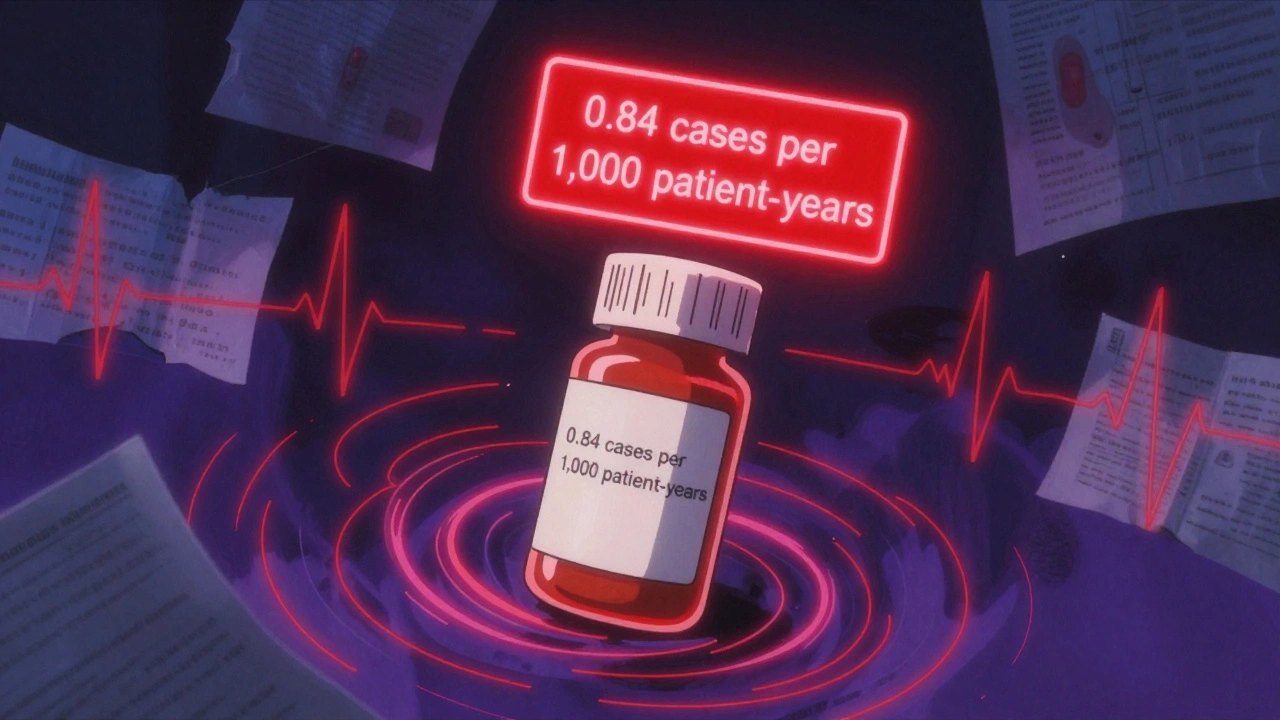
On the flip side, Clozaril’s warning got more specific in 2025. It now says: “Myocarditis occurs at a rate of 0.84 cases per 1,000 patient-years compared to 0.12 in non-clozapine antipsychotics.” That’s not vague. That’s a measurable, quantified risk. It tells doctors exactly how often to expect this problem-and when to act.
Changes happen because:
- New adverse events are reported through the FDA’s MedWatch system (over 1.2 million reports a year)
- Long-term studies reveal delayed side effects (like bone loss from Depo-Provera, still active after 20 years)
- Population data shows certain groups are at higher risk (e.g., young adults aged 18-24 for antidepressant-related suicidality)
- Language evolves to be more precise (e.g., “neuropathy” changed to “neurotoxicity” in Unituxin’s label to reflect how the drug actually damages nerves)
These aren’t random updates. They’re responses to real-world evidence. And they’re tracked in the FDA’s Drug Safety-related Labeling Changes (SrLC) database, which has been publicly searchable since January 2016.
How to Track Changes Over Time
Knowing a drug has a boxed warning isn’t enough. You need to know what that warning says today-and how it’s changed since it was first issued.
Here’s how to stay updated:
- Use the FDA’s SrLC database-This is your go-to source for labeling changes since 2016. You can search by drug name, warning type, or date. The April-June 2025 update, for example, included revisions to Clozaril’s myocarditis risk language.
- Check Drugs@FDA-This archive shows the original approval labeling and all subsequent changes. You can compare the 2004 version of an antidepressant’s warning to the 2025 version side by side.
- Subscribe to the American Journal of Health-System Pharmacy-They publish quarterly summaries of all boxed warning updates. The September 2025 issue covered 17 changes across 14 drugs.
- Use MedWatch-If you’re a healthcare provider, report any unexpected adverse events. Your report could trigger a future warning update.
Don’t rely on old printouts, outdated apps, or memory. Labels change. And if you’re prescribing, dispensing, or taking a drug with a boxed warning, you need the current version.
What Changes to Look For
Not all updates are obvious. Here’s what to watch for when reviewing a warning:
- Expanded populations-Early warnings often targeted children. Later ones add young adults, elderly patients, or those with specific genetic markers.
- Added quantification-Moving from “risk of liver damage” to “1 in 500 patients develop severe hepatotoxicity within 6 months” is a huge shift in clarity.
- Added monitoring requirements-New warnings often include mandatory tests: blood counts, EKGs, liver enzymes, or frequency of follow-ups.
- Removed warnings-Rare, but it happens. Chantix’s removal in 2016 was a landmark. It means the risk was overestimated, not underestimated.
- Terminology updates-Words like “neuropathy” replaced with “neurotoxicity” reflect better science. Don’t assume the meaning is the same.
One 2021 study found that only 61% of boxed warning updates led to measurable changes in prescribing. Why? Because many providers don’t check for updates. Or they don’t understand what changed.
Why This Matters for Patients and Providers
Patients often don’t know their meds have a boxed warning. Pharmacists may not always explain it. And even doctors miss updates.
A 2017 study found only 43.6% of primary care physicians could correctly identify which of their patients’ drugs had a boxed warning during a routine visit. That’s alarming. If you’re on a drug like clozapine or valproate, you need to know:
- What the warning says now
- What changed since you started taking it
- What monitoring you need
- What symptoms require immediate action
For prescribers, it’s even more critical. A 2024 survey of 1,247 physicians showed 68% felt “frequent confusion” about how to apply boxed warning criteria. Family doctors were especially unsure. But hospital pharmacists? 89% said they routinely adjust therapy based on these warnings.
That’s the difference between risk management and risk avoidance. A warning about suicidal behavior doesn’t mean you can’t treat depression. It means you need to monitor more closely. A warning about bone loss doesn’t mean you can’t use Depo-Provera. It means you need to check bone density every two years.
The Future of Boxed Warnings
The system isn’t perfect. Critics call it “warning fatigue”-too many alerts, too many changes, too many vague phrases. But the FDA is fixing it.
By 2025, pilot programs are testing real-time warning updates using electronic health record data. Instead of waiting 18-24 months for a label change, a spike in heart failure reports from a specific drug could trigger an alert within days.
Industry analysts predict that by 2030, 40-45% of all marketed drugs will carry a boxed warning-up from 32% in 2020. That’s not because drugs are getting more dangerous. It’s because we’re better at spotting danger.
And the warnings themselves are getting smarter. They’re shorter. More precise. More actionable. The goal isn’t to scare people. It’s to help them stay alive.
What You Should Do Now
If you’re a patient:
- Ask your pharmacist or doctor: “Does my medication have a boxed warning? When was it last updated?”
- Don’t assume your warning is the same as it was five years ago.
- Know what symptoms require an emergency visit.
If you’re a provider:
- Check the FDA SrLC database quarterly-even if you don’t think your patients are on high-risk drugs.
- Update your EHR templates with current warning language.
- Train your staff. A nurse who doesn’t know the updated clozapine monitoring schedule could miss a life-threatening drop in white blood cells.
Boxed warnings aren’t obstacles. They’re lifelines. They’ve prevented thousands of deaths. But only if we pay attention-and keep paying attention as they evolve.
How often do boxed warnings change?
Boxed warnings are updated whenever new safety data emerges-this can be every few months or once every several years. Between 2015 and 2025, the FDA issued 25-30 new or revised boxed warnings per year. Updates often follow FDA reviews of MedWatch reports, post-marketing studies, or new clinical trial data. The average time from drug approval to first boxed warning has increased to about 11 years, but updates to existing warnings happen more frequently, sometimes within a year of new evidence.
Can a boxed warning be removed?
Yes, but it’s rare. The most notable example is Chantix (varenicline), whose 2009 boxed warning about suicidal behavior was removed in 2016 after a large clinical trial found no significant increase in neuropsychiatric events compared to placebo. Removal requires strong, consistent evidence that the original risk was overestimated or no longer applicable. The FDA doesn’t remove warnings lightly-it’s a sign that science has advanced.
Do all countries use boxed warnings?
No. The boxed warning system is unique to the U.S. FDA. Other countries use different formats: the European Medicines Agency (EMA) uses “contraindications” and “warnings” in a structured format without a box, while Health Canada and Australia use bolded text or separate safety sections. However, many global drug labels reference FDA boxed warnings as a benchmark, even if they don’t replicate the format.
What’s the difference between a boxed warning and a contraindication?
A contraindication means the drug should not be used under any circumstances-for example, giving a blood thinner to someone with active bleeding. A boxed warning means the drug can be used, but only with extreme caution, monitoring, or under specific conditions. For example, clozapine has a boxed warning for agranulocytosis but is still prescribed because the benefit outweighs the risk when monitored properly. Contraindications are absolute. Boxed warnings are conditional.
How can I find out if my drug’s warning changed last year?
Go to the FDA’s Drug Safety-related Labeling Changes (SrLC) database on FDA.gov. Search by drug name and filter by date range (e.g., January 1, 2024-December 31, 2024). You can download the full report or just view the summary. The April-June 2025 update, for instance, included changes to Clozaril, risperidone, and lithium. If you’re a healthcare provider, subscribe to the American Journal of Health-System Pharmacy’s quarterly safety updates for curated summaries.
Why do some boxed warnings seem vague while others are very specific?
Early warnings (1980s-2000s) were often broad because the data was limited. For example, the first antidepressant warning in 2004 just said “increased risk of suicidal thinking.” By 2025, warnings are more precise: they name exact populations (e.g., “patients aged 18-24”), quantify risk (e.g., “0.84 cases per 1,000 patient-years”), and specify actions (e.g., “monitor for worsening mood within first 4 weeks”). The FDA now requires more granular data before approving updates, so newer warnings are sharper and more actionable.


