
Levothyroxine Dose Timing Calculator
How to Take Your Medication
To ensure optimal absorption of levothyroxine, you need to separate it from calcium and iron supplements. The article explains why timing matters and how to get the best results.
Calcium: Wait at least 4 hours after levothyroxine
Iron: Wait 2-4 hours after levothyroxine
Important Reminder
Never try to compensate for missed absorption by increasing your levothyroxine dose. This won't work and can cause dangerous fluctuations in your thyroid levels.
If you accidentally take them too close together: Don't skip your dose. Wait until the next day and return to your normal schedule. Don't double up.
Take your levothyroxine at the same time every day. That’s step one. But if you’re also taking iron or calcium supplements, that simple routine can fall apart fast. You might not realize it, but these common supplements can block your thyroid medication from working - and the result isn’t just a missed dose. It’s your TSH levels creeping up, fatigue returning, weight gain, brain fog, and a doctor scratching their head wondering why your dose isn’t working anymore.
Why Iron and Calcium Mess With Levothyroxine
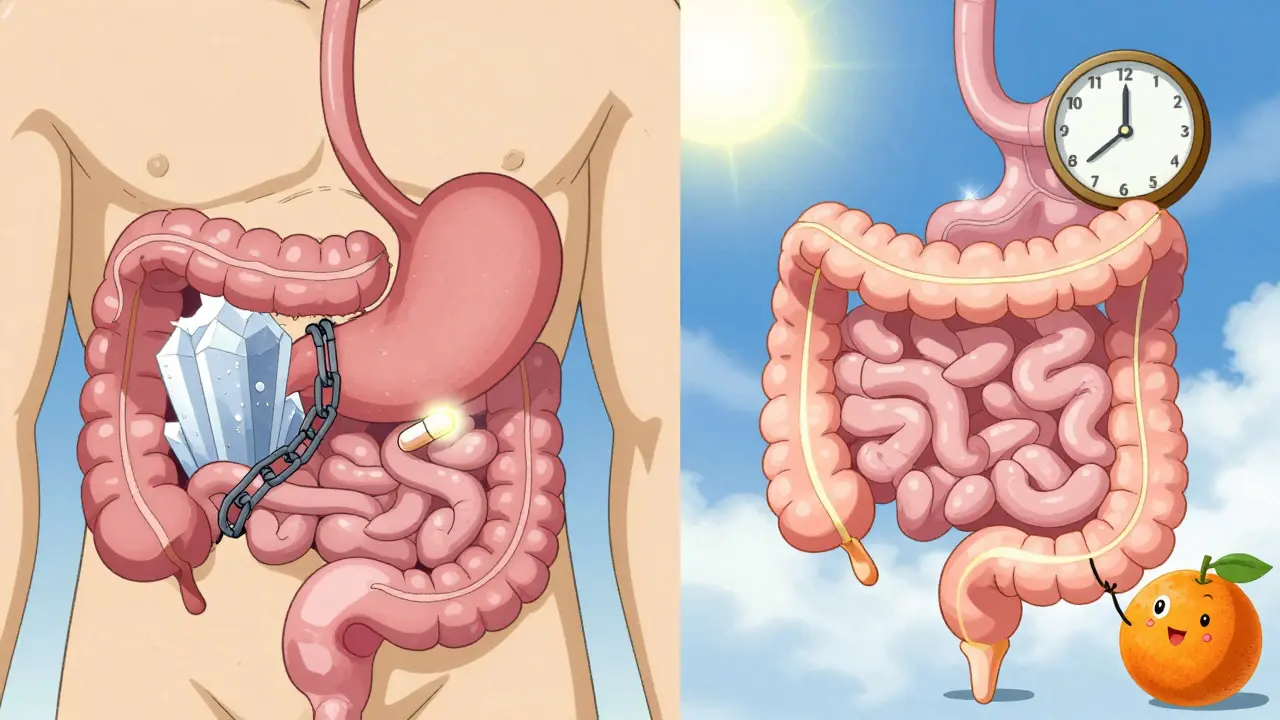
Levothyroxine isn’t like other pills. It has a narrow therapeutic index, meaning even a 10% drop in absorption can throw your whole thyroid balance off. Your body needs a precise amount - too little and you’re hypothyroid again; too much and you risk heart palpitations or bone loss. When you take iron or calcium at the same time, they bind to levothyroxine in your gut like glue. Studies show this binding can reduce absorption by up to 25%.
The science is clear. Calcium - whether it’s carbonate, citrate, or acetate - forms insoluble complexes with levothyroxine in the acidic environment of your stomach. In vitro tests from the 1990s showed that at calcium concentrations found in supplements, over 90% of the levothyroxine got trapped and couldn’t be absorbed. Iron does the same thing. A 1992 study found that 78% of patients on stable levothyroxine saw their TSH levels spike when they started taking ferrous sulfate. Some even developed full-blown hypothyroid symptoms: dry skin, cold hands, depression.
How Long Should You Wait?
You can’t just space them out by 30 minutes. You need real distance. Here’s what the data says:
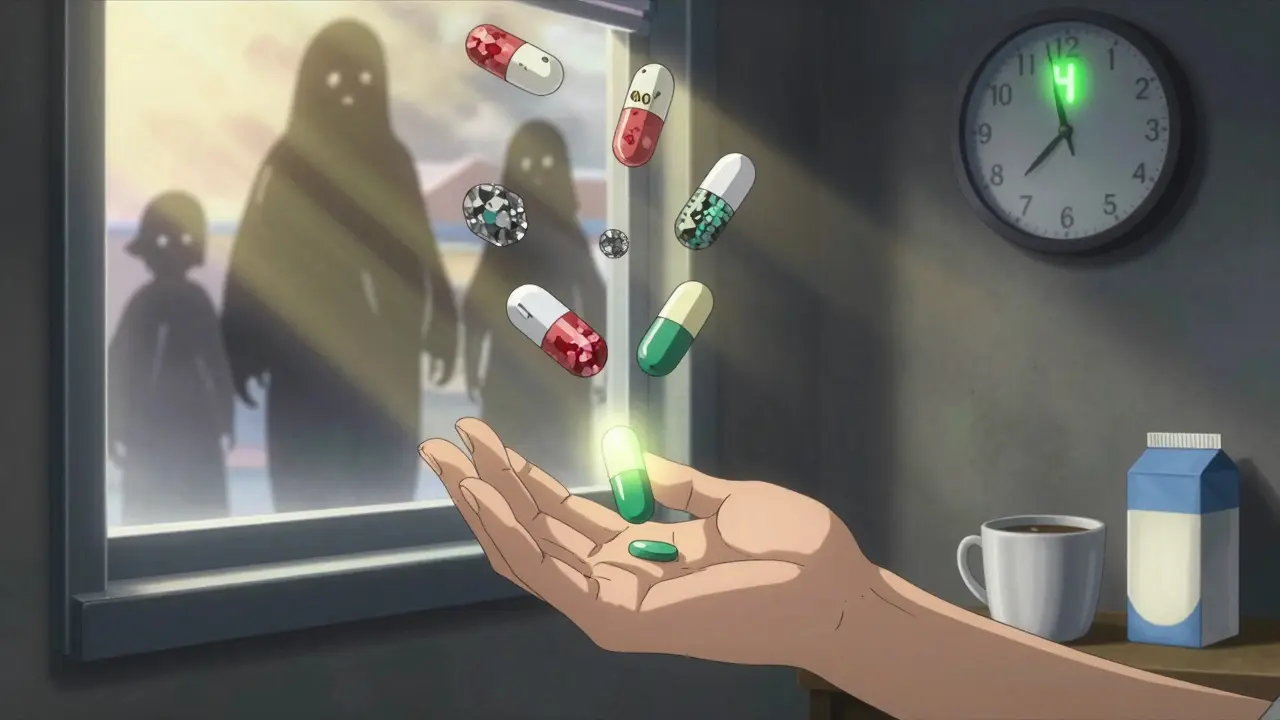
- Calcium supplements: Wait at least 4 hours after taking levothyroxine. This isn’t a suggestion - it’s backed by multiple clinical studies. Even calcium citrate, often thought to be gentler, still cuts absorption by over 20% if taken too close.
- Iron supplements: Wait 2 to 4 hours after levothyroxine. Iron binds more aggressively than calcium in some cases. One 2020 study found iron caused more frequent dose adjustments than calcium in patients with thyroid disease.
There’s no wiggle room here. If you take levothyroxine at 6 a.m., don’t touch your calcium pill until 10 a.m. Don’t take your iron until after noon. And if you take calcium at night? That’s fine - just make sure you don’t take levothyroxine after dinner. Timing matters more than you think.
What About Taking Them Together? Can’t I Just Adjust the Dose?
Some people try to compensate by increasing their levothyroxine dose. Don’t. It doesn’t work. You can’t out-dose the binding. The supplement will still block absorption, and you’ll end up with erratic TSH levels - high one month, low the next. That’s dangerous. A 2020 study of 605 patients showed that 16% needed dose changes because they didn’t separate their supplements. That’s not a fluke. That’s a pattern.
And here’s the catch: TSH levels don’t always show the problem right away. You might feel fine for months. Then, suddenly, your energy crashes. Your doctor says, “Let’s bump your dose.” But if you’re still taking calcium with your pill, you’re just chasing your tail. The fix isn’t more medication. It’s better timing.
Best Practices: When and How to Take Them
Here’s how to build a real routine - not just guesswork.
- Take levothyroxine first thing in the morning, on an empty stomach, with a full glass of water. Wait 30 to 60 minutes before eating or drinking anything else. Coffee, milk, orange juice - they all interfere too.
- Take calcium supplements with food, preferably at dinner. That’s when your body absorbs calcium best anyway. And it gives you a natural 8-10 hour gap from your morning dose.
- Take iron supplements at lunchtime or early afternoon, at least 2 hours after levothyroxine. Avoid taking iron with dairy, calcium, or antacids. Vitamin C helps iron absorption, so pair it with an orange or a glass of OJ.
- Don’t take multivitamins with levothyroxine. Many contain iron or calcium. If you need a multivitamin, take it at night.
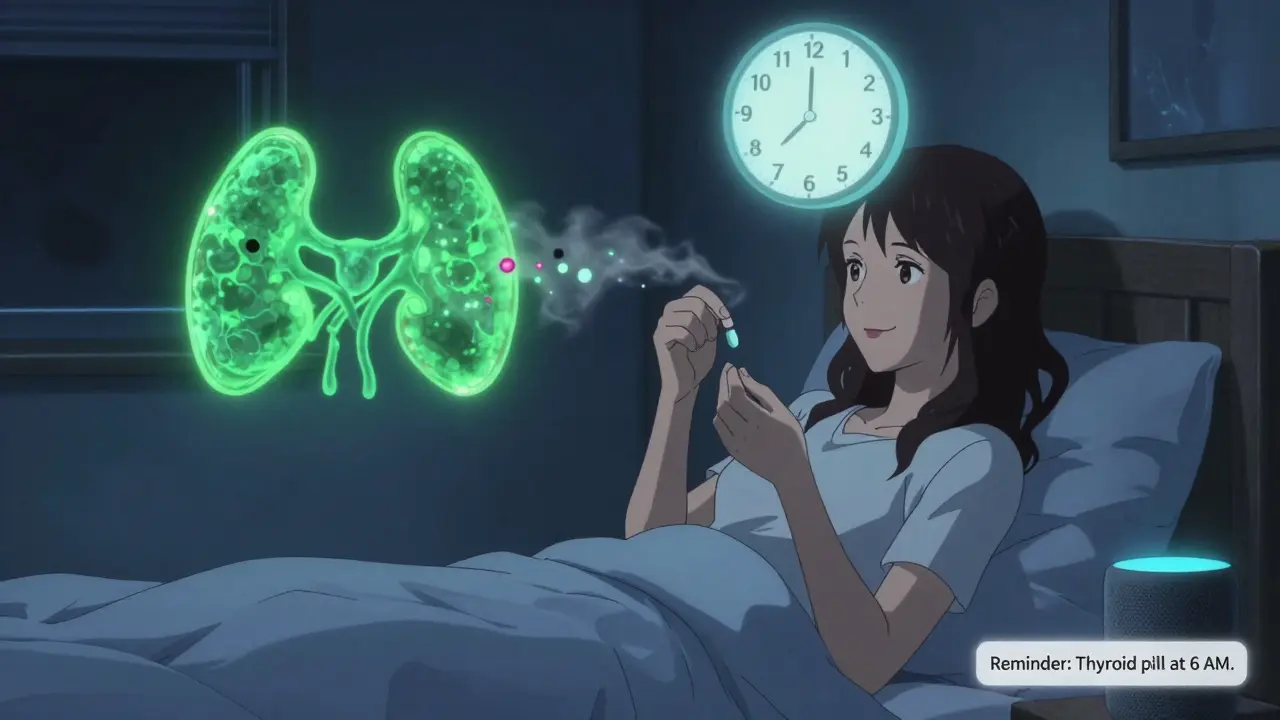
Some patients use pill organizers with labeled compartments for morning, noon, and night. Others set phone alarms: “Levothyroxine” at 6:00 a.m., “Calcium” at 7:00 p.m. One woman from New Zealand told her endocrinologist she used her smart speaker to say, “Hey Google, remind me to take my thyroid pill,” every morning. Simple. Effective.
What If I Can’t Stick to 4 Hours?
Life happens. You’re at work. You’re traveling. You forget. You’re not alone. About 41% of patients in a 2022 study didn’t follow separation rules consistently. But there are options.
Liquid levothyroxine - like Tirosint - may help. A 2021 study found that patients on liquid form had significantly lower TSH levels when taking iron compared to those on tablets. The liquid form doesn’t bind as easily to minerals in the gut. It’s not a magic fix, but for some, it’s a game-changer. The downside? It costs about 35% more than generic tablets.
Extended-release formulations are new. The FDA approved Thyropatch ER in 2023, designed to release levothyroxine slowly and reduce interaction risk. Early data shows a 28% drop in calcium interference. It’s not widely available yet, but it’s coming.
What About Other Supplements?
It’s not just iron and calcium. Soy products, fiber supplements, antacids with aluminum or magnesium, and even some medications like cholestyramine can interfere. Always check with your pharmacist. If a supplement says “take with food” or “avoid dairy,” it might also interfere with your thyroid meds.
And don’t forget: your gut health matters. Conditions like celiac disease, H. pylori infection, or gastric bypass surgery can make absorption worse. If you have one of these, your doctor may need to monitor you more closely - even if you follow the timing rules.
Real Stories: What Happens When You Get It Right
A 52-year-old woman in Wellington, NZ, was struggling with fatigue and weight gain despite taking her levothyroxine daily. Her TSH was stuck at 7.4 mIU/L - way above the ideal range. She was taking calcium at dinner and iron at lunch. Her endocrinologist told her to move calcium to bedtime and iron to lunch, with at least 3 hours between her pill and iron. Six weeks later, her TSH dropped to 1.8. She said she felt like a new person.
On the flip side, a Reddit thread from October 2022 had 142 people sharing their experiences. 78% said their TSH spiked when they didn’t separate supplements. 63 specifically blamed iron. One wrote: “I took Synthroid and my iron together for years. I thought I was fine. Then I got diagnosed with Hashimoto’s flare-up. Turns out, it was the iron.”
Bottom Line: Timing Is Everything
Levothyroxine works - but only if your body can absorb it. Iron and calcium aren’t enemies. They’re just bad timing partners. The fix isn’t complicated. It’s not expensive. It’s just consistent.
Do this:
- Take levothyroxine alone, on an empty stomach, first thing in the morning.
- Wait 4 hours before taking calcium.
- Wait 2-4 hours before taking iron.
- Use alarms. Use pill boxes. Use your phone.
- If you’re still struggling, ask about liquid levothyroxine.
Your thyroid doesn’t care how busy you are. It just wants to work. Give it the chance.
Can I take levothyroxine and calcium at the same time if I increase my levothyroxine dose?
No. Increasing the dose won’t fix the absorption problem. Calcium binds to levothyroxine in your gut, blocking it from entering your bloodstream. Even if you take more, your body still can’t absorb it properly. This leads to unstable TSH levels and puts you at risk for both under- and over-treatment. The only reliable solution is to separate them by at least 4 hours.
Does the type of calcium matter - carbonate vs. citrate vs. acetate?
Yes, but not in the way you might think. All three forms - carbonate, citrate, and acetate - reduce levothyroxine absorption by roughly the same amount: 20-25%. Early studies suggested acetate might be safer, but a 2011 clinical trial proved that’s not true. All calcium supplements interfere. It doesn’t matter if it’s Tums, Citracal, or a generic brand. If it contains calcium, wait 4 hours after your thyroid pill.
Can I take iron at night instead of in the morning?
Yes - and it’s actually better. Iron is best absorbed on an empty stomach, but taking it at night, several hours after levothyroxine, avoids the interaction entirely. Many patients find it easier to remember iron at bedtime than midday. Just make sure you don’t take it with dairy, calcium, or antacids. Pair it with vitamin C (like an orange or juice) to help absorption.
What if I forget and take them together? Should I skip my dose?
Don’t skip your dose. If you accidentally take levothyroxine with calcium or iron, wait until the next day and return to your normal schedule. Don’t double up. Missing one dose occasionally won’t hurt. What matters is consistency over time. If this happens often, it’s time to rethink your routine - set alarms, change timing, or talk to your doctor about liquid levothyroxine.
Are there any new medications that don’t interact with iron or calcium?
Yes - but they’re not perfect. The FDA approved Thyropatch ER in 2023, an extended-release levothyroxine designed to reduce interactions. Early studies show it cuts calcium interference by about 28%. Liquid levothyroxine (like Tirosint) also shows less binding in the gut. Neither eliminates the risk, but they help. Both cost more than generic tablets. Talk to your doctor if you struggle with timing - these options may be worth considering.


