
For millions of low-income Americans on Medicaid, the difference between a brand-name drug and its generic version isn’t just about the label-it’s about whether they can afford to take their medicine at all. In 2023, 91% of all prescriptions filled through Medicaid were for generic drugs. That’s not a coincidence. It’s the result of a system designed to stretch limited dollars as far as possible-without sacrificing health outcomes.
Why Generics Are the Backbone of Medicaid
Generic drugs are chemically identical to their brand-name counterparts. They work the same way. They’re held to the same safety standards by the FDA. The only real difference? Price. And that difference is massive. In Medicaid, the average copay for a generic prescription is $6.16. For a brand-name drug? $56.12. That’s nearly nine times more. For someone living paycheck to paycheck, that’s the difference between filling a prescription and skipping it. A 2023 report from the Association for Accessible Medicines found that 93% of generic prescriptions cost less than $20 at the pharmacy counter. Only 59% of brand-name prescriptions hit that same low threshold. This isn’t just about patient affordability. It’s about system efficiency. Generics make up 91% of Medicaid prescriptions but account for just 17.5% of total prescription drug spending. That means for every dollar spent on Medicaid drugs, only about 18 cents goes to generics-while the rest covers the few brand-name drugs that still dominate cost.How Medicaid Gets Such Low Prices
Medicaid doesn’t just rely on generics to save money-it has a powerful tool to drive prices even lower: the Medicaid Drug Rebate Program (MDRP). Created in 1990, this program requires drug manufacturers to pay rebates to state Medicaid programs in exchange for having their drugs covered. For non-specialty generic drugs, Medicaid gets rebates equal to 86% of the average retail price. That means if a generic drug retails for $10, Medicaid pays about $1.40 after the rebate. That’s not a discount-it’s a near-total write-down. In 2023, these rebates saved the federal and state governments a combined $53.7 billion. That’s more than half of all gross drug spending. Without rebates, Medicaid’s drug bill would be twice as high. And Medicaid gets better prices than almost any other federal program-including the Department of Veterans Affairs.Who’s Getting Paid Behind the Scenes?
Even with these savings, not all the money reaches the patient. Pharmacy Benefit Managers (PBMs)-middlemen who negotiate drug prices between manufacturers and insurers-take a cut. A 2025 report from the Ohio Auditor of State found that PBMs collected 31% in fees on generic drugs worth $208 million in just one year. That’s $64.5 million in fees on drugs that were already priced low. For a patient paying $6 for a generic blood pressure pill, a portion of that $6 may be going to a PBM, not the pharmacy or the manufacturer. These fees aren’t transparent. They don’t show up on the receipt. But they eat into the savings Medicaid was designed to deliver. Some alternative models, like the Mark Cuban Cost Plus Drug Company, offer even lower prices-sometimes under $5 for generics. But those aren’t widely available through Medicaid. In fact, only 26% of expensive generic drugs were accessible through such programs in 2023. Medicaid’s system still delivers the best overall value for the majority of enrollees.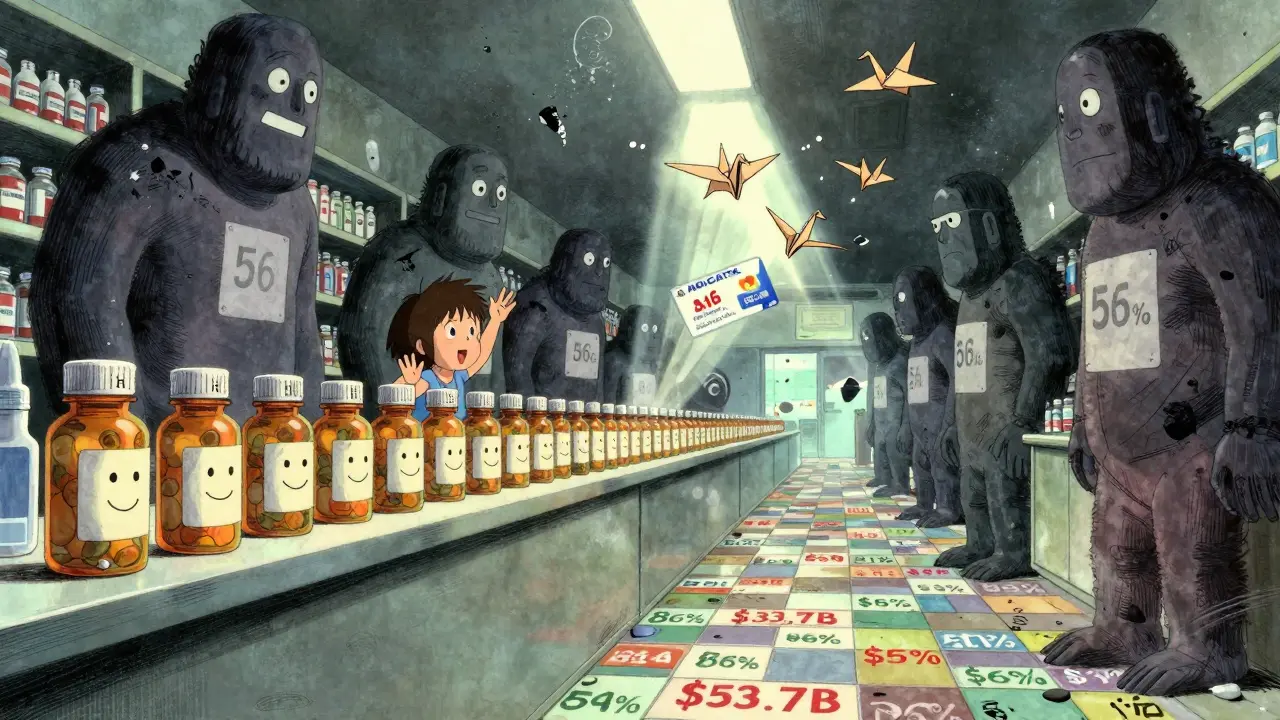
When Generics Aren’t Enough
Despite the success of generics, Medicaid drug spending is rising. Why? Specialty drugs. These are high-cost medications for complex conditions like cancer, rheumatoid arthritis, or rare genetic disorders. They’re not generics. They’re often biologics-complex molecules that can’t be easily copied. In 2021, drugs costing more than $1,000 per claim made up less than 2% of Medicaid prescriptions-but more than half of total spending. That’s the new challenge. While generics keep routine prescriptions affordable, specialty drugs are driving up overall costs. Net Medicaid drug spending jumped from $30 billion in 2017 to $60 billion in 2024. That’s a 100% increase in just seven years. To respond, the Centers for Medicare & Medicaid Services (CMS) launched the GENEROUS Model in 2024. It’s designed to reduce waste, improve formulary management, and encourage better use of lower-cost alternatives-even among specialty drugs.What Patients Actually Experience
For most Medicaid patients, switching to a generic is seamless. Pharmacists automatically substitute generics unless the doctor says otherwise. Copays are low. Access is good. But it’s not perfect. Some patients report delays. One Reddit user, ‘MedicaidMom2023,’ shared that her daughter’s asthma inhaler switched to a generic-and her copay dropped from $25 to $3. But getting approval took three weeks and multiple phone calls. That’s because Medicaid uses prior authorization for some drugs, even generics, to prevent overuse or misuse. About 15-20% of Medicaid prescriptions require prior authorization. That’s not a huge number, but when you’re sick and waiting for a treatment, every day matters. And some states have more hurdles than others. Forty-eight states use managed care organizations to handle pharmacy benefits, and each has its own rules.
What’s Next for Medicaid and Generics?
The future of Medicaid’s drug savings depends on two things: keeping generics affordable and managing the rise of specialty drugs. Biosimilars-generic versions of biologic drugs-are coming online. Experts predict they could save Medicaid $100 billion annually by 2027. That’s huge. But getting them into formularies takes time. Regulatory approval, payer negotiations, and provider education all slow adoption. There’s also talk of extending Medicare’s new drug price negotiation powers to Medicaid. Stanford researchers estimate that could save another $15-20 billion over ten years. But that’s still in the planning stage. Meanwhile, the core truth remains: generics are the single most effective tool Medicaid has to keep low-income patients healthy and out of the hospital. They’re not perfect. They’re not always fast to arrive. But they work-and they save money at every level.What You Should Know as a Medicaid Patient
If you’re on Medicaid:- Always ask if a generic version is available-even if your doctor prescribes a brand-name drug.
- Your copay for generics is likely under $10. If it’s higher, ask your pharmacy or Medicaid office why.
- Don’t skip refills because of cost. Generics are designed to be affordable.
- Know your state’s rules. Some require prior authorization for certain meds, even generics.
- Report unexpected copay increases. Sometimes, the pharmacy or PBM made a mistake.
Are generic drugs as safe and effective as brand-name drugs?
Yes. The FDA requires generic drugs to have the same active ingredients, strength, dosage form, and route of administration as the brand-name version. They must also meet the same strict standards for purity, stability, and performance. Generic drugs are tested to ensure they work the same way in the body. The only differences are in inactive ingredients like fillers or colorants, which don’t affect how the drug works.
Why is my generic drug copay higher than $6?
While the average Medicaid generic copay is $6.16, some states or managed care plans charge more-especially for higher-tier generics or those with limited competition. If your copay is higher, ask your pharmacy if there’s a lower-cost alternative or if your plan offers a mail-order option. You can also contact your state Medicaid office to confirm your copay structure.
Can I get generics through mail-order pharmacies?
Yes. Most Medicaid managed care plans offer mail-order pharmacy services, often with lower copays for 90-day supplies. For example, a 30-day generic prescription might cost $6, but a 90-day supply through mail-order could cost $12-saving you money and trips to the pharmacy. Check your plan’s formulary or call customer service to see what’s available.
Why does Medicaid require prior authorization for some generics?
Prior authorization is used to prevent overuse, ensure medical necessity, or encourage use of the lowest-cost option within a drug class. For example, if there are three similar generic blood pressure pills, Medicaid may require you to try the cheapest one first. It’s not about denying care-it’s about managing costs so more people can get the medications they need.
Do generics cost more in some states?
Yes. While federal rules set minimum rebates, states have flexibility in setting copay amounts and formularies. Some states have higher copays for certain generics, especially if they’re newer or have limited competition. Others offer $0 copays for generics. Your state’s Medicaid website or your managed care plan’s member handbook will list your specific copay structure.


