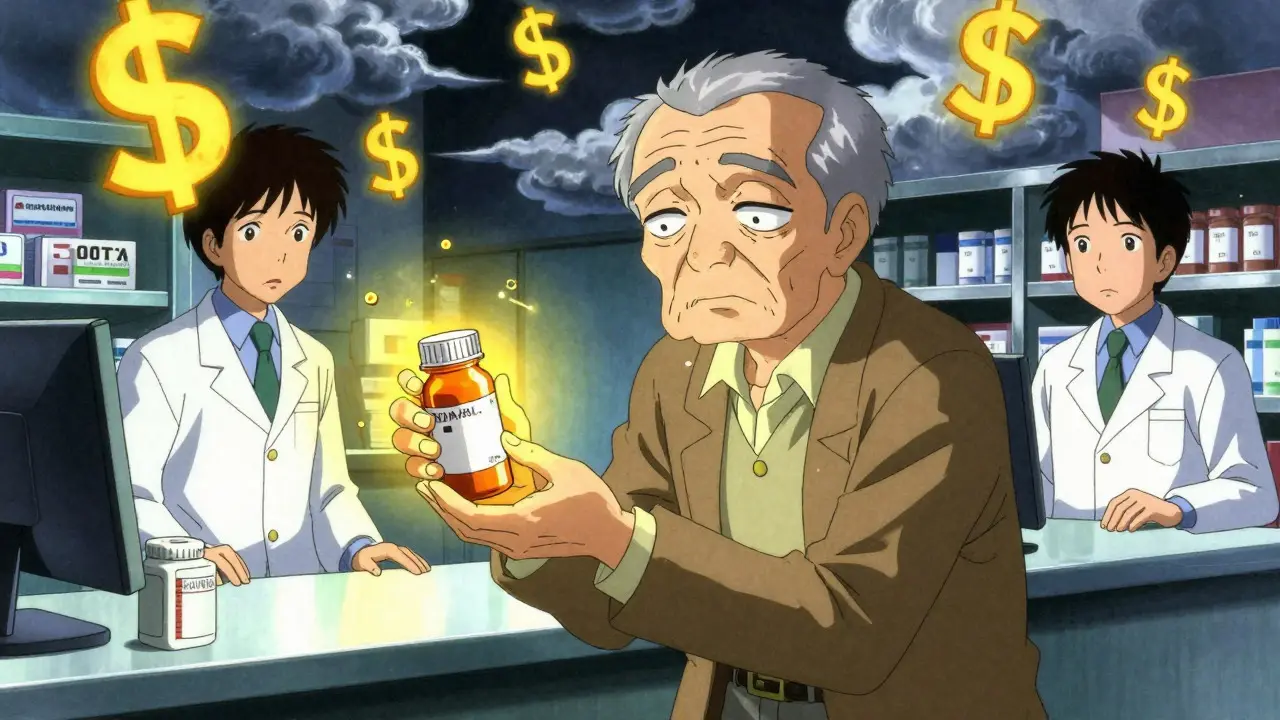

You fill your prescription, and the pharmacist tells you it’s $45. You have a Part D plan, but that monthly premium feels like a lot when you’re already watching every dollar. If you are on a fixed income, those costs can force you to skip doses or ration pills just to keep the lights on. But there is a federal program designed specifically to stop this from happening, and most people don’t even realize they qualify.
Medicare Extra Help, officially known as the Part D Low-Income Subsidy (LIS), is a financial assistance program that drastically cuts what you pay for medications. For generic drugs-the kind of everyday meds for blood pressure, cholesterol, and diabetes-this subsidy can drop your cost from tens of dollars down to a few cents. In 2026, if you qualify, you could pay $0 for your plan premium and only about $4.90 per generic prescription. That is not a typo. It is real money back in your pocket.
What Is Medicare Extra Help?
Extra Help isn't a separate insurance plan. It is a subsidy attached to your existing Medicare Part D prescription drug plan. Think of it as a discount card that the government hands you because you meet specific income and resource limits. The Social Security Administration (SSA) runs the enrollment, while the Centers for Medicare & Medicaid Services (CMS) manages the rules.
The goal is simple: ensure that low-income seniors can afford their life-saving medications. Before Extra Help, many beneficiaries faced deductibles of nearly $600 before coverage kicked in. With the subsidy, that deductible vanishes. The premium for your drug plan? Gone. The high copays during the "donut hole" coverage gap? Eliminated. This program effectively smooths out the rocky financial landscape of Medicare Part D.
According to data from the National Council on Aging (NCOA), the average value of this help is roughly $5,900 to $6,200 per person annually. That is a significant chunk of change for someone living on a fixed budget.
How Much Do Generic Prescriptions Cost With Extra Help?
This is where the numbers get exciting for your wallet. Let’s look at the specific costs for 2026, which build upon the 2025 baseline established by recent regulatory updates.
| Cost Component | Standard Part D Plan | With Extra Help (LIS) |
|---|---|---|
| Monthly Premium | $30 - $70+ (varies by plan) | $0 |
| Annual Deductible | Up to $595 | $0 |
| Copay for Generic Drugs | 25% of drug cost (after deductible) | Max $4.90 per prescription |
| Copay for Brand-Name Drugs | 25% of drug cost | Max $12.15 per prescription |
| Coverage Gap (Donut Hole) | You pay up to 25% of brand/generic costs | No gap; same low copays apply |
Notice the difference. Without Extra Help, if you take a generic medication that costs $50, you might pay $12.50 after meeting your deductible. Under Extra Help, that same pill costs you no more than $4.90. If you take multiple medications daily, the savings compound quickly. A patient filling four generic prescriptions a month would save hundreds of dollars compared to standard coverage.
There is an even better tier. If you qualify for both Medicare and Medicaid (dual-eligible) and your income is below 100% of the Federal Poverty Level, your copay drops further to just $1.60 for generics. This enhanced benefit ensures that the most vulnerable patients face almost zero barrier to entry for essential drugs.
Who Qualifies for Extra Help in 2026?
Eligibility hinges on two things: income and resources. The SSA reviews these figures strictly. You cannot guess; you need to know your exact numbers.
Income Limits (2026 Guidelines):
- Individuals: Approximately $23,475 annually
- Married couples living together: Approximately $31,725 annually
Your income includes Social Security benefits, pensions, wages, worker’s compensation, and veterans’ benefits. It does not include certain types of assistance like housing subsidies or medical treatment costs.
Resource Limits (Assets):
- Individuals: Up to $17,600
- Married couples living together: Up to $35,130
Resources count bank accounts, stocks, bonds, mutual funds, IRAs, and cash. Crucially, your primary home and one car are excluded from this calculation. There is also a $1,500 allowance for burial expenses that doesn't count against your limit.
If you fall even slightly over these limits, you hit what experts call the "cliff effect." You lose all benefits, and your costs skyrocket overnight. This rigidity frustrates many advocates, including Susan Reinhard from AARP, who has testified that these thresholds leave struggling seniors without aid despite genuine financial need.

How to Apply for Extra Help
Applying isn't instant, but it is free. You do not need a lawyer or a paid consultant. Here is how you start:
- Check Automatic Eligibility: If you receive Supplemental Security Income (SSI), Medicaid, or a Medicare Savings Program, you are likely automatically enrolled. Check your Medicare Summary Notice to confirm.
- Apply Online: Visit SSA.gov. The application is digital and guides you through each step.
- Call SSA: Dial 1-800-772-1213. Representatives can walk you through the process or mail you paper forms.
- Visit Local Office: Bring proof of income (tax returns, benefit letters) and assets (bank statements).
The processing time typically takes 3 to 6 weeks. During this period, keep taking your medications. If approved, the subsidy often applies retroactively to the date of your application.
A pro tip: Contact your local State Health Insurance Assistance Program (SHIP). These are free, unbiased counselors who specialize in Medicare. According to SHIP surveys, 73% of applicants needed help navigating the paperwork. They can review your documents before you submit them to avoid rejection due to minor errors.
Common Pitfalls and How to Avoid Them
Many eligible people miss out because they assume they don't qualify or find the process too confusing. Here are the biggest hurdles:
The Annual Review Trap: Every year, usually in August, the SSA sends a renewal form. You must return it within 30 days. If you miss this deadline, your Extra Help terminates on January 1 of the following year. Set a calendar reminder now. Losing benefits means facing full premiums and deductives immediately.
Plan Confusion: Having Extra Help gives you a special power: a Special Enrollment Period (SEP). Unlike other Medicare members who can only switch plans once a year during Open Enrollment, you can change your Part D plan once a month. Use this to your advantage. If a pharmacy raises prices or moves a drug to a higher tier, switch to a plan that offers better pricing for your specific generics. Changes take effect the first of the next month.
Formulary Mismatches: Not all Part D plans cover all drugs. Even with Extra Help, if your plan doesn't cover your specific generic, you pay out of pocket. Always check the formulary (drug list) of any new plan. You can request exceptions, but prevention is easier than cure.

Why Generic Drugs Matter More Now
The Inflation Reduction Act introduced new caps on insulin and future drug prices, but for millions, generic medications remain the backbone of their health regimen. Statins, metformin, lisinopril-these are the workhorses of senior healthcare. Because they are off-patent, they are cheap to manufacture, but insurance markups can still make them expensive without subsidies.
Extra Help locks in that low price. While standard Part D beneficiaries face variable costs based on complex actuarial calculations, Extra Help provides predictability. You know exactly what you will pay at the counter. This stability improves medication adherence. MedPAC reported that Extra Help beneficiaries adhere to their medication schedules 23 percentage points better than similar non-beneficiaries. Taking your medicine consistently prevents hospital visits, which are far more costly than any copay.
Frequently Asked Questions
Does Extra Help cover brand-name drugs?
Yes, but the copay is higher. In 2026, you pay a maximum of $12.15 for brand-name prescriptions under Extra Help, compared to $4.90 for generics. However, you still pay $0 for the premium and deductible, and you never enter the coverage gap.
What happens if my income increases slightly above the limit?
You may lose eligibility entirely due to the strict cutoffs. This is known as the "cliff effect." If you anticipate an income increase, contact SSA before filing taxes or reporting changes to see if partial subsidies or state-based programs might offer alternative support.
Can I choose any pharmacy with Extra Help?
You must use pharmacies within your chosen Part D plan's network. Most major chains participate, but always verify. Using an out-of-network pharmacy means paying full price unless you have emergency coverage.
How long does it take to get approved?
Initial applications typically take 3 to 6 weeks. Automatic enrollments for SSI or Medicaid recipients happen faster, often within a few weeks of qualification. Keep taking your meds during the wait; approval is often retroactive.
Do I need to reapply every year?
Not fully, but you must complete an annual renewal form sent by the SSA, usually in August. Returning this form within 30 days confirms your continued eligibility for the next year. Missing it results in loss of benefits on January 1.
Is Extra Help available in all states?
Yes, it is a federal program available in all 50 states and Washington D.C. However, some states offer additional pharmaceutical assistance programs that can stack on top of Extra Help for extra savings.