
Postoperative Ileus Risk & Recovery Estimator
Patient Parameters
Results & Recommendations
Enter patient parameters and click "Estimate Recovery Timeline" to see personalized predictions.
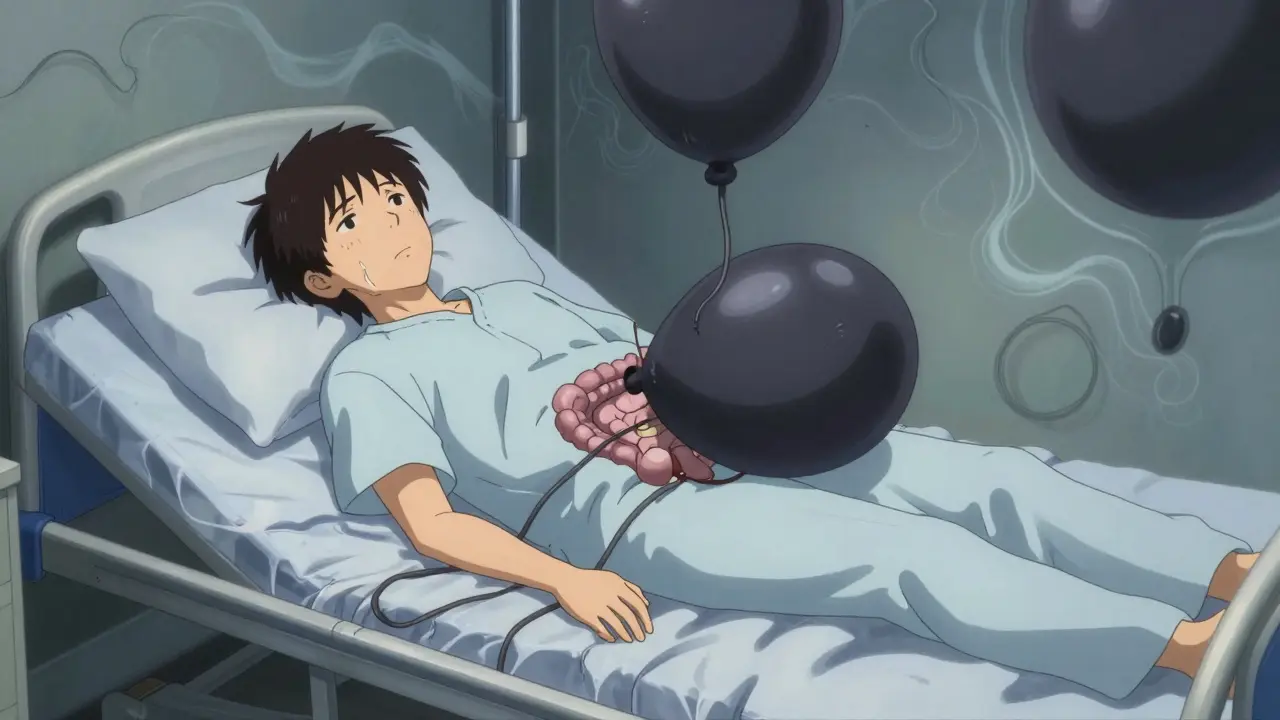
Imagine you are recovering from surgery. You expect pain to fade and energy to return. Instead, your stomach feels like a lead balloon. You cannot pass gas, you feel bloated, and nausea keeps you from eating. This is not just discomfort; it is postoperative ileus, defined as a temporary paralysis of the intestines that occurs after surgical procedures. While surgery itself causes some gut slowdown, the opioids used to manage pain are often the primary culprit. This condition adds days to hospital stays and costs the U.S. healthcare system billions annually. Understanding how to prevent and treat it is critical for faster recovery.
Why Opioids Stop Your Gut
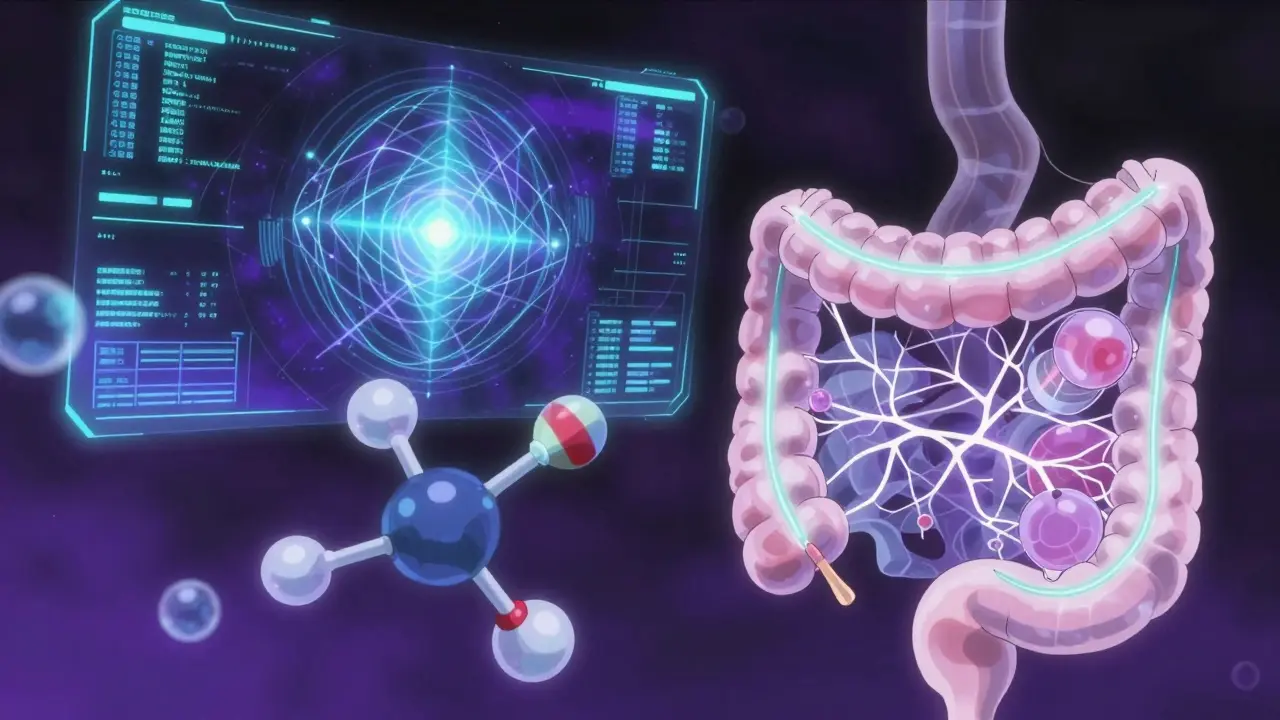
Your digestive system relies on complex nerve signals to move food through your intestines. When surgeons operate, they disrupt these signals. However, the biggest brake on your gut motility often comes from the pain medication you receive. Opioids bind to mu-opioid receptors located in the myenteric plexus of your gastrointestinal tract. These receptors do not care about your brain’s need for pain relief; they only know how to slow down muscle contractions.
The mechanism is straightforward but potent. Activation of these receptors inhibits the release of neurotransmitters like substance P and vasoactive intestinal peptide. In experimental models, this inhibition can decrease colonic motility by up to 70%. The result is a dose-dependent paralysis. The more opioids you take, the longer your gut stays still. Studies show that standard doses of morphine equivalents can prolong gastric emptying by 50% to 200%. This is why patients receiving high doses-more than 50 morphine milligram equivalents in the first 48 hours-report significantly worse bloating and delayed bowel movements compared to those on lower doses.
This pathophysiology involves three interconnected factors:
- Neurogenic: Increased sympathetic stimulation from surgical stress inhibits gut movement while suppressing parasympathetic activity.
- Inflammatory: Surgical trauma releases cytokines that further disrupt gut function.
- Pharmacologic: Opioids directly block the nerves controlling intestinal muscles.
Understanding this triad helps explain why simply waiting it out is rarely the best strategy. Active intervention is required to counteract these specific biological blocks.
The Cost of Delayed Recovery
Postoperative ileus is not just an inconvenience; it has significant economic and clinical consequences. A clinically significant ileus lasts more than 3 days post-surgery. During this time, patients cannot eat normally, requiring intravenous fluids and sometimes nasogastric tubes. According to a JAMA Surgery analysis, POI adds approximately 2-3 days to average hospital recovery times. For the healthcare system, this translates to an estimated $1.6 billion in annual costs in the United States alone.
| Metric | Without POI | With Opioid-Exacerbated POI |
|---|---|---|
| Average Hospital Stay | Standard duration | +2 to 3 days |
| Time to First Bowel Movement | 2.0 days | 5.3 days (high opioid use) |
| Patient Discomfort Score | Low | High (7.8/10 bloating) |
| Risk of Readmission | Baseline | Increased due to complications |
Hospitals face penalties under programs like the Hospital Readmissions Reduction Program if excessive POI-related readmissions occur. In 2022, nearly 16% of general surgery programs faced financial penalties averaging $187,000 per facility. For patients, the experience is miserable. Surveys indicate that severe bloating and inability to tolerate oral intake are among the most distressing aspects of post-surgical recovery.

Prevention Strategies: The ERAS Approach
The most effective way to handle postoperative ileus is to prevent it before it starts. The Enhanced Recovery After Surgery (ERAS) Society guidelines provide a robust framework for this. The core principle is multimodal analgesia-using a combination of non-opioid medications to control pain so that opioid use is minimized or eliminated.
ERAS protocols recommend initiating pain management preoperatively. This includes scheduled acetaminophen (1g IV) and ketorolac (30mg IV), provided there are no contraindications like kidney issues or bleeding risks. Regional anesthesia, such as spinal or epidural blocks, is also crucial. Data shows that epidural analgesia can reduce POI duration from 5.2 days to 3.8 days in orthopedic surgery patients. By blocking pain signals at the source, regional anesthesia reduces the need for systemic opioids that would otherwise paralyze the gut.
Lifestyle interventions play a surprisingly large role. Early ambulation is a cornerstone of prevention. Walking within 4 hours of surgery stimulates the vagus nerve and encourages gut motility. Dr. Michael Camilleri of Mayo Clinic notes that early ambulation reduces POI duration by an average of 22 hours compared to standard mobilization. Another simple trick is chewing gum. Chewing four times daily mimics eating, triggering cephalic-vagal reflexes that stimulate the digestive tract without introducing actual food. Clinical bundles including gum chewing, early walking, and scheduled acetaminophen have reduced average POI duration from 4.1 days to 2.7 days in multiple studies.
Treatment Options When Ileus Occurs
If prevention fails and ileus develops, treatment options range from supportive care to pharmacologic intervention. Traditional methods like nasogastric decompression offer limited benefit, with Cochrane reviews showing only a 12% reduction in POI duration compared to standard care. Modern medicine favors peripheral opioid receptor antagonists (PORAs).
PORAs work by blocking opioid receptors in the gut without affecting pain relief in the brain. Two key drugs in this category are alvimopan and Entereg, and methylnaltrexone and Relistor. Alvimopan, given in doses of 0.5-12mg, has been shown to reduce time to gastrointestinal recovery by 18-24 hours in abdominal surgery patients. Methylnaltrexone, administered subcutaneously at 8-12mg, produces a 30-40% faster return of bowel function in opioid-tolerant patients.
However, these drugs are not without risks. They are strictly contraindicated in patients with known or suspected mechanical gastrointestinal obstruction, which occurs in 0.3-0.5% of surgical cases. Using them in these situations can cause bowel perforation. Therefore, careful screening is essential. Additionally, cost is a factor. Methylnaltrexone adds approximately $120-$150 per dose, which may not be cost-effective for low-risk patients where natural recovery is likely.
Implementing Effective Protocols
Successful management of postoperative ileus requires a team approach. Implementation of ERAS protocols typically takes 3-6 months of interdisciplinary training. The most successful programs incorporate daily "POI rounds" where surgical, anesthesia, and nursing staff assess bowel function using standardized metrics.
Key metrics include:
- Time to first flatus (ideal: <72 hours)
- Time to first bowel movement (ideal: <96 hours)
- Ability to tolerate 1,000mL oral intake within 24 hours of symptom onset
Documentation must track precise opioid dosing in morphine milligram equivalents (MME). If a patient exceeds 40 MME at 24 hours, protocols should trigger the addition of PORAs or a transition to non-opioid alternatives. Resistance to change is common; studies report that 63% of initial implementations face pushback from anesthesia teams accustomed to opioid-centric protocols. Overcoming this requires education on the long-term benefits, including reduced length of stay and improved patient satisfaction.
Adoption rates vary by specialty. Colorectal surgery programs lead with 78% implementation of formal POI prevention protocols, while orthopedic programs lag at 34%. Academic medical centers show 92% adoption of comprehensive multimodal protocols, whereas rural facilities rely primarily on traditional management, leading to disparities in outcomes. POI duration averages 3.2 days in academic centers versus 5.1 days in rural settings.
Future Directions and Innovations
The field of postoperative ileus management is evolving rapidly. New formulations of existing drugs are in development. An extended-release version of alvimopan is currently in Phase III trials, aiming to address previous safety concerns that led to its withdrawal in 2009. Meanwhile, methylnaltrexone continues to see expanded use following FDA approval updates.
Emerging therapies include naltrexone implants for sustained peripheral blockade and fecal microbiome transplantation for refractory cases. Pilot data suggests microbiome transplants can improve motility by 40% in stubborn cases. Artificial intelligence is also entering the picture. AI-driven prediction models using 27 preoperative variables can identify high-risk patients with 86% accuracy, allowing for preemptive intervention.
Healthcare economists project that comprehensive POI management will become the standard of care by 2027. With potential national savings of $7.2 billion annually, the incentive for hospitals to adopt these protocols is strong. For patients, this means a future where surgery recovery is smoother, faster, and less painful.
What is postoperative ileus?
Postoperative ileus is a temporary paralysis of the intestines that occurs after surgery. It is characterized by symptoms such as nausea, vomiting, abdominal distension, and the inability to pass gas or stool. It is considered clinically significant if it lasts more than 3 days.
How do opioids cause postoperative ileus?
Opioids bind to mu-opioid receptors in the gastrointestinal tract, specifically in the myenteric plexus. This binding inhibits the release of neurotransmitters necessary for intestinal muscle contractions, effectively paralyzing the gut. The effect is dose-dependent, meaning higher opioid doses lead to more severe and prolonged ileus.
What is the ERAS protocol?
The Enhanced Recovery After Surgery (ERAS) protocol is a set of evidence-based guidelines designed to optimize patient recovery. Key components include multimodal analgesia (using non-opioid pain relievers), early ambulation, and minimally invasive surgical techniques. ERAS aims to reduce opioid use, thereby preventing complications like postoperative ileus.
Are peripheral opioid receptor antagonists safe?
Peripheral opioid receptor antagonists like alvimopan and methylnaltrexone are generally safe when used correctly. However, they are strictly contraindicated in patients with known or suspected mechanical gastrointestinal obstruction. Using them in these cases can lead to serious complications like bowel perforation. They should only be prescribed under careful medical supervision.
Can chewing gum really help prevent ileus?
Yes. Chewing gum stimulates the cephalic-vagal reflex, which sends signals to the digestive tract to start working, even though no food is being consumed. Studies have shown that chewing gum four times daily can significantly reduce the duration of postoperative ileus and speed up the return of bowel function.


