
What Happens to Your Skin During Radiation Therapy
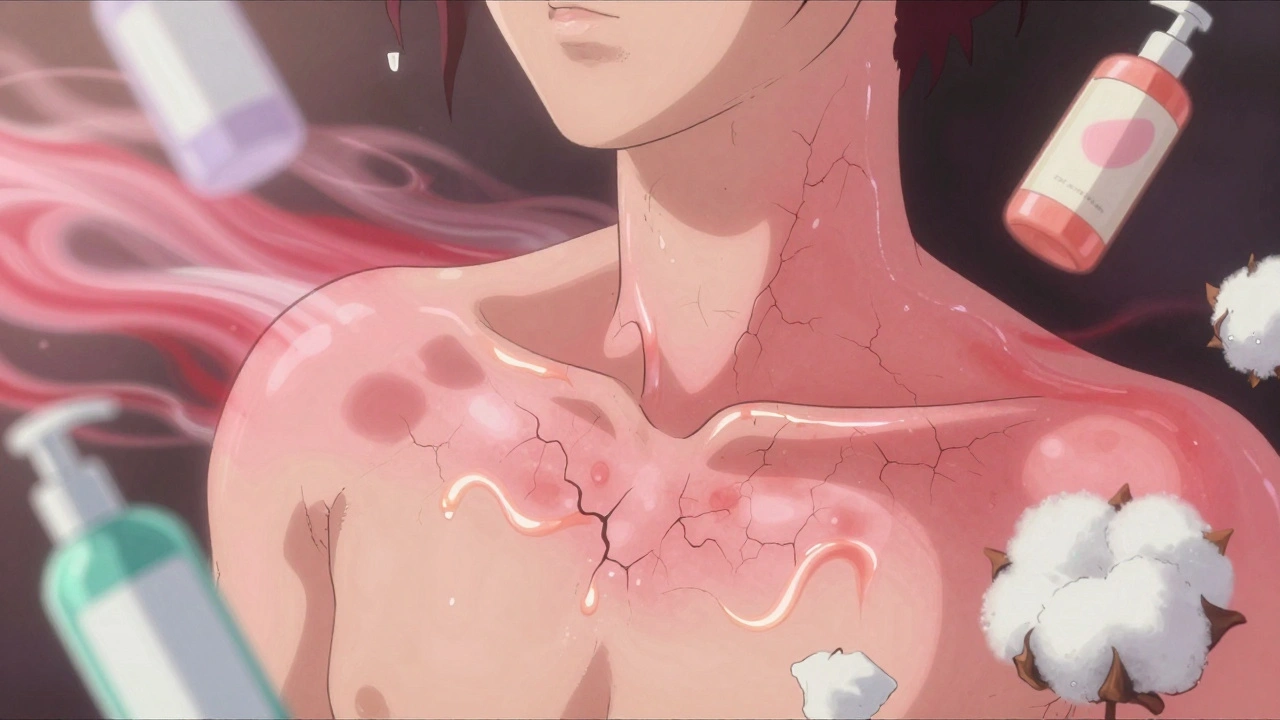
Most people don’t expect their skin to become the most obvious side effect of radiation therapy. But if you’re getting radiation for breast, head and neck, or pelvic cancer, your skin is in the line of fire-literally. About 95% of patients see some kind of skin reaction, and it usually starts quietly: a faint redness, like a mild sunburn, around day 7 to 10 of treatment. By week 3, it can turn into dry, flaky patches. By week 5, some people get blistering or oozing skin-called moist desquamation. That’s not rare. In head and neck radiation, it happens in 20-30% of cases. In breast radiation, it’s about 15-25%.
The good news? You don’t have to wait until your skin breaks down to act. The best strategy is prevention. Start gentle skin care from day one. Use a fragrance-free, soap-free cleanser like Cetaphil or Vanicream. Wash with lukewarm water-no hot showers. Pat your skin dry, don’t rub. Then, within three minutes of drying, apply a thick, ceramide-based moisturizer. Look for products with no alcohol, no perfume, and no irritating additives. RadiaPlex Rx and Biafine are two brands backed by patient surveys and clinical use. Many patients say these made the difference between manageable irritation and painful breakdown.
Avoid anything that pulls, scrapes, or heats your skin. No razors, no tight clothing, no heating pads. Even sunscreen can be too harsh during treatment. If your skin starts peeling, skip the exfoliants. Don’t pick. Your radiation nurse should give you a product like Cavilon No Sting Barrier Film-it’s like a clear shield that prevents blisters from turning into open sores. One patient on Reddit said it stopped her skin from breaking open completely. That’s not luck. That’s protocol.
Why Fatigue Hits Harder Than You Think
Fatigue isn’t just being tired. It’s the kind of exhaustion that sleep doesn’t fix. You nap for hours and still feel like you’ve been dragged through gravel. That’s radiation fatigue, and it affects 75-95% of patients. It doesn’t show up on day one. It creeps in. Usually around week 2 or 3, you’ll notice you’re dragging. By week 5 or 6, it peaks. If you’re getting radiation to your chest or pelvis, it’s worse. Studies show patients with pelvic radiation report the highest fatigue scores on the PROMIS scale-over 65 out of 100.
And here’s the twist: most people think fatigue stays the same. It doesn’t. It gets worse as treatment goes on. A 2022 NCI report found that 45% of patients receiving whole-brain radiation had severe fatigue-so bad they needed medication. Even localized treatments can leave you sleeping 16 hours a day and still not rested. One patient on CancerCare’s forum said her oncologist prescribed modafinil, and within two weeks, her fatigue score dropped from 72 to 58. That’s a real change.
But drugs aren’t the only answer. The most powerful tool you have is movement. Not marathon running. Just walking. The National Comprehensive Cancer Network says 30 minutes of brisk walking five days a week cuts fatigue by 25-30%. That’s the same effect as some medications. One MD Anderson case study followed a breast cancer patient who walked 30 minutes daily and did light strength training twice a week. Her fatigue score was 22 points lower than others who didn’t move. She didn’t feel “cured”-but she felt like herself again.
How to Recover After Radiation Ends
When your last treatment is done, you might expect to bounce back fast. You won’t. Skin reactions usually clear up in 2-4 weeks. But the damage underneath? That takes longer. Redness fades. Peeling stops. But your skin might stay thinner, drier, or more sensitive for months. Permanent hair loss happens if you got over 70 Gy to the scalp-100% of those patients lose hair there forever. For lower doses, hair starts coming back around 2-3 months. Half of it returns by then. But 15-20% of people never get full regrowth.
Another long-term effect? Telangiectasias-those tiny red spider veins under the skin. They show up in 30-50% of patients five years after treatment. Fibrosis, or hardening of tissue, affects 5-10% of head and neck patients. It’s not dangerous, but it can make swallowing or moving your neck stiff. Physical therapy helps. So does massage with a gentle, oil-based balm. Don’t wait until it’s stiff to start.
Recovery isn’t just physical. It’s emotional. You spent weeks managing red skin, constant tiredness, and fear. Now it’s over, and you’re supposed to feel better? But you’re still tired. Your skin still feels strange. You’re not broken. You’re healing. Give yourself time. Most patients say it takes 6-12 months to feel close to normal again.
What Works: Evidence-Based Skin and Fatigue Tips
- For skin: Use ceramide moisturizers daily. Apply within 3 minutes of showering. Avoid alcohol, fragrance, and exfoliants. Use hydrogel dressings if skin breaks open-ASTRO says they cut healing time by 32%. Avoid shaving the treated area. Wear loose, cotton clothes.
- For fatigue: Walk 30 minutes, 5 days a week. Add two light resistance sessions (like bands or light dumbbells). Keep a consistent sleep schedule. No naps longer than 30 minutes. Track your energy with a simple journal. If fatigue hits 7+ on a 1-10 scale, talk to your oncologist. Modafinil or methylphenidate can help-but only if you’ve tried movement and sleep first.
- For recovery: Keep moisturizing your skin for 6-12 months. Ask for a referral to a lymphedema or physical therapy specialist if you feel tightness or stiffness. Don’t rush back to full activity. Let your body reset.
What Doesn’t Work (And Why)
There’s a lot of advice out there. A lot of it is wrong.
Don’t use aloe vera gel straight from the plant. It sounds natural, but raw aloe can irritate radiation-damaged skin. Stick to pharmacy-grade, preservative-free versions if you use it at all.
Don’t slap on steroid creams unless your doctor tells you to. The American Society for Radiation Oncology says they don’t prevent dermatitis-and can cause more harm than good if used long-term.
Don’t think “rest = recovery.” Lying on the couch all day makes fatigue worse. Movement, even small, is the antidote.
Don’t wait for your nurse to bring up skin care. Ask for a handout. Ask for a demo. Most cancer centers have radiation oncology nurses who specialize in this. They’ve seen thousands of skin reactions. Let them help you before it’s too late.
What’s New in Radiation Side Effect Care
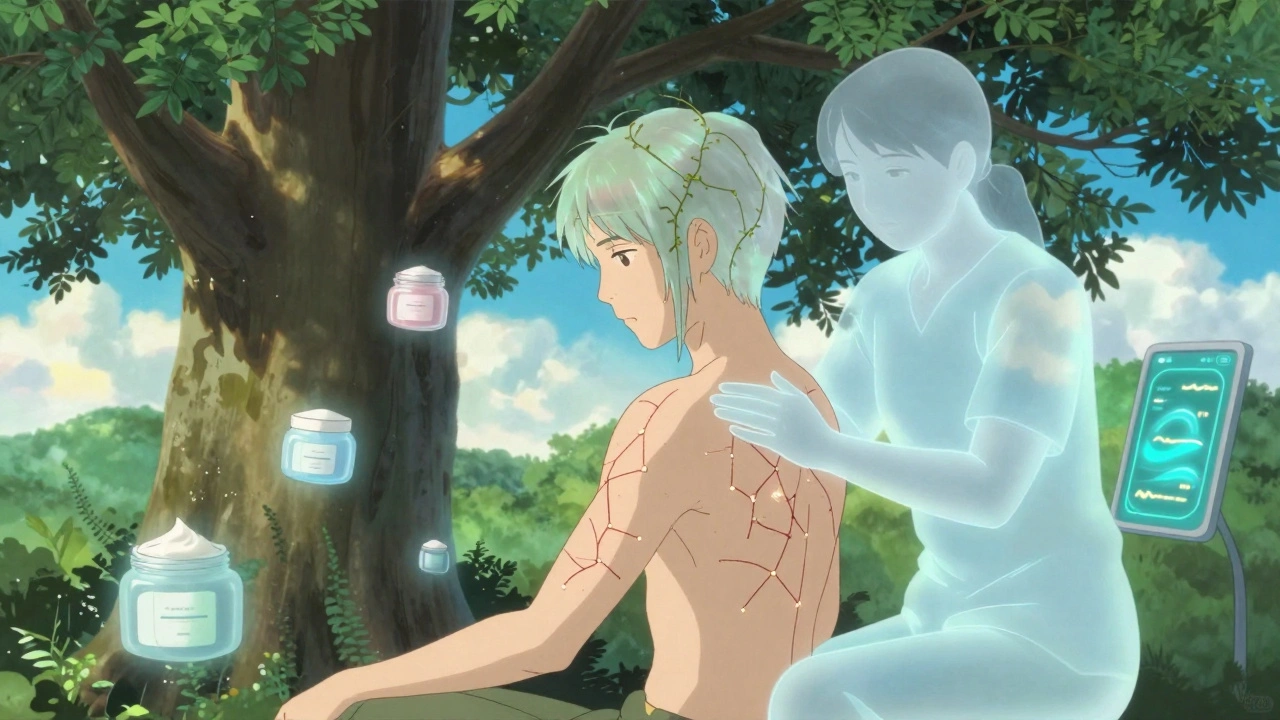
Things are changing fast. In 2023, the NCI launched the REQUITE project, which found 12 genetic markers that predict who’s likely to get severe skin reactions. If you’re tested, your care team can adjust your skin routine before problems start.
There’s also a new FDA-approved app called Vitality by Mindstrong Health. It guides you through daily fatigue management exercises-breathing, pacing, activity tracking. In trials, it lowered fatigue scores by 28%.
And new topical treatments are in phase III trials. One, ON 01910.Na, reduced moderate-to-severe skin reactions by 40% in early testing. It’s not available yet, but it’s coming.
Most cancer centers now use digital tools to track your symptoms in real time. If your skin looks worse or your fatigue spikes, your team gets an alert. That means faster help, not waiting for your next appointment.
Final Thoughts: You’re Not Alone in This
Radiation is hard. The skin changes, the exhaustion, the slow recovery-it’s not something you can just power through. But you don’t have to do it alone. The tools exist. The science is clear. Prevention beats reaction. Movement beats rest. Patience beats speed.
Ask for help early. Use the right products. Move when you can. Rest when you need to. And remember: your body is doing the hard work. You just need to support it. Not fight it. Not ignore it. Support it.


