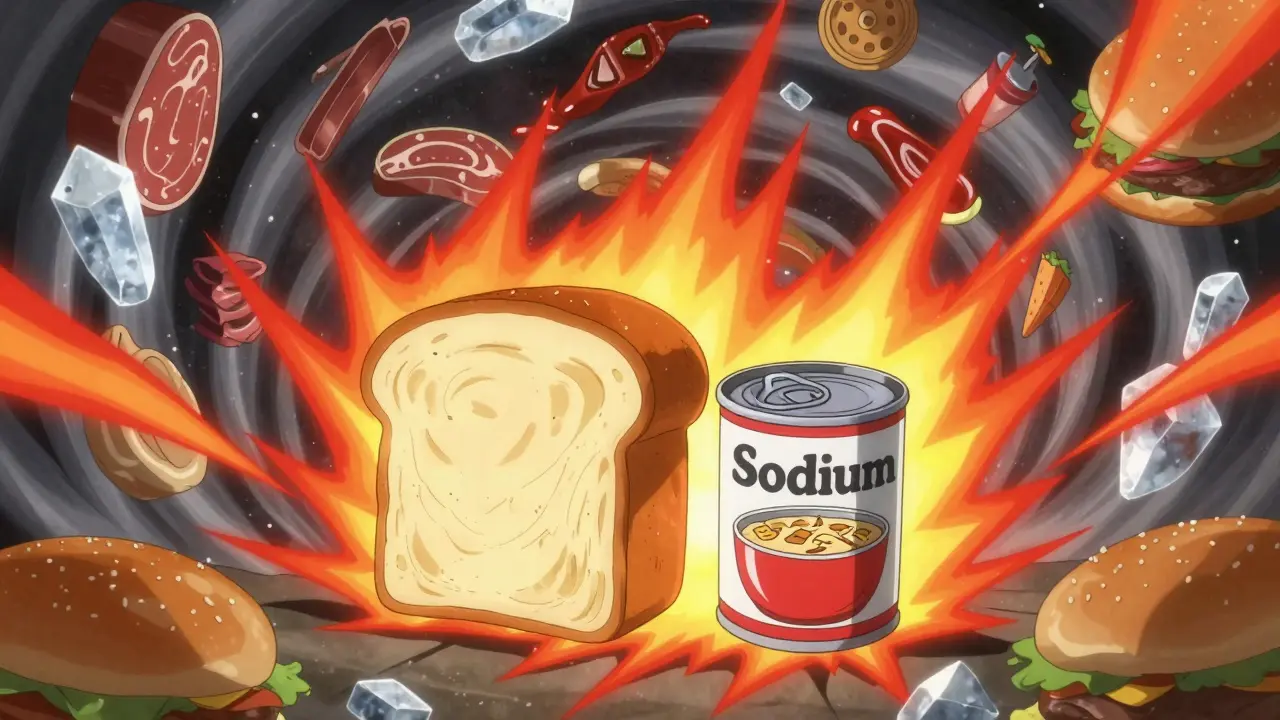

It’s easy to blame the salt shaker for high blood pressure. You see a bagel with a sprinkle of sea salt, or you remember adding a pinch to your morning eggs, and you assume that’s the culprit. But here is the uncomfortable truth: if you are like most people, the salt shaker isn’t doing much damage at all. The real problem hides in the bread, the canned soup, the deli meat, and even the salad dressing you didn’t make yourself.
The link between sodium and hypertension (high blood pressure) is one of the most studied relationships in medicine. We’ve known since the early 1900s that too much salt raises blood pressure. Today, organizations like the World Health Organization (WHO) and the American Heart Association (AHA) agree on the core issue: excessive sodium forces your heart to work harder. The WHO recommends no more than 2,000 mg of sodium daily, while the AHA suggests an ideal limit of 1,500 mg for optimal heart health. Most of us eat far more than that-often double or triple the recommended amount-without even realizing it.
Why Sodium Raises Blood Pressure
To understand why cutting back matters, you need to know what happens inside your body when you eat salty food. It’s not just about taste; it’s about fluid dynamics. When you consume excess sodium, your body tries to balance the concentration by holding onto water. This extra water increases your blood volume. Think of your blood vessels as garden hoses. If you turn up the faucet (more volume), the pressure inside the hose goes up. That increased pressure forces your heart to pump harder against the walls of your arteries.
This process affects everyone, but not equally. Research shows that about half of people with hypertension have "salt-sensitive" blood pressure. For these individuals, sodium causes a sharper spike in pressure. Even if you don’t have high blood pressure yet, roughly 25% of healthy adults show this sensitivity. High sodium also damages the lining of your blood vessels (endothelial dysfunction) over time, making them stiffer and less able to relax. This stiffness contributes to long-term cardiovascular risk, independent of blood pressure numbers alone.
The Hidden Sources of Salt
If you want to lower your intake, you can’t just stop salting your food. According to reports from the Centers for Disease Control and Prevention (CDC), about 70-75% of the sodium in a typical Western diet comes from processed foods and restaurant meals. The remaining quarter comes from natural sources in food and what we add during cooking.
- Processed Meats: Bacon, ham, sausages, and hot dogs are packed with sodium as a preservative. A single slice of bacon can contain 300-400 mg of sodium.
- Bread and Rolls: Surprisingly, bread is often the number one source of sodium in many diets. A standard sandwich roll might have 200-300 mg per piece.
- Canned Soups and Vegetables: These convenience items are notorious. One cup of canned tomato soup can easily exceed 800 mg of sodium.
- Sauces and Condiments: Soy sauce, ketchup, and salad dressings are liquid sodium bombs. Two tablespoons of soy sauce contain nearly 1,000 mg of sodium.
- Fast Food: A single fast-food burger meal can deliver 1,500-2,500 mg of sodium, wiping out your entire daily allowance before lunch.
Understanding where the salt hides is the first step to removing it. You cannot manage what you do not measure.

Practical Strategies to Cut Sodium
You don’t need to become a chef to eat less salt. You just need to change a few habits. Here are practical ways to lower your intake without sacrificing flavor.
Read Labels Like a Pro
Start looking at nutrition labels with a specific goal. In the US, the FDA updated labeling requirements to highlight sodium percentages based on a 2,300 mg daily limit. Look for the "% Daily Value." If a serving has 20% or more, it’s high in sodium. If it’s 5% or less, it’s low. Aim for products that fall in the low category. Compare brands side-by-side; you’ll often find that one brand uses significantly less salt than another for the exact same product.
Rinse Canned Goods
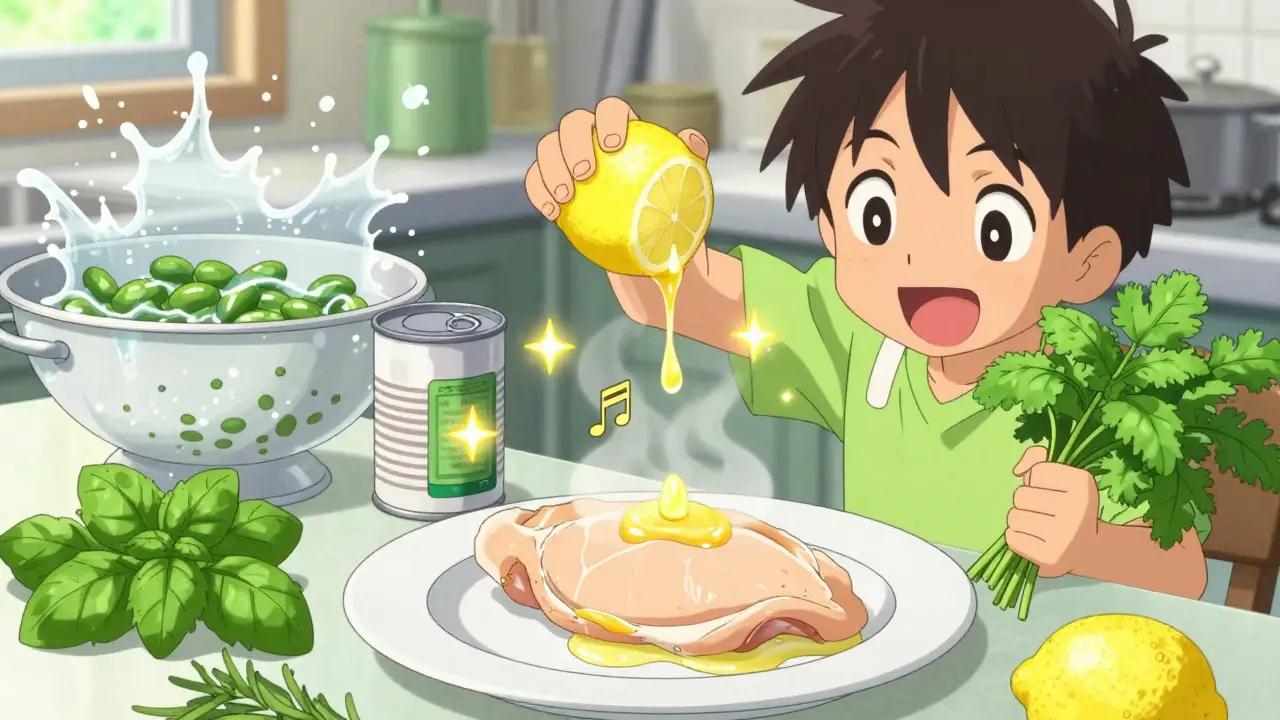
If you rely on canned beans, vegetables, or tuna, rinse them thoroughly under cold water before using them. This simple step can remove up to 40% of the sodium added during processing. It takes ten seconds and makes a measurable difference in your total daily intake.
Season Smarter
Your taste buds adapt quickly. Many people report that after two to four weeks of reduced salt, their palate resets, and previously bland foods start tasting vibrant. To bridge that gap, use acid and herbs instead of salt. Lemon juice, vinegar, garlic, onion powder, chili flakes, and fresh herbs like basil and cilantro add depth without sodium. Consider using potassium-based salt substitutes, which can reduce sodium intake by 300-500 mg per meal. However, check with your doctor before using potassium substitutes if you have kidney disease or take certain medications, as too much potassium can be dangerous for those conditions.
Cook at Home More Often
Home-cooked meals typically contain 400-600 mg of sodium compared to 1,500-2,500 mg in restaurant equivalents. Batch cooking on weekends saves time during the week and gives you full control over ingredients. When you do eat out, ask for sauces and dressings on the side. Choose grilled options over fried ones, and avoid menu items described as "savory," "smoky," or "deli-style," as these words often signal high sodium content.
The DASH Diet Approach
One of the most effective ways to manage blood pressure is through the DASH diet (Dietary Approaches to Stop Hypertension). This eating plan was designed specifically to combat high blood pressure. It emphasizes fruits, vegetables, whole grains, lean proteins, and low-fat dairy while limiting saturated fats, cholesterol, and sodium.
Clinical trials have shown that the DASH diet can reduce systolic blood pressure by 8-14 mmHg when combined with sodium restriction. The key is not just cutting salt but increasing potassium-rich foods. Potassium helps counteract the effects of sodium by helping your kidneys excrete more sodium through urine and easing tension in your blood vessel walls. Good sources of potassium include bananas, spinach, sweet potatoes, avocados, and beans. The current clinical guidelines suggest aiming for 3,500-5,000 mg of potassium daily, depending on your individual health status.
How Much Should You Reduce?
You don’t need to drop to zero overnight. Gradual reduction works best. Try decreasing the salt you add in cooking by 10% each month until you reach your target. Studies, including the CARDIA-SSBP trial published in JAMA Network, show that even short-term reductions of one week can lead to an average 8-mm Hg drop in systolic blood pressure. For hypertensive individuals, reducing sodium by 1.75 grams per day corresponds to a mean blood pressure reduction of 5.4/2.8 mmHg. These small changes add up to significant long-term benefits, lowering stroke risk by 24% and coronary heart disease risk by 18% over five to ten years.
| Food Item | Serving Size | Approximate Sodium (mg) |
|---|---|---|
| White Bread | 1 slice | 200-250 mg |
| Canned Soup | 1 cup | 800-1,000 mg |
| Fresh Chicken Breast | 3 oz | 70-80 mg |
| Deli Ham | 2 slices | 600-800 mg |
| Spinach (cooked) | 1 cup | 80 mg |
| Soy Sauce | 2 tbsp | ~1,000 mg |
Addressing Common Concerns
Some experts note that extremely low sodium intake (<1,500 mg/day) may not benefit everyone, particularly those with advanced heart failure or kidney disease. The relationship between sodium and cardiovascular outcomes follows a J-shaped curve, meaning both very high and very low intakes can carry risks for specific subgroups. However, for the general population and most people with hypertension, moderate reduction remains the safest and most effective strategy. Always consult your healthcare provider before making drastic dietary changes, especially if you are on medication.
Cost is another concern. Fresh, unprocessed foods can cost more upfront. The USDA estimates a premium of about $1.25 per meal for fresh versus processed options. However, batch cooking and buying frozen vegetables (which are just as nutritious and often cheaper) can mitigate this expense. Plus, the cost of treating hypertension-related complications far outweighs the price of groceries.
How quickly will lowering sodium affect my blood pressure?
You can see results surprisingly fast. The CARDIA-SSBP study found that just one week of a low-sodium diet resulted in an average 8-mm Hg reduction in systolic blood pressure. For many people, consistent reduction over a few weeks leads to sustained improvements.
Is sea salt healthier than table salt?
No. Chemically, both are primarily sodium chloride. Sea salt may contain trace minerals, but the amounts are negligible. Your body reacts to the sodium content the same way regardless of the source. Focus on reducing total sodium, not switching brands.
Can I use salt substitutes safely?
Potassium-based salt substitutes can help reduce sodium intake. However, they are not safe for everyone. If you have kidney disease, heart failure, or take ACE inhibitors or ARBs, excess potassium can be dangerous. Always check with your doctor before using them.
What is the daily sodium limit for someone with hypertension?
The American Heart Association recommends an ideal limit of 1,500 mg per day for adults with hypertension. The maximum acceptable limit is 2,300 mg. Even modest reductions of 1,000 mg per day can lower blood pressure significantly.
Does rinsing canned vegetables really remove that much salt?
Yes. Rinsing canned beans, vegetables, and tuna under cold water can remove up to 40% of the added sodium. It is one of the easiest and most effective steps you can take immediately.


