
Many people turn to St. John’s Wort because it’s natural, easy to find, and marketed as a gentle way to manage mild depression. But here’s the truth most labels don’t tell you: St. John’s Wort doesn’t just float quietly in your system. It actively changes how your body handles prescription drugs - sometimes dangerously so.
You might think supplements are safe because they’re sold over the counter. That’s a dangerous assumption. St. John’s Wort is one of the most powerful herbal interactions out there, and it’s not just about one or two drugs. It affects dozens - including ones you rely on to stay alive.
How St. John’s Wort Changes Your Body’s Chemistry
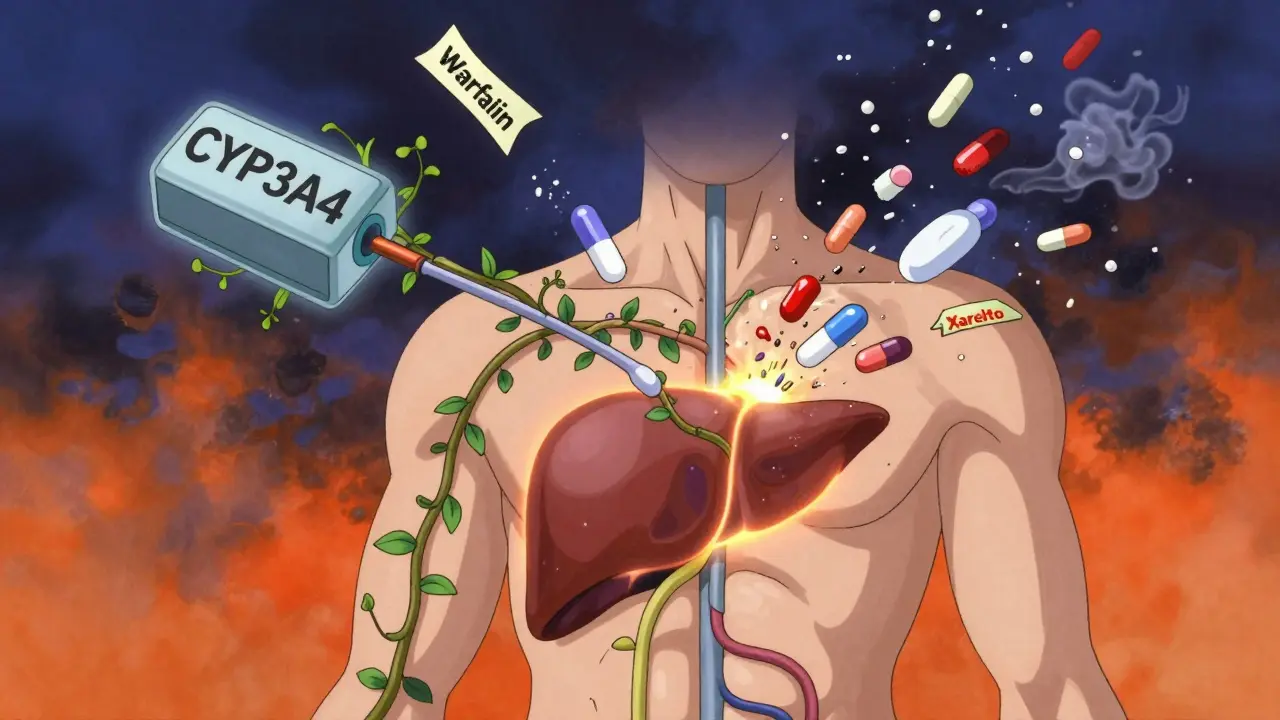
St. John’s Wort doesn’t just sit there. It turns on a switch in your liver called CYP3A4. This enzyme is responsible for breaking down about half of all prescription medications. When St. John’s Wort activates it, your body starts flushing out drugs way faster than normal. That means your pills stop working - not because they’re bad, but because your body won’t let them stick around long enough to do their job.
It also ramps up another system called P-glycoprotein. Think of it like a bouncer at the door of your cells. When this bouncer gets overworked by St. John’s Wort, it kicks out important drugs before they can enter your bloodstream. The result? Lower drug levels. Reduced effectiveness. And in some cases, life-threatening consequences.
Drugs That Become Useless - Or Dangerous
Let’s get specific. Here are real medications that lose their power when mixed with St. John’s Wort:
- Warfarin (Coumadin) - Used to prevent blood clots. St. John’s Wort cuts its effectiveness by up to 30%. That means you could develop a clot without knowing it.
- Rivaroxaban (Xarelto) - Another blood thinner. Same problem. Less drug in your system = higher stroke risk.
- Birth control pills - Your body breaks them down faster. Studies show increased chances of unplanned pregnancy and breakthrough bleeding. It doesn’t matter if it’s the pill, patch, or ring - St. John’s Wort interferes.
- Phenytoin (Dilantin) and Carbamazepine (Tegretol) - Antiseizure drugs. If your seizure medication stops working, you could have a seizure you didn’t see coming.
- Tacrolimus and Cyclosporin - Used after organ transplants. If these drop, your body may reject the new organ. This isn’t theoretical. There are documented cases of kidney and liver transplants failing because of this interaction.
- Methadone - Used for pain and addiction treatment. St. John’s Wort can cause withdrawal symptoms, cravings, and relapse.
- Protease inhibitors - Used for HIV. A drop in these levels can lead to drug resistance, making future treatment harder.
- Fexofenadine (Allegra) - An allergy med. Instead of helping, St. John’s Wort can make side effects worse by trapping the drug in your system.
And that’s just the tip of the iceberg. The list goes on: antidepressants, antipsychotics, anesthetics, migraine meds, even some antibiotics. If a drug is processed by your liver, St. John’s Wort might be messing with it.
The Serotonin Danger: When Natural Meets Prescription
St. John’s Wort doesn’t just speed up drug breakdown. It also changes how your brain works. It increases serotonin - the same chemical targeted by SSRIs like fluoxetine (Prozac) and sertraline (Zoloft).
Take both together? You risk serotonin syndrome. It sounds scary - because it is. Symptoms include confusion, rapid heartbeat, high blood pressure, muscle rigidity, fever, and seizures. In severe cases, it can be fatal. One study found that people using St. John’s Wort with SSRIs had a 3x higher chance of developing this condition.
And it’s not just SSRIs. Triptans for migraines, certain painkillers, and even some cough syrups can push you over the edge. You don’t need to take a huge dose. Even a small amount of St. John’s Wort mixed with another serotonin-boosting drug can trigger it.
What Happens When You Quit St. John’s Wort?
Here’s a twist most people miss: stopping St. John’s Wort can be just as risky as taking it.
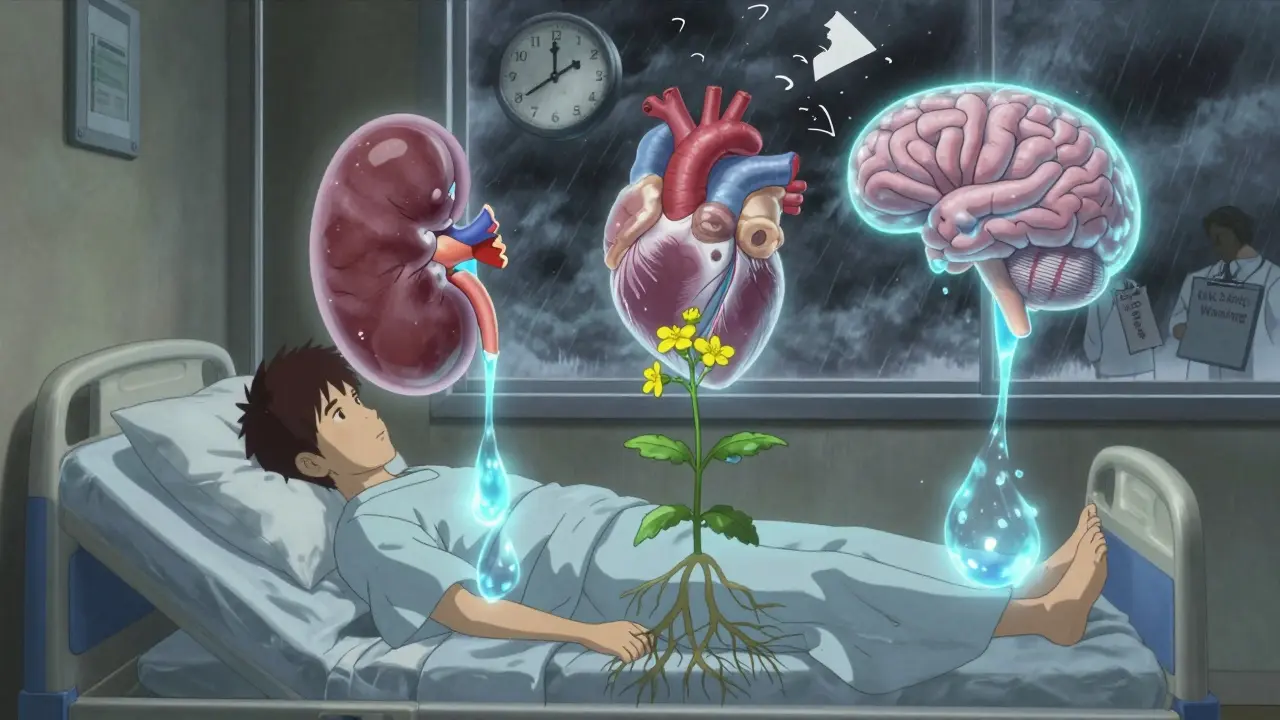
When you stop, your liver slowly turns off that CYP3A4 switch. But your prescription drugs? They’re still in your system at the same dose. Now, suddenly, your body can’t break them down fast enough. That means drug levels spike - sometimes dangerously high.
One patient stopped St. John’s Wort after six months. Two weeks later, their cyclosporin levels doubled. They ended up in the hospital with kidney damage. That’s not rare. Regulatory agencies in Australia and the UK have documented multiple cases like this.
There’s no safe way to just quit. You need medical supervision. Your doctor needs to monitor your drug levels and adjust doses - slowly.
Why This Isn’t Just a "Maybe" - It’s a Rule
Regulatory agencies aren’t being alarmist. They’ve seen the damage.
- The Therapeutic Goods Administration (TGA) in Australia issued a formal safety alert in 2000 - and it’s still active.
- In the UK and Sweden, product labels for affected medications now include warnings about St. John’s Wort.
- Medsafe in New Zealand explicitly warns that St. John’s Wort interacts with SSRIs and other antidepressants.
- The American Academy of Family Physicians says: "Use of St. John’s Wort with SSRIs is not recommended."
These aren’t opinions. They’re based on hundreds of clinical cases, controlled trials, and real-world outcomes. And yet, most people still don’t know.
What You Should Do - Right Now
If you’re taking St. John’s Wort:
- Stop assuming it’s safe just because it’s natural.
- List every medication and supplement you take - including vitamins, OTC painkillers, and herbal teas.
- Bring that list to your doctor or pharmacist. Don’t wait for them to ask. Ask them yourself: "Could this interact with anything I’m taking?"
- If you’re on blood thinners, transplant meds, antidepressants, or seizure drugs - don’t even think about starting it.
- If you’ve already been using it, don’t quit cold turkey. Talk to your provider about how to taper off safely.
There’s no shortcut. No easy fix. If you need help with depression, there are safer, proven options - therapy, exercise, FDA-approved medications, and lifestyle changes. None of them carry this level of risk.
Final Reality Check
St. John’s Wort isn’t harmless. It’s a potent, unpredictable drug that plays hide-and-seek with your prescriptions. It doesn’t matter if you’ve been taking it for months. It doesn’t matter if you feel fine. The damage isn’t always obvious until it’s too late.
Every year, people end up in emergency rooms because they didn’t know. Every year, transplants fail. Birth control fails. Seizures return. Blood clots form. All because someone thought a plant was safer than a pill.
It’s not safer. It’s just less obvious.


