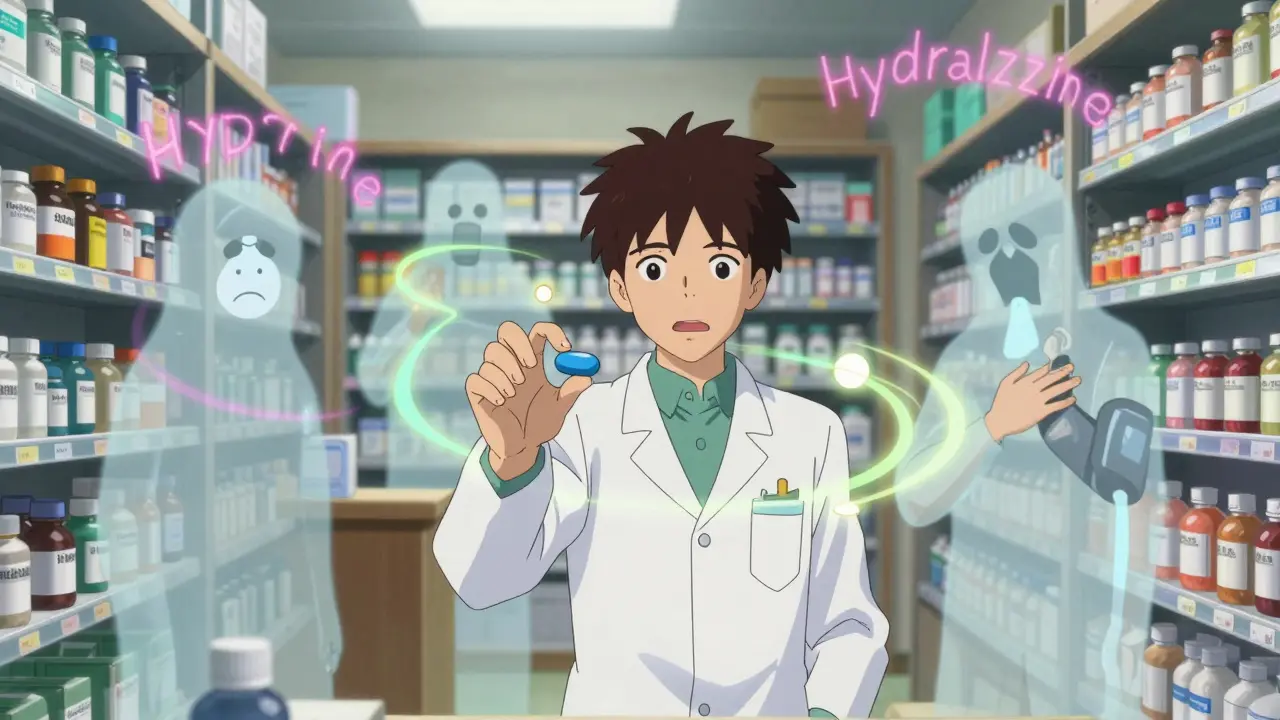

When a pharmacy technician pulls a bottle off the shelf, they’re not just grabbing a pill-they’re handling a patient’s health. In the U.S., 90% of prescriptions filled are for generic drugs. That means every time a technician dispenses medication, they’re making a decision that could prevent harm-or cause it. The difference between hydroxyzine and hydralazine, two look-alike, sound-alike generics, could mean the difference between treating anxiety and controlling blood pressure. And if the technician can’t tell them apart? That’s not a mistake. It’s a risk.
What Generic Drug Competency Actually Means
Generic drug competency isn’t about memorizing lists. It’s about recognizing patterns, understanding context, and reacting correctly under pressure. The Pharmacy Technician Certification Board (PTCB) requires technicians to know not just the names of 200+ medications, but also their class, strength, dosage form, and therapeutic use. For example, a technician must know that metformin is an oral antidiabetic, not an insulin, and that lisinopril and enalapril belong to the same drug class (ACE inhibitors) even though they’re made by different manufacturers. The VA’s qualification standard HT38, updated in 2018 and still in force, demands even more. Technicians working in VA facilities must identify 100% of Schedule II-V controlled substances by both brand and generic name. That’s not optional. It’s mandatory. And it’s not just about knowing the names-it’s about knowing what happens if you get it wrong. A wrong substitution can lead to overdose, therapeutic failure, or dangerous interactions.Why This Matters: The Real Cost of Errors
In 2021, the Institute for Safe Medication Practices (ISMP) found that 10-15% of all medication errors linked to pharmacy technicians involved confusion between generic and brand names. These aren’t minor slip-ups. They’re life-threatening. One case involved a patient given glipizide instead of glyburide-two different sulfonylureas with different half-lives. The patient suffered prolonged hypoglycemia and was hospitalized. Another case reported a technician dispensing hydroxyzine (an antihistamine) instead of hydralazine (a vasodilator), leading to uncontrolled hypertension and a stroke. A 2023 University of Utah study tracked 1,247 pharmacy technicians across 42 pharmacies. Those who scored below 70% on generic drug identification tests made 3.2 times more dispensing errors than those scoring above 90%. And those errors didn’t just affect patients-they cost the system money. The American Association of Colleges of Pharmacy (AACP) estimated that poor generic drug knowledge contributes to $2.4 billion in avoidable healthcare costs each year.How Standards Differ Across Settings
Not all pharmacy technician training is the same. The PTCB certification exam covers 200+ drugs, while the National Healthcareer Association’s ExCPT exam tests only about 150. That’s a 25% gap in knowledge expectations. In community pharmacies, the focus is on substitution rules and formulary lists. In hospitals, it’s about high-alert drugs: insulin, anticoagulants, opioids. In VA facilities, it’s about controlled substances and regulatory compliance. State-level differences make it worse. California requires technicians to know 180 specific drugs. Texas requires 120. A technician certified in one state might fail a competency test in another. That’s why 78% of pharmacy technicians surveyed in 2024 said they struggled with mobility-moving from one job to another meant relearning entire lists.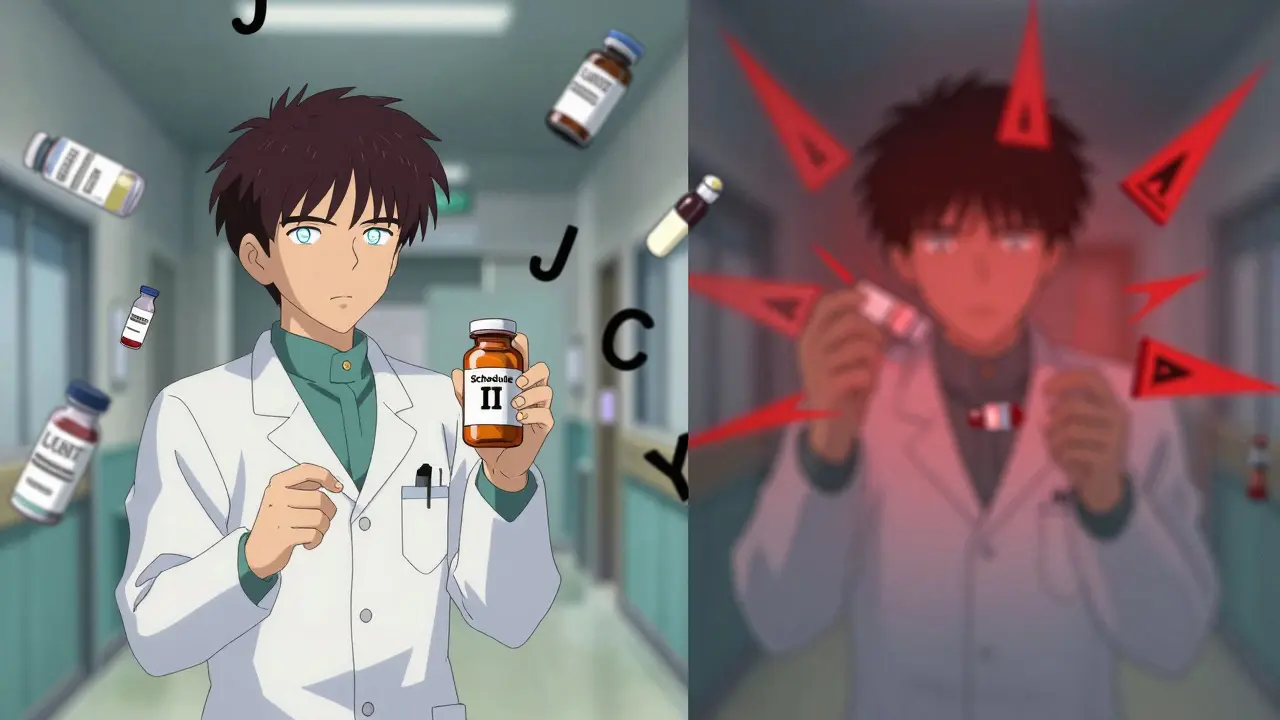
What You Need to Know: The Top 200 Drugs
Most training programs center on the PTCB’s Top 200 Drug List. This isn’t arbitrary. These are the most commonly prescribed medications in the U.S. Here’s what you need to master for each:- Generic name (e.g., atorvastatin)
- Brand name (e.g., Lipitor)
- Drug class (e.g., statin)
- Common use (e.g., lowers cholesterol)
- Strengths and dosage forms (e.g., 10mg, 20mg, 40mg tablets)
- Therapeutic duplication risk (e.g., don’t mix with simvastatin)
Learning Strategies That Actually Work
Rote memorization fails. Most technicians who fail the PTCB exam do so because they tried to memorize 200 drugs as isolated facts. The ones who pass? They group them. Successful technicians use three proven methods:- Group by therapeutic class-Learn all beta-blockers together, all SSRIs together. This builds pattern recognition. If you know one SSRI, you can infer the others.
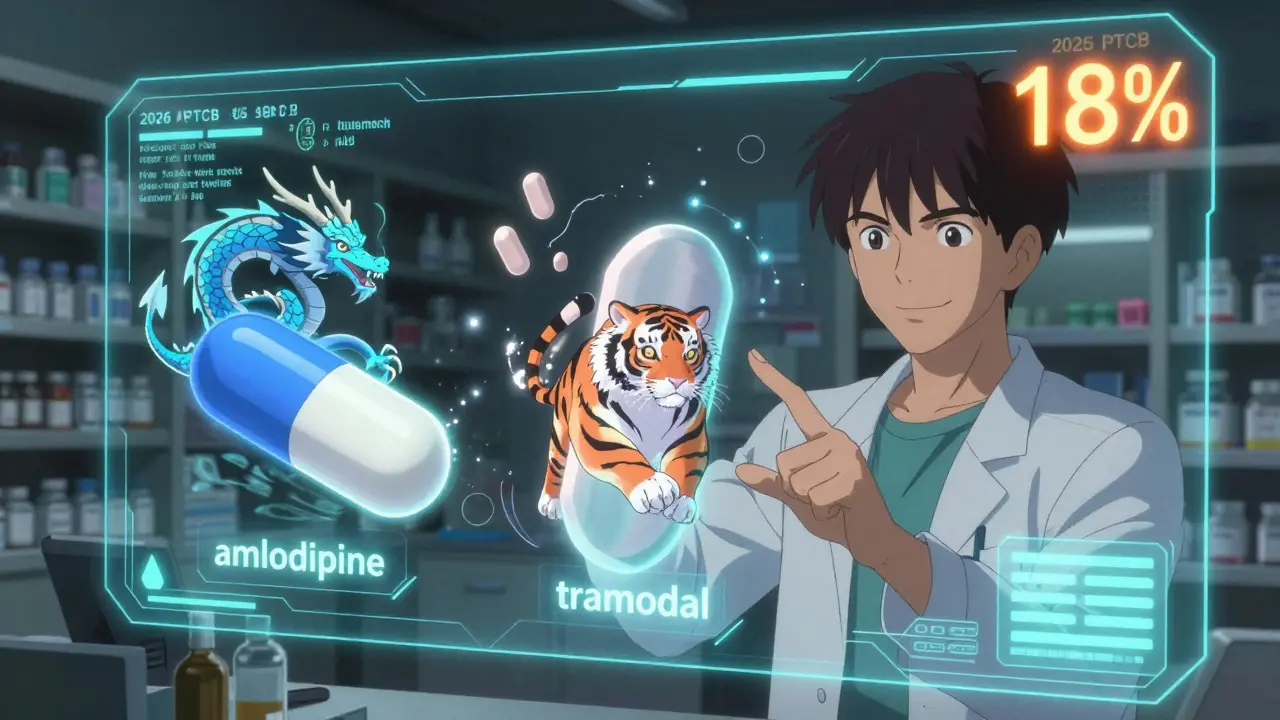
- Use visual cues-Color, shape, imprint. A blue oval pill with “10” on one side? That’s amlodipine. A white round pill with “50” and “T” on it? That’s tramadol. Reddit user “GenericGuru” says this method worked better than flashcards for 68% of visual learners.
- Practice daily-Spending 30 minutes a day reviewing 10 drugs is more effective than cramming 5 hours once a week. Apps like RxTechExam and PTCBTestPrep offer daily quizzes that mimic real-world scenarios.