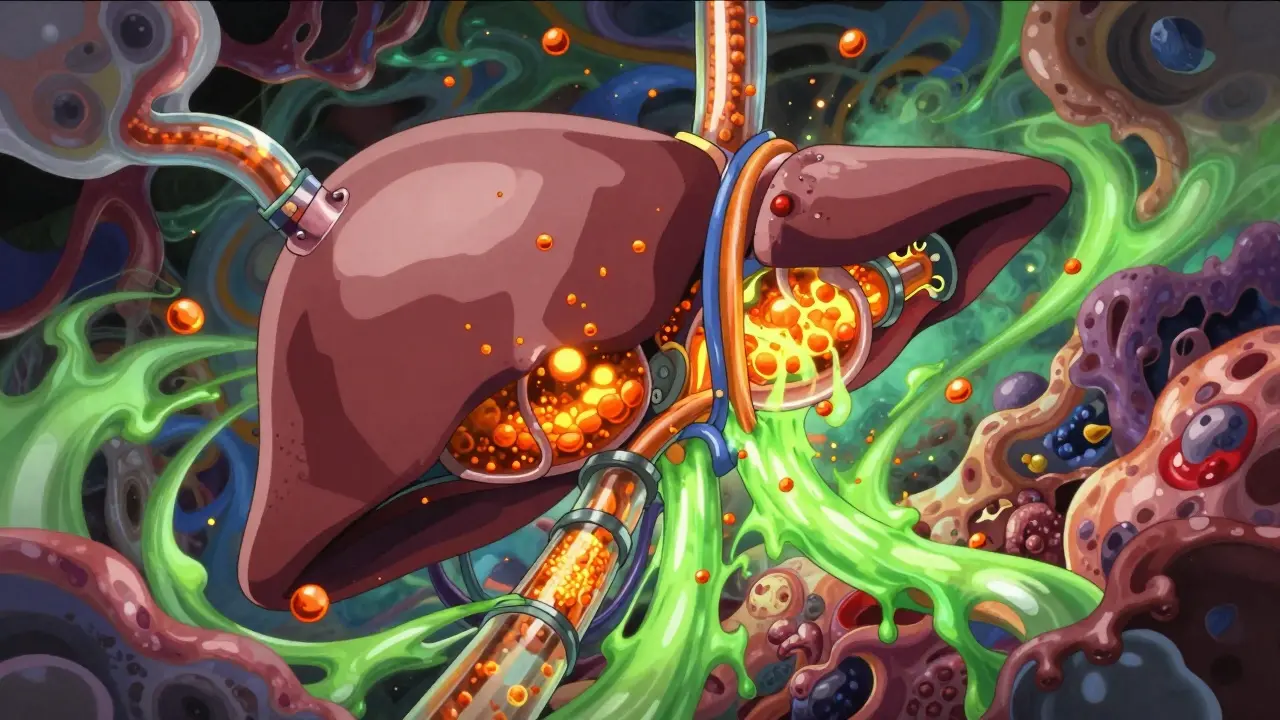

You might not think of copper as a threat. It’s in your pipes, your coins, and even some healthy foods. But for people with Wilson’s disease, a rare genetic disorder that causes copper to build up in the body instead of being flushed out, this essential mineral becomes toxic. Without treatment, it damages the liver, brain, kidneys, and eyes. The good news? With early diagnosis and proper copper chelation therapy, most patients live normal, healthy lives.
This article breaks down exactly what goes wrong in Wilson’s disease, how doctors spot it before permanent damage occurs, and which treatments actually work. We’ll look at the science behind copper buildup, compare the main drug options, and address the real-world challenges patients face daily.
The Root Cause: A Broken Copper Filter
To understand Wilson’s disease, you first need to know how your body handles copper normally. Your digestive tract absorbs copper from food. In a healthy system, your liver acts like a smart filter. It takes that copper and does two things:
- Attaches it to a protein called ceruloplasmin, which safely transports copper through your blood.
- Dumps excess copper into your bile, so it leaves your body via stool.
In Wilson’s disease, this system fails. It all comes down to a single gene called ATP7B, the gene responsible for producing a protein that moves copper out of liver cells. Located on chromosome 13, this gene provides instructions for making a pump-like protein. When you inherit two faulty copies of this gene (one from each parent), the pump doesn’t work.
Without a working ATP7B protein, copper gets stuck in liver cells. At first, the liver tries to cope by storing the extra copper in harmless packets. But eventually, those storage tanks overflow. Free copper leaks into the bloodstream. It travels to other organs, settling in places where it causes serious harm-especially the basal ganglia in the brain, the cornea of the eye, and the kidneys.
This condition affects about 1 in 30,000 people worldwide. Symptoms usually show up between ages 5 and 35, though they can appear later. Because the symptoms mimic other common conditions, many people wait years for a correct diagnosis.
How Doctors Spot Wilson’s Disease
Diagnosing Wilson’s disease is tricky because its symptoms are vague at first. You might feel tired, have joint pain, or notice slight changes in your mood. Later, more specific signs appear:
- Liver issues: Elevated liver enzymes, jaundice (yellowing of skin/eyes), or cirrhosis.
- Neurological problems: Tremors, slurred speech, difficulty swallowing, or muscle stiffness.
- Eye changes: Kayser-Fleischer rings-golden-brown deposits around the iris visible only with a slit-lamp exam.
Doctors rely on a combination of tests to confirm the diagnosis. No single test is perfect, so they look at the whole picture.
| Test | What It Measures | Typical Result in Wilson’s |
|---|---|---|
| Serum Ceruloplasmin | Copper-carrying protein level | Low (<20 mg/dL) |
| 24-Hour Urinary Copper | Copper excreted in urine | High (>100 μg/24h) |
| Slit-Lamp Eye Exam | Kayser-Fleischer rings | Present in 95% of neurological cases |
| Liver Biopsy | Copper content in liver tissue | >250 μg/g dry weight |
| ATP7B Genetic Testing | Mutations in the causative gene | Two pathogenic variants found |
A key challenge is that children under five often don’t show Kayser-Fleischer rings, and their ceruloplasmin levels can be naturally low. This makes early diagnosis harder. Recent guidelines now emphasize genetic testing as a definitive tool, especially when clinical signs are ambiguous.

Chelation Therapy: Pulling Copper Out
The main goal of treating Wilson’s disease is to remove excess copper and prevent new buildup. This is done through chelation therapy, treatment using drugs that bind to copper molecules so they can be excreted in urine. These drugs act like magnets, grabbing free copper in your blood and tissues and flushing it out.
There are three primary medications used today:
1. D-Penicillamine
This was the first effective treatment, approved in 1956. It binds copper strongly and increases urinary excretion. Typical doses range from 750-1,500 mg per day for adults. While cheap (around $300/month in the US), it has significant downsides. About 20-50% of patients experience side effects like nausea, metallic taste, or lupus-like symptoms. Worse, some patients suffer temporary worsening of neurological symptoms when starting treatment, requiring careful monitoring.
2. Trientine
Trientine is often preferred for patients who can’t tolerate penicillamine. It works similarly but tends to cause fewer severe side effects. Doses are typically 900-1,500 mg daily. However, it’s much more expensive-roughly $1,850/month-and may lead to iron deficiency anemia in some users.
3. Zinc Acetate
Zinc doesn’t remove existing copper directly. Instead, it blocks copper absorption in the gut by inducing metallothionein production. It’s gentler and often used for maintenance therapy after initial chelation reduces copper loads. Doses are usually 50 mg three times daily on an empty stomach. It’s less effective for acute high-copper states but excellent for long-term control.
Choosing the right drug depends on your symptoms, tolerance, cost, and whether you have liver or neurological involvement. Neurological cases require extra caution due to the risk of symptom flare-ups during initial treatment.
New Treatments on the Horizon
Research hasn’t stopped at traditional chelators. Several promising therapies are emerging:
- Tetrathiomolybdate: Approved in Europe under the brand name Decuprate®, this drug penetrates the blood-brain barrier better than older agents. It showed 78% efficacy in preventing neurological decline in recent trials but carries risks of bone marrow suppression.
- CLN-1357: A novel copper-binding polymer that reduced free serum copper by 82% in phase 3 trials without causing neurological worsening.
- Gene Therapy: Early-phase trials using adeno-associated viruses (AAV) to deliver functional ATP7B genes have shown preliminary safety in small patient groups. This could potentially offer a cure rather than lifelong management.
These advances suggest we’re moving toward safer, more targeted treatments. For now, however, standard chelation remains the backbone of care.

Living with Wilson’s Disease: Daily Realities
Managing Wilson’s disease isn’t just about taking pills. It involves lifestyle adjustments, regular monitoring, and emotional resilience. Here’s what patients commonly report:
- Dietary Restrictions: Avoiding high-copper foods like shellfish, nuts, chocolate, and organ meats. Limiting intake to under 1 mg/day helps prevent overload. Many find this difficult socially and nutritionally.
- Medication Adherence: Missing doses can quickly reverse progress. Side effects like nausea or fatigue make consistency hard. Setting alarms and using pill organizers helps.
- Regular Monitoring: Blood tests every 3 months, urine tests every 6 months, and periodic eye exams are non-negotiable. They catch complications early.
- Emotional Support: Misdiagnosis delays average nearly three years. Joining support groups or online communities reduces isolation and shares practical tips.
Patients also note that switching treatments sometimes brings relief. One user reported stabilizing their urine copper levels and normalizing liver enzymes after switching from penicillamine to zinc acetate due to kidney concerns.
Why Early Diagnosis Matters
The biggest factor in outcomes is timing. If caught before irreversible damage-like cirrhosis or severe neurological impairment-patients can expect near-normal life expectancy. Delayed diagnosis leads to worse prognosis, higher treatment costs, and greater quality-of-life impact.
Families with a history of Wilson’s disease should consider screening siblings and children. Genetic counseling can identify carriers and help plan proactive health strategies.
Is Wilson’s disease hereditary?
Yes, it’s autosomal recessive. You must inherit two defective ATP7B genes-one from each parent-to develop the disease. Carriers (with one copy) usually show no symptoms but can pass the gene to offspring.
Can you eat copper-rich foods if you have Wilson’s?
You should limit them significantly. Shellfish, nuts, chocolate, mushrooms, and liver are particularly high in copper. Aim for less than 1 mg per day total. Always consult your doctor or a dietitian for personalized advice.
Do I need to take medication forever?
In most cases, yes. Stopping treatment allows copper to rebuild up, leading to renewed damage. Some patients transition to lower-dose zinc maintenance after years of stable control, but discontinuation requires strict medical supervision.
What causes neurological symptoms in Wilson’s disease?
Copper accumulates in the basal ganglia, a brain region controlling movement and coordination. High concentrations disrupt neural signaling, causing tremors, dystonia, speech difficulties, and behavioral changes.
How soon do treatments start working?
Liver enzyme improvements often appear within weeks. Neurological recovery takes longer-months to years-and may plateau. Consistent adherence and monitoring are critical for maximizing benefits.