

You've probably stood in the pharmacy aisle staring at a wall of colorful tubes and boxes, wondering if a gel, a cream, or a patch is the right move for your aching back or sore knee. While these OTC topical pain relievers is a category of non-prescription medications applied directly to the skin to treat localized muscle and joint pain seem like a simple alternative to swallowing pills, they aren't completely risk-free. Depending on what's inside the tube, you could be dealing with anything from a mild cooling sensation to a serious risk of skin burns or systemic toxicity.
Key Safety Takeaways
- Menthol Caution: Some menthol-based products can cause rare but serious skin burns.
- Avoid Heat: Never use heating pads or tight bandages with topical analgesics.
- Lidocaine Limits: Only use OTC lidocaine products with a concentration of 4% or less.
- Skin Integrity: Do not apply these medications to broken or irritated skin.
- Blood Thinners: Be extra careful with salicylates or diclofenac if you are on anticoagulants.
Understanding the Different Types of Topical Analgesics
Not all creams are created equal. The "active ingredient" determines not only how the medicine works but also what safety precautions you need to take. Generally, these products fall into a few main buckets: counter-irritants, local anesthetics, and anti-inflammatories.
Counter-irritants, like Menthol and Capsaicin, work by creating a distracting sensation (cooling or heating) that masks the pain. For example, a typical heat gel might contain 10% menthol. Capsaicin, derived from chili peppers, usually comes in concentrations between 0.025% and 0.1% in over-the-counter versions. These aren't "instant" fixes; capsaicin often requires consistent use 3-4 times a day for up to a week before you feel the real benefit.
Then you have local anesthetics like Lidocaine, which numb the area. While a 4% concentration is the legal limit for OTC use, some illegal products marketed for cosmetic procedures (like tattooing or laser hair removal) have been found with concentrations as high as 20%. This is dangerous because too much lidocaine absorbed through the skin can lead to seizures or irregular heartbeats.
Finally, there are topical NSAIDs like Diclofenac. These target the inflammation itself. They are often preferred by doctors for osteoarthritis because they deliver the medicine right where it's needed without hitting the stomach as hard as a pill would.
| Ingredient | Primary Action | Typical OTC Strength | Main Safety Risk |
|---|---|---|---|
| Menthol | Cooling/Distraction | ~10% | Rare skin burns |
| Capsaicin | Heating/Nerve Desensitization | 0.025% - 0.1% | Skin/Eye irritation |
| Lidocaine | Numbing | Max 4% | Systemic toxicity (if >4%) |
| Diclofenac | Anti-inflammatory | Varies (e.g., 1%) | Blood thinner interactions |
The Hidden Risks: Burns, Toxicity, and Interactions
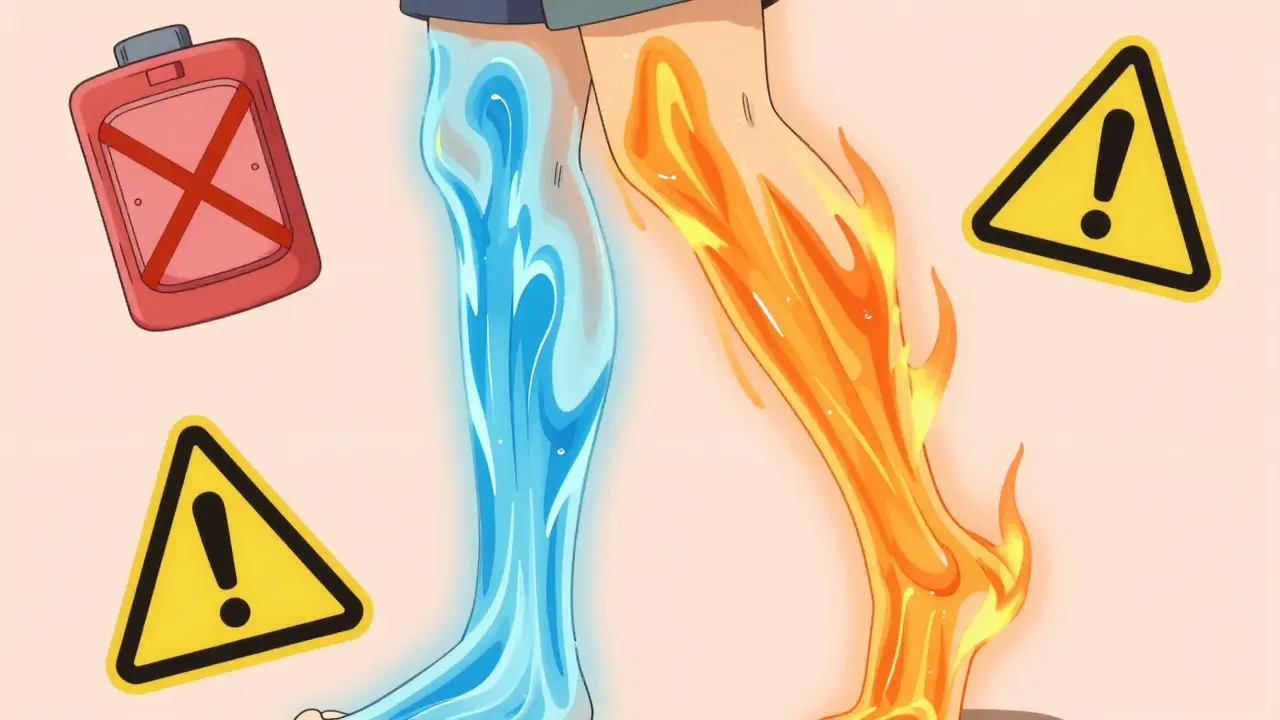
Why does the label warn you not to use a heating pad with your pain cream? It seems like a logical combo-heat plus a heat cream-but it's actually a recipe for disaster. When you apply a topical analgesic and then add external heat or wrap it in a tight bandage, you increase the absorption rate and skin temperature. This can lead to severe chemical burns, especially with menthol-based products. Health Canada's reviews have specifically linked these products to rare but serious skin burns when misused.
Another major concern is systemic absorption. While Harvard Health points out that topical versions are generally safer than oral ones because smaller amounts enter the bloodstream, that's not a blanket rule. If you apply huge amounts of Methyl Salicylate or diclofenac over large areas of your body, you can start to see side effects similar to oral NSAIDs, such as kidney stress or blood pressure spikes.
If you're taking blood thinners, you need to be especially cautious. Salicylate-based products can interfere with clotting. It's a common mistake to assume that because a medicine is "just a cream," it won't interact with your prescriptions. In reality, your skin is a semi-permeable membrane, not a brick wall.
How to Apply Topical Pain Relievers Safely
Using these products correctly is the best way to avoid a trip to the urgent care clinic. It's not just about where you put the cream, but how you handle it afterward.
- Check the skin: Never apply any topical analgesic to broken skin, cuts, or rashes. The medication will enter your bloodstream too quickly and can cause intense irritation.
- Use a barrier: When using capsaicin, wear gloves or use a roll-on applicator. If you touch your eyes, nose, or mouth after applying chili-pepper extract, you'll experience significant pain.
- Avoid the "Double Heat" trap: Keep heating pads, electric blankets, and tight compression wraps away from the treated area.
- Wash your hands: Immediately after application (and after removing a patch), wash your hands with soap and water to prevent accidental transfer to sensitive areas.
- Monitor for tolerance: If you notice the gel isn't working as well as it used to, don't just apply more. This is called tolerance, and it's a sign you should talk to a professional about a different treatment plan.

Topical vs. Oral: Which One Should You Choose?
The biggest advantage of topical pain relievers is the reduction in gastrointestinal side effects. Oral NSAIDs, like ibuprofen or naproxen, are known to cause stomach bleeding in about 1-2% of regular users. By applying the medicine directly to the joint, you bypass much of the digestive system.
However, topicals are only effective for "surface" pain. If you have a deep-seated ache or systemic inflammation, a cream won't reach the source. They are best used for soft tissue injuries, tendonitis, or localized osteoarthritis. If you're dealing with something like sciatica, some research suggests that while certain OTC options can be as effective as stronger medications, the delivery method (topical vs. oral) depends entirely on where the nerve is being pinched.
Can I use a topical pain gel every day?
Yes, many can be used daily, but it depends on the ingredient. For instance, capsaicin often requires use 3-4 times daily for several days to become effective. However, you should monitor for skin irritation or the development of tolerance, where the product becomes less effective over time.
Is it safe to use these products during pregnancy?
You should always consult a doctor first. Some topical NSAIDs can be absorbed into the bloodstream and may pose risks, particularly in the third trimester. Salicylates and other anti-inflammatories should be vetted by a healthcare provider.
What should I do if I get a burn from a menthol gel?
Immediately stop using the product and wash the area gently with cool water and mild soap. Do not apply other irritating creams. If the burn is severe, blisters form, or the pain doesn't subside, seek medical attention immediately.
Why is the 4% lidocaine limit so important?
Lidocaine is absorbed through the skin. At concentrations above 4%, the risk of the drug entering the bloodstream in high enough quantities to cause systemic toxicity increases. This can lead to dangerous heart arrhythmias, seizures, and difficulty breathing.
Do topical patches work better than creams?
Patches provide a "controlled release" of the medication over several hours, which can be more convenient than applying a cream multiple times a day. However, they can also trap heat and moisture against the skin, increasing the risk of irritation if the skin is sensitive.
Next Steps for Safe Pain Management
If you're starting a new topical regimen, start small. Apply a tiny amount to a small patch of skin to check for an allergic reaction before coating your entire shoulder or knee. Keep a log of how often you apply the product and whether the pain is actually decreasing or if you're just getting used to the cooling/heating sensation.
If you are using these products because of a chronic condition, bring the actual tube or a photo of the ingredient list to your next doctor's appointment. Most people assume OTC products are "invisible" to their care team, but knowing you're using a salicylate-based cream can change how a doctor prescribes other medications, especially blood pressure or blood-thinning drugs.


